Is it “benefited” or “benefitted”?
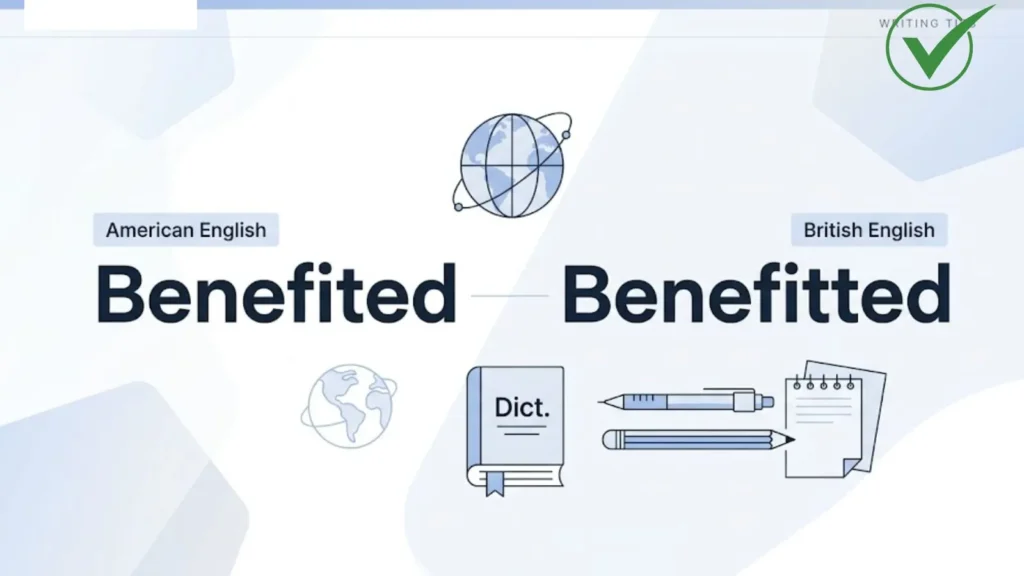
Both spellings are correct, but usage depends on regional English.
- American English: “Benefited“
- British English: “Benefitted“
However, “benefited” is far more widely used worldwide, especially in professional, academic, and online writing.
|learn More About: Sapphire or Saphire – Which Spelling Is Correct and Why It Matters
Benefited or Benefitted – Quick Answer
Both “benefited” and “benefitted” are correct—but they are used in different regions.
- Benefited → Preferred in American English
- Benefitted → Common in British English
Examples:
- American English: She benefited from the training.
- British English: She benefitted from the training.
👉 Quick tip:
- If you write for a global or US audience, use benefited.
The Origin of Benefited or Benefitted
The word comes from the Latin word “beneficium”, meaning good deed or advantage.
“Benefit.” verb
Spelling rule:
- In British English: Verbs often double the final consonant before adding “-ed”
- In American English: They usually do not double it
That’s why:
- UK: benefitted
- US: benefited
Pattern seen in:
- Travelled (UK) vs Traveled (US)
- Cancelled (UK) vs Canceled (US)
|RELATED: Cocoon vs Cacoon: Real Differences Explained
British English vs American English Spelling
| Feature | American English | British English |
|---|---|---|
| Preferred spelling | Benefited | Benefitted |
| Rule | No double “t” | Double “t” |
| Example sentence | He benefited from the course. | He benefitted from the course. |
| Common usage | USA, global business | UK, Australia, Canada |
👉 Both are correct—just choose based on your audience.
Which Spelling Should You Use?
Use “Benefited” if:
- You write for a US audience
- You want a simpler, more common form
Use “Benefitted” if:
- Your audience is in the UK or Commonwealth countries
- You follow British English style guides
Best Advice:
For most writers, bloggers, and businesses → “benefited” is safer and more widely accepted globally.
Common Mistakes with Benefited or Benefitted
One of the most common writing mistakes happens when people switch between American English and British English without noticing. For example, many writers use “benefited” in one sentence and “benefitted” in another. However, consistent spelling improves readability and gives your content a polished, professional appearance.
❌ She benefitted from the program in an American article.
She benefited from the program.✔️
❌ Mixing styles:
He benefited yesterday but benefitted today.
Stay consistent in one style.✔️
Benefited or Benefitted in Everyday Examples
Emails
- I benefited from your advice. Thank you!
News Writing
- The company benefited from the new policy.
Social Media
- I really benefited from this course!
Formal Writing
- Participants benefited significantly from the training program.
👉 In most global writing, “benefited” is more common.
Benefited or Benefitted – Google Trends & Usage Data
Search and usage data show that “benefited” is far more popular worldwide, especially in:
- United States
- Pakistan
- India
“Benefitted” appears more in:
- United Kingdom
- Australia
- Academic or traditional British texts
Comparison Table: Keyword Variations
| Word | Region | Usage Frequency | Example |
|---|---|---|---|
| Benefited | American English | Very High | She benefited from the help. |
| Benefitted | British English | Moderate | She benefitted from the help. |
| Benefit (base form) | Global | Very High | This will benefit you. |
FAQs
1. Is “benefitted” wrong?
No, it’s correct in British English.
2. Which is more common globally?
Benefited is more widely used.
3. Should I use “benefited” for SEO?
Yes, it performs better for global audiences.
4. Why do some words double letters in British English?
British spelling often doubles consonants before adding suffixes like “-ed.”
5. Can I use both in one article?
No, stay consistent with one style.
6. Is “benefited” correct in formal writing?
Yes, especially in American and global contexts.
7. Which should students use?
Follow your school’s style (UK or US), or use benefited for safety.
Conclusion
Choosing between benefited and benefitted may seem like a tiny detail, yet correct spelling strengthens your writing credibility. In most cases, “benefited” dominates modern American English and professional digital content. However, “benefitted” still appears in British English publications. The smartest approach is consistency. Pick one style, follow it throughout your writing, and your content will appear polished, natural, and professionally refined.