
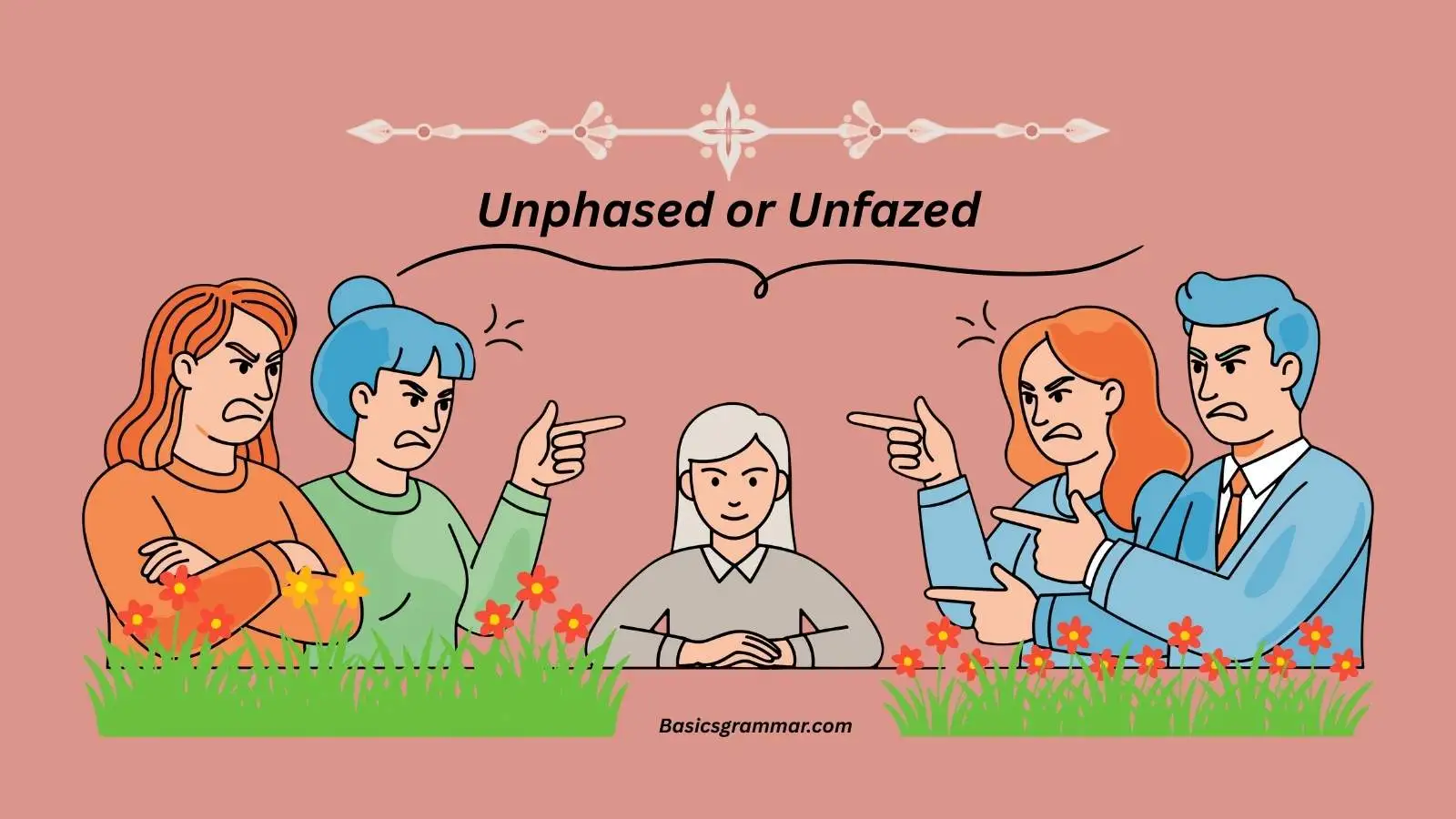
People frequently question if “unphased” or “unfazed” is the proper expression. The two terms have very similar sounds but quite distinct spellings and meanings, which frequently causes confusion. Since both terms can be used in casual internet contexts, many people look for this keyword to help them decide which term to use in their writing or speaking. Knowing the distinction is crucial since using the incorrect term might alter the meaning of your sentence and detract from your professional appearance. Whether you’re composing an email, posting on social media, or creating formal documents, this article will help you understand the meaning of each word, dispel any uncertainty, and provide guidance on proper usage.
Is Unphased a Word?
Yes, unphased is technically a real word, but it is rarely used in everyday English. It means “not phased,” where phased relates to stages or sequences rather than emotional reactions. Example: The construction project was unphased by the weather delays.
In most cases, people actually mean unfazed, which describes someone who remains calm or unaffected by a situation. Example: She was unfazed by the criticism and continued confidently. This distinction is important for clear and correct writing.
Real-life Situations Where “Unfazed” Fits Perfectly
The word “unfazed” is ideal to describe someone who remains calm, composed, and unaffected despite challenges or unexpected events. In real life, this term is often used to highlight a person’s resilience and confidence.
Examples include:
- Workplace scenarios: When a project faces sudden changes or tight deadlines, a team member who stays calm and continues working efficiently can be described as unfazed. For instance, “Despite the last-minute client requests, the manager was unfazed and guided the team effectively.”
- Sports: Athletes who maintain focus and do not get distracted by pressure or mistakes during a game are said to be unfazed. Example: “The player was unfazed by the crowd’s boos and delivered a winning performance.”
- Daily life challenges: People often use “unfazed” when describing someone who handles stressful situations with grace, like remaining calm during a traffic jam or an unexpected delay. For example, “She was unfazed by the flight delay and used the time to catch up on reading.”
Using unfazed in these contexts communicates a strong sense of emotional stability and control, which can be a positive trait in both personal and professional life.
Analyzing “Unfazed” Usage in Popular Culture and Media
The term “unfazed” has become increasingly common in popular culture and media, often used to portray characters, celebrities, or public figures who show no signs of worry or disturbance despite criticism or challenges.
- Movies and TV shows: Scripts frequently use “unfazed” to describe heroes or protagonists who confront obstacles without fear or hesitation, emphasizing their strength and resilience.
- Celebrity interviews and news: Journalists often describe celebrities as unfazed when they remain calm during controversies or negative press. Example headlines might read, “Star remains unfazed by rumors.”
- Social media: Influencers and everyday users use “unfazed” in posts or comments to express their ability to ignore negativity or criticism. It has become a popular word to convey confidence and emotional toughness online.
- Music and literature: The word also appears in song lyrics and books to highlight characters’ steady nature in difficult situations.
Overall, “unfazed” conveys a positive image of steadiness and composure, making it a favored term in various forms of media and communication. Its widespread use reflects society’s admiration for calmness under pressure.
Unphased or Unfazed – Quick Answer
The correct word to use when describing someone who is calm and not disturbed by something is “unfazed.”
- Unfazed means not upset, worried, or affected by a situation.
- Unphased is a common misspelling and is not recognized as a correct word in standard English.
Example:
- Correct: She was unfazed by the sudden change in plans.
- Incorrect: She was unphased by the sudden change in plans.
The Origin of Unphased and Unfazed
Unfazed comes from the verb “faze,” which means to disturb or disconcert. The prefix “un-” means “not,” so unfazed means “not disturbed.” This word has been used in English since the early 20th century.
On the other hand, unphased mistakenly uses “phase” (a stage or step) instead of “faze.” People might confuse it because “phase” is a common word, but “unphased” does not have any historical or correct usage in English. It’s an error derived from mishearing or misunderstanding “unfazed.”
British English vs American English Spelling
Both “unfazed” and “unphased” are spelled the same in British and American English as “unfazed” (correct spelling).
| Feature | American English | British English |
|---|---|---|
| Correct spelling | unfazed | unfazed |
| Incorrect form | unphased | unphased |
| Usage | Common in US and UK | Common in UK and US |
There is no difference in the correct spelling of this word between British and American English. The confusion comes from the incorrect “unphased,” which is universally wrong.
Which Spelling Should You Use?
Use “unfazed” regardless of whether you’re in the US, UK, or any other English-speaking country. It is the accepted spelling worldwide.
- If you’re writing for an American audience, use unfazed.
- For British or Commonwealth audiences, unfazed is also correct.
- Avoid unphased in all professional, academic, or formal writing.
Common Mistakes with Unphased or Unfazed
- Writing “unphased” instead of “unfazed.”
- Confusing “phase” (a stage in a process) with “faze” (to disturb).
- Using unphased thinking it relates to “phase,” but it changes the meaning entirely.
Correction tips:
- Remember “faze” means to disturb — so “unfazed” means not disturbed.
- Think of “phase” as a stage in a process, which doesn’t apply here.
Unphased or Unfazed in Everyday Examples
- Emails: “Despite the tight deadline, the team remained unfazed.”
- News articles: “The politician was unfazed by the criticism.”
- Social media: “Unfazed by the trolls, she kept posting.”
- Formal writing: “The CEO appeared unfazed during the crisis.”
Avoid using “unphased” in all these contexts.
Unphased or Unfazed – Google Trends & Usage Data
Google Trends shows “unfazed” is overwhelmingly more popular globally than “unphased.” The correct term is used more frequently in English-speaking countries like the US, UK, Canada, and Australia. “Unphased” tends to appear only in informal or incorrect usage, often in social media typos or misspelled posts.
Keyword Variations Comparison Table
| Variation | Correct? | Meaning | Usage Example |
|---|---|---|---|
| Unfazed | Yes | Not disturbed or bothered | She remained unfazed by criticism. |
| Unphased | No | Incorrect; misspelling | She was unphased by the criticism. (Wrong) |
| Not fazed | Yes | Informal alternative | He was not fazed by the challenge. |
| Unphased (formal) | No | Incorrect | Avoid in all formal writing. |
FAQs
- Is it unphased or unfazed?
The correct word is unfazed. - What does unfazed mean?
It means not disturbed, worried, or affected by something. - Why do people confuse unphased and unfazed?
Because “phase” is a common word and sounds similar, but it’s a misspelling in this context. - Can I use unphased in formal writing?
No, always use unfazed in formal writing. - Is unfazed American or British English?
It is used and accepted in both American and British English. - What is the origin of “faze” in unfazed?
“Faze” means to disturb or disconcert; “unfazed” means not disturbed. - Are there other words similar to unfazed?
Yes, similar words include “unbothered,” “unperturbed,” and “calm.”
Conclusion
Always go with unfazed when choosing between unphased and unfazed. In both American and British English, it is the proper and commonly used spelling. When you use the word “unfazed,” you are referring to someone who is composed and unaffected by a problem or disruption. Because “phase” is a common word that has nothing to do with this sentence, confusion frequently results. “Unfazed” is the word to employ while writing emails, social media postings, or official papers in order to come off as clear and professional. Steer clear of “unphased” completely because it is a typo that could confuse readers or detract from your content. For accurate, self-assured communication, stick with “unfazed.”
