
One question frequently arises when you stand in the baking aisle: is the flour bleached or unbleached? Due to the ambiguous labels, this keyword is frequently searched by home bakers, chefs, and health-conscious consumers. Both flours are used in common recipes, have comparable appearances, and cost around the same. However, the terms “bleached” and “unbleached” can seem frightening or deceptive.
People are looking for speedy responses. Is one more healthful? Is there a better baker? For cakes, bread, or cookies, does it really matter? Food blogs, packaging, and social media frequently offer conflicting information, which adds to the confusion. Bleached flour is considered “bad” by some. Some claim that unbleached flour is “too dense.”
That misconception is cleared up in this article. The differences between bleached and unbleached flour, how each is created, and when to use each will all be explained in an easy-to-understand manner. By the time it’s all over, you’ll know precisely which flour suits your audience, your baking style, and your health objectives—all without the jargon or anxiety.
How Bleached or Unbleached Flour Processing Affects Texture and Color
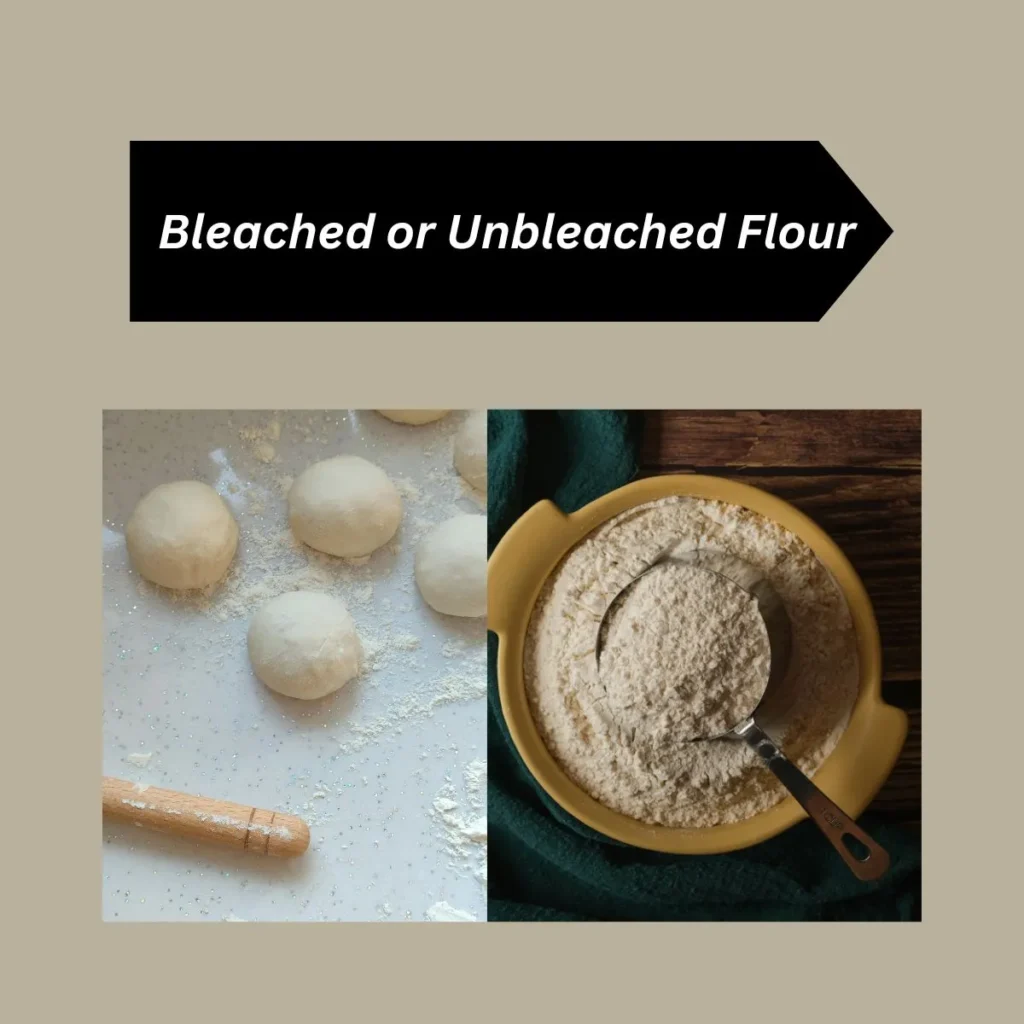
The main difference between bleached or unbleached flour comes from how the flour is processed after milling. This processing directly changes both texture and color, which then affects baking results.
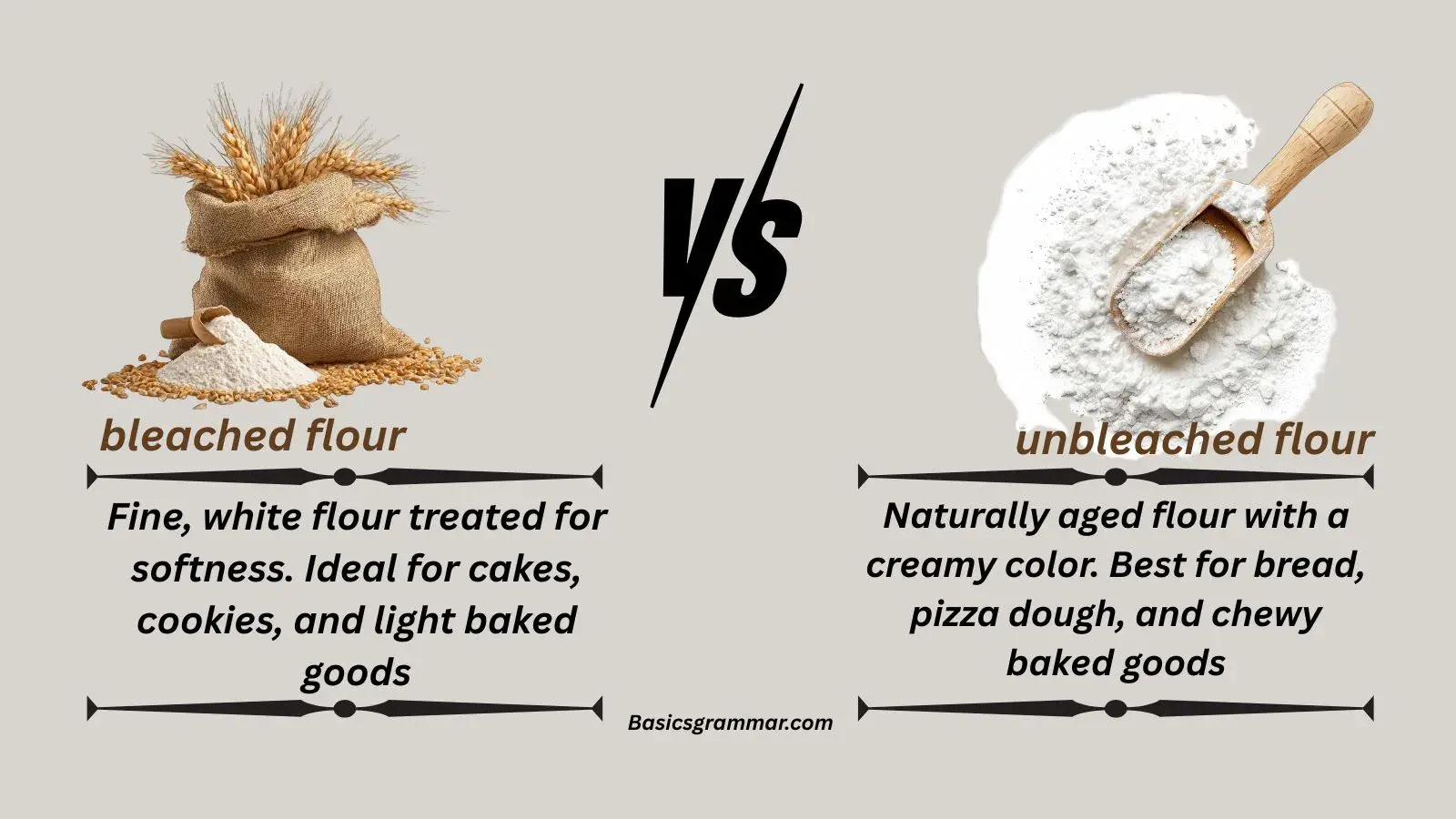
Bleached flour is treated with approved bleaching agents. These agents speed up the aging process. As a result, the flour becomes bright white and very fine in texture. The protein structure also softens, which helps baked goods rise evenly. This is why bleached flour works well for cakes, muffins, cookies, and pastries that need a light and tender crumb.
Unbleached flour is aged naturally using oxygen. This takes more time but keeps the flour closer to its original state. The color stays off-white or slightly creamy, and the texture remains firmer. The stronger protein structure supports gluten development, making unbleached flour better for bread, pizza dough, and rolls.
In simple terms, if you want soft and delicate results, bleached flour performs better. If you need strength and structure, unbleached flour is the better choice. Both types are safe, but their processing creates clear differences in appearance and performance.
Culinary and Commercial Uses of Bleached or Unbleached Flour Worldwide
The choice between bleached or unbleached flour varies across regions and industries because baking traditions, consumer preferences, and production needs are different worldwide.
In commercial baking, bleached flour is widely used in the United States. Large bakeries prefer it for cakes, cookies, donuts, and packaged baked goods. Its fine texture and bright white color create a uniform look and soft crumb. It also produces consistent results at scale, which is important for mass production.
In traditional and artisanal baking, unbleached flour is more common. European and UK bakeries often use unbleached flour for bread, pastries, and specialty loaves. The stronger gluten structure supports longer fermentation and better texture. Many professional bakers prefer it for flavor and dough strength.
In Asian cuisines, unbleached flour is often used for noodles, flatbreads, and dumplings, where dough elasticity matters. In global home kitchens, health awareness has increased demand for unbleached flour because it feels more natural and less processed.
Overall, bleached flour dominates industrial baking, while unbleached flour leads in artisan, traditional, and health-focused markets worldwide.
Bleached or Unbleached Flour – Quick Answer
Bleached flour is treated to whiten it and soften its texture.
Unbleached flour is naturally aged and keeps a slightly off-white color.
Example:
- Soft cakes and cookies → Bleached flour
- Bread and pizza dough → Unbleached flour
Both are safe to eat and widely used.
The Origin of Bleached or Unbleached Flour
The term bleached flour comes from early milling practices. Freshly milled flour was yellow and dense. Bakers learned that aging flour made it lighter and easier to use. To save time, mills began using bleaching agents to speed up this process.
Unbleached flour still goes through aging, but naturally. Oxygen slowly changes the flour over time. This keeps the flour closer to its original state.
There are no spelling differences in this keyword. The difference is about processing, not language. The terms developed to help buyers understand how the flour was treated before sale.
British English vs American English Spelling
There is no spelling difference between British and American English for bleached or unbleached flour. The wording stays the same.
What differs is usage and preference, not spelling.
| Aspect | American English | British English |
|---|---|---|
| Term used | Bleached flour | Plain flour (often unbleached) |
| Label focus | Bleached vs unbleached | Protein and grind |
| Common use | Cakes use bleached | Baking avoids bleaching |
Which Should You Use?
Choose based on your audience and baking goal.
- United States: Bleached flour is common for cakes and pastries.
- UK & Commonwealth: Unbleached flour is preferred and more traditional.
- Global or health-focused audience: Unbleached flour feels more natural and trusted.
If texture matters most, choose bleached. If simplicity and tradition matter, choose unbleached.
Common Mistakes with Bleached or Unbleached Flour
- ❌ Thinking bleached flour is unsafe
✅ It is FDA-approved and safe - Wrong Assuming unbleached flour is always healthier
Write Nutritional differences are minimal - ❌ Using bleached flour for yeast bread
✅ Unbleached flour works better for structure
Bleached or Unbleached Flour in Everyday Examples
- Email:
“Please use unbleached flour for the sourdough batch.” - News:
“Bakeries debate bleached or unbleached flour in modern recipes.” - Social media:
“Switched to unbleached flour and love the texture!” - Formal writing:
“The recipe specifies unbleached flour for improved gluten strength.”
Bleached or Unbleached Flour – Google Trends & Usage Data
Search interest in bleached or unbleached flour is highest in the US, Canada, and Australia. Health trends push interest toward unbleached flour. Baking shows increase searches for bleached flour during holidays.
The keyword is most used in:
- Recipe searches
- Health comparisons
- Baking education content
Comparison Table: Bleached or Unbleached Flour
| Feature | Bleached Flour | Unbleached Flour |
|---|---|---|
| Color | Bright white | Off-white |
| Texture | Soft, fine | Slightly dense |
| Best for | Cakes, cookies | Bread, pizza |
| Processing | Chemically aged | Naturally aged |
FAQs
1. Is bleached flour bad for health?
No. It is safe and regulated.
2. Does unbleached flour taste different?
Only slightly. Most people cannot tell.
3. Can I substitute one for the other?
Yes, in most recipes.
4. Which flour is better for cakes?
Bleached flour.
5. Which flour is better for bread?
Unbleached flour.
6. Is unbleached flour organic?
Not always. Check the label.
7. Why is unbleached flour darker?
It is not artificially whitened.
Conclusion
It doesn’t have to be difficult to decide between bleached and unbleached flour. First, safety is not the primary difference; instead, processing and texture are. For example, soft and white bleached flour works well for light baked items like cookies and cakes. In contrast, naturally aged and somewhat denser unbleached flour works well for bread and pizza dough.
Neither choice is “bad.” Both home bakers and professionals utilize both extensively. Your audience, your recipe, and your own preferences should all influence your decision. Unbleached flour frequently feels more natural when baking for a worldwide or health-conscious audience. Bleached flour is a wise choice if you desire fine texture and delicate crumbs.
You may shop with confidence and consistently bake better outcomes after you know the purpose of each type.