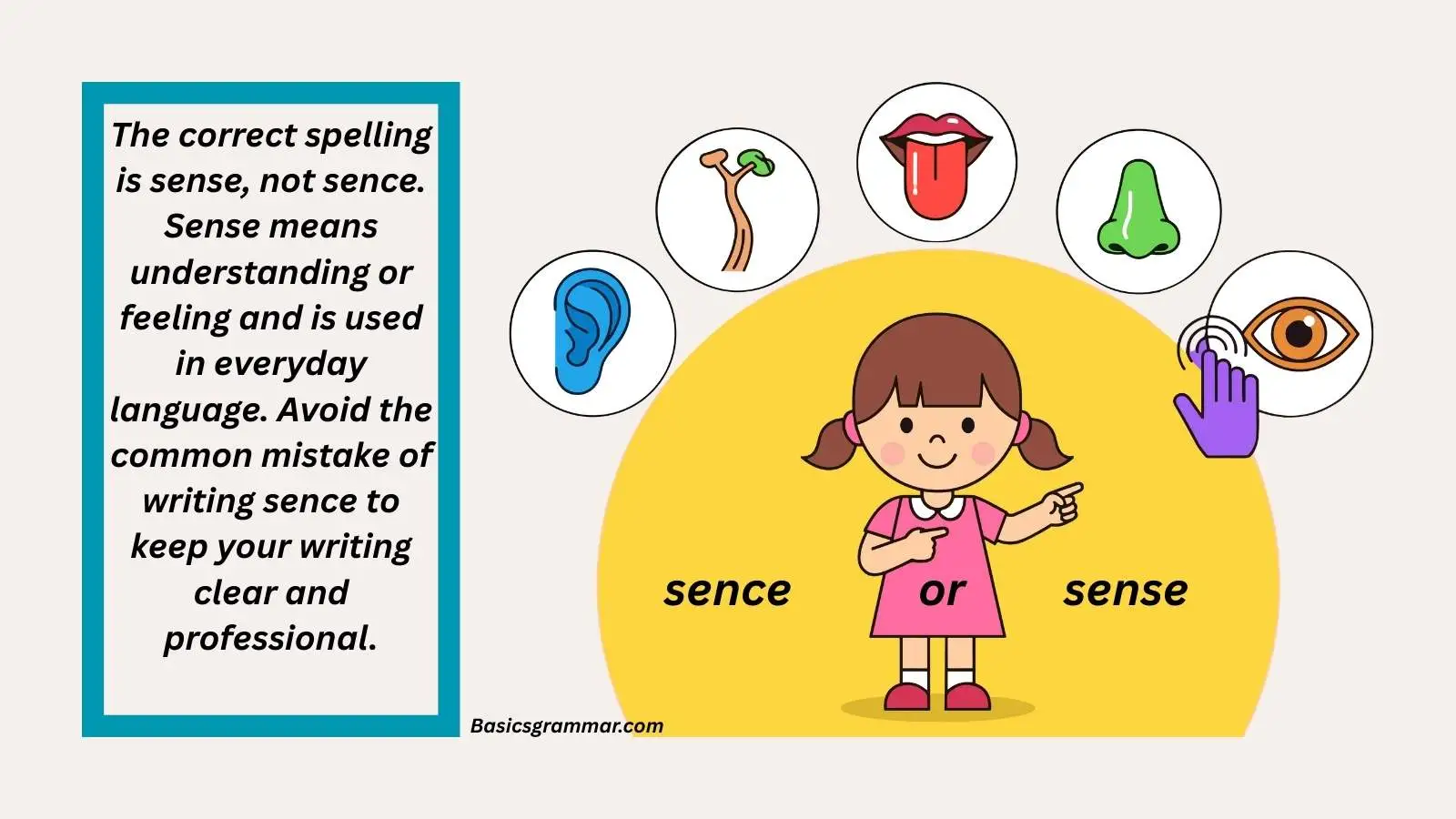
Do you have trouble deciding whether to write “sense” or “sence”? You’re not by yourself. Because the spelling appears difficult, thousands of people look for this every month. Many writers doubt themselves, particularly when learning English or typing quickly. The word’s sound is the source of the mistake. When we speak “sense,” it sometimes sounds like it should end in “-ce” rather than “-se.” When composing an essay, text message, or email, this little spelling inquiry may cause you to pause.The good news is that the solution is straightforward. You’ll discover the proper spelling, the reason for the misconception, and how to always use “sense” correctly in this tutorial. Whether you’re an English learner, professional, or student, this post will finally dispel any confusion. Together, let’s tackle this spelling challenge.
Frequently Asked Questions About Sence vs Sense
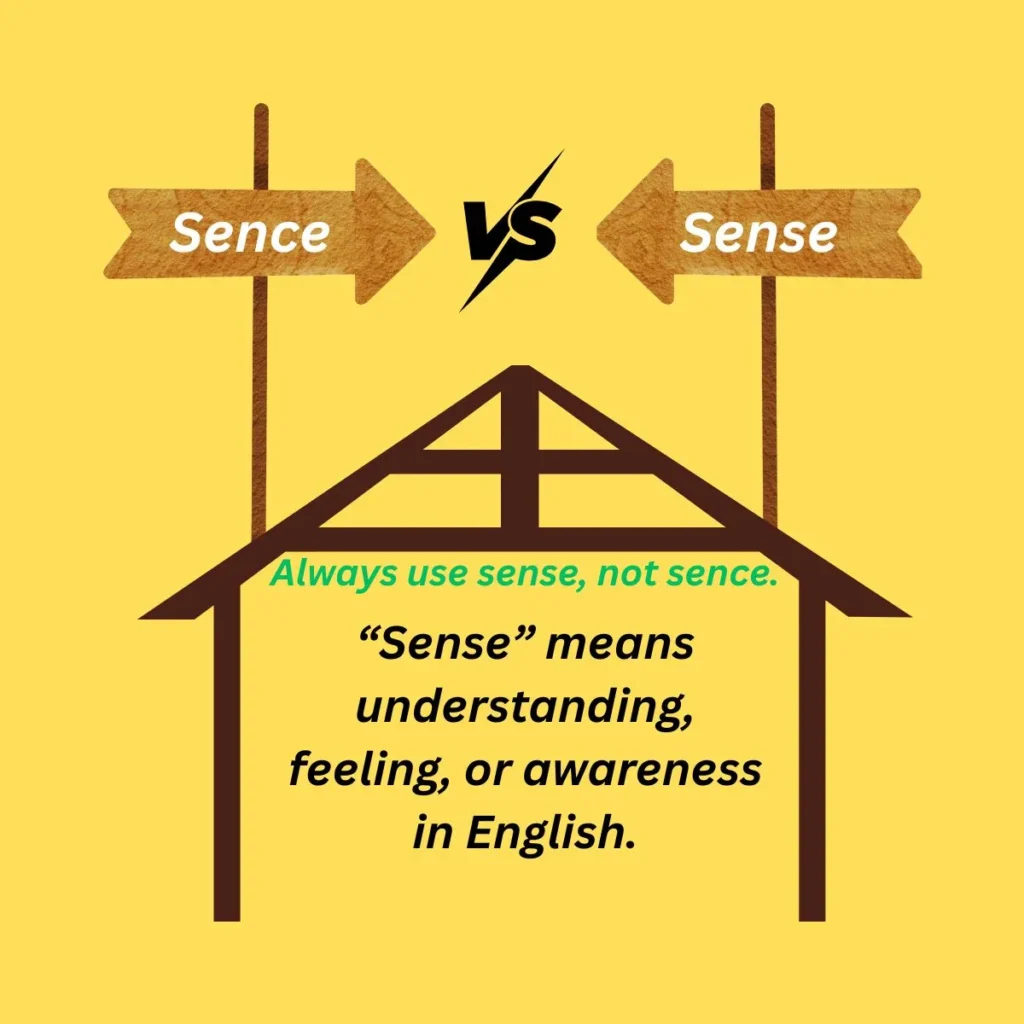
Many people wonder if “sence” is a correct spelling or if they should use “sense.” The simple answer is that “sense” is the only correct spelling. Questions often arise about the meaning of the word, its usage in sentences, and how to avoid confusion with similar-sounding words. Common FAQs also include why the misspelling “sence” happens and whether it affects writing quality. Understanding these answers helps improve spelling accuracy and communication.
Popular Phrases and Idioms Using “Sense”
The word “sense” appears in many common English phrases and idioms that convey feelings, understanding, or awareness. Examples include “common sense” (practical judgment), “make sense” (to be logical), “sense of humor” (ability to appreciate humor), and “sense of direction” (ability to find your way). These phrases are widely used in daily conversations and writing, making it important to spell “sense” correctly to maintain clarity and professionalism.
Sense or Sence – Quick Answer
The correct spelling is “sense.”
“Sence” is not a word in English. It’s a common misspelling.
Examples:
- ✅ This makes sense to me.
- ✅ Use your common sense.
- ✅ I sense something is wrong.
- ❌ This makes sence. (Wrong)
- ❌ Use your common sence. (Wrong)
Always use “sense” when you mean perception, feeling, or good judgment.
The Origin of Sense
The word “sense” comes from Latin. It comes from the Latin word “sensus,” which means feeling or perception. The word entered English through Old French in the 14th century. In Old French, it was written as “sens.”
Over time, English adopted the spelling “sense” with an “s” at the end. This spelling has stayed the same for hundreds of years. The “-se” ending follows a pattern seen in other English words like “dense,” “tense,” and “intense.”
The confusion with “sence” happens because English has many words ending in “-ence” like “difference,” “rence,” and “silence.” Our brains sometimes mix these patterns. But “sense” never followed that pattern. It has always been spelled with “-se” at the end.
British English vs American English Spelling
Good news: both British and American English use the same spelling.
“Sense” is spelled the same way in all English-speaking countries.
| Aspect | British English | American English |
|---|---|---|
| Spelling | sense | sense |
| Pronunciation | /sens/ | /sens/ |
| Usage | Same meaning | Same meaning |
| Common phrases | make sense, sixth sense | make sense, sixth sense |
Unlike words like “colour/color” or “honour/honor,” “sense” has no variation. You can use “sense” anywhere in the world, and it will be correct.
Which Spelling Should You Use?
Always use “sense” no matter where you are.
For US Audiences:
Use “sense.” It’s the only correct spelling in American English.
For UK/Commonwealth Audiences:
Use “sense.” It’s the only correct spelling in British, Australian, Canadian, and other English variants.
For Global/International Writing:
Use “sense.” There’s no debate or regional difference.
Bottom line: “Sence” is always wrong. “Sense” is always right.
Common Mistakes with Sense
Here are the most frequent errors people make:
Error 1: Writing “sence” instead of “sense”
- ❌ That doesn’t make sence.
- ✅ That doesn’t make sense.
Mistake 2: Confusing “sense” with “since”
- ❌ I haven’t seen him sense yesterday. (Wrong)
- ✅ I haven’t seen him since yesterday. (Correct)
- ✅ I sense he’s not coming. (Correct)
Error 3: Using “scents” when you mean “sense”
- ❌ Use your common scents. (Wrong)
- ✅ Use your common sense. (Correct)
- ✅ The flowers have lovely scents. (Correct – means smells)
Mistake 4: Typing too fast
Auto-correct doesn’t always catch “sence” because it looks like a real word to some spell-checkers.
Pro tip: Add “sence” to your personal dictionary as a blocked word so you’ll always catch the error.
Sense in Everyday Examples
Here’s how “sense” appears in real writing:
In Emails:
“Your suggestion makes sense. Let’s move forward with it.”
In News:
“Experts sense a change in the market trends.”
In Social Media:
“Does anyone else sense something weird happening? 🤔”
In Formal Writing:
“The data supports this hypothesis in every sense.”
In Casual Conversation:
“Dude, that makes zero sense!”
In Literature:
“She had a strong sense of justice and fairness.”
All these examples show “sense” used correctly in different contexts.
Sense – Google Trends & Usage Data
“Sense” is searched millions of times each month worldwide. “Sence” is also searched frequently, but only because people are checking if it’s correct (it’s not).
Search Volume by Country:
- United States: High searches for “sense vs sence”
- United Kingdom: Moderate searches
- India: High searches (English learners checking spelling)
- Philippines: Moderate searches
- Canada: Low to moderate searches
Context of Searches:
Most people search “sense or sence” when:
- Writing formal documents
- Completing school assignments
- Sending professional emails
- Learning English as a second language
| Term | Status | Search Intent |
|---|---|---|
| sense | Correct spelling | Looking for meaning/usage |
| sence | Incorrect spelling | Checking if it’s correct |
| since | Different word | Looking for time-related word |
| scents | Different word | Looking for smell-related word |
Key insight: “Sence” gets searched a lot, but 100% of those searches confirm it’s wrong.
FAQs
- What is the 5 sentence rule?
It means writing a clear paragraph using five sentences: topic, supporting details, and conclusion. - What are the four types of grammar?
They are phonology, morphology, syntax, and semantics. - What are 10 simple sentences?
Examples: “I like apples.”, “She runs fast.”, “He is happy.”, etc. - How do you use sense?
Use sense to describe understanding, feeling, or awareness, like “I sense danger.” - What are 5 sentences examples?
Examples: “The sun is bright.”, “They play football.”, “Birds can fly.”, “Water is cold.”, “She reads books.” - Which is correct, sence or sense?
Sense is correct; sence is incorrect. - What is the meaning of sence?
Sence is a misspelling; it has no meaning in English. - Does sense have two meanings?
Yes, it can mean both physical senses (like sight) and understanding or feeling. - How do you use sence in a sentence?
You should not use sence because it is incorrect; use sense instead.
Conclusion
You now know the answer: “sense” is always incorrect and “sense” is always right. For centuries, all varieties of English have used the same spelling. Whether you are writing for a British, American, or international readership, you should always make use of “sense.” To help you recall the proper spelling, keep in mind that “sensus” is a Latin word. Steer clear of typical blunders like mistaking “sense” for “since” or “scents. “These terms have distinct meanings. When in doubt, consider well-known expressions such as “common sense” or “make sense.” They are never spelled with “-ce” at the end. When spelling uncertainty arises, go to this guide. Correctly writing “sense” will become second nature with repetition. You’ll quickly become proficient with this word if you follow your gut and proofread your spelling. Enjoy writing!