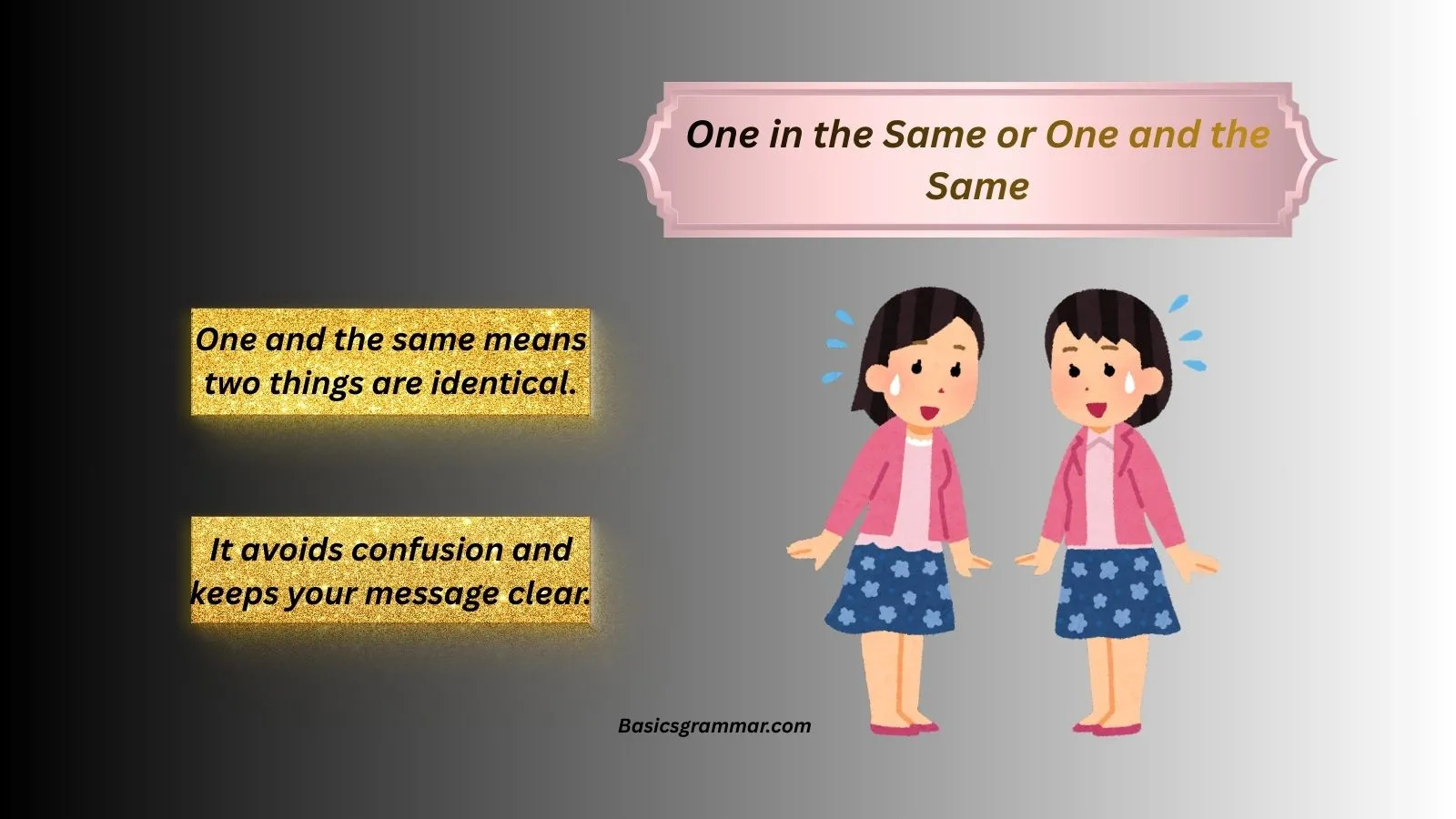
Because the two expressions sound almost identical when pronounced, many people look up “one in the same or one and the same.” This phonetic resemblance in language leads to confusion, particularly in casual speaking, movies, and quick conversations. Because of this, authors frequently stop to consider whether a sentence is accurate or whether there is a grammatical error.
This is an excellent illustration of misheard English words and a classic example of English phrase confusion. One and the same can sound identical when spoken rapidly, which can result in improper phrase usage when written. Even though it may appear insignificant, using the incorrect term can compromise communication clarity, particularly in professional writing.
This article provides a definitive solution to the confusion. You’ll receive a brief response, a more thorough explanation of the phrase’s history, advice on how to use British versus American English, and examples from emails, news, and social media. By the conclusion, you’ll know how to use idioms correctly, steer clear of frequent grammatical errors, and write accurately and confidently.
One and the Same as an Idiomatic Expression
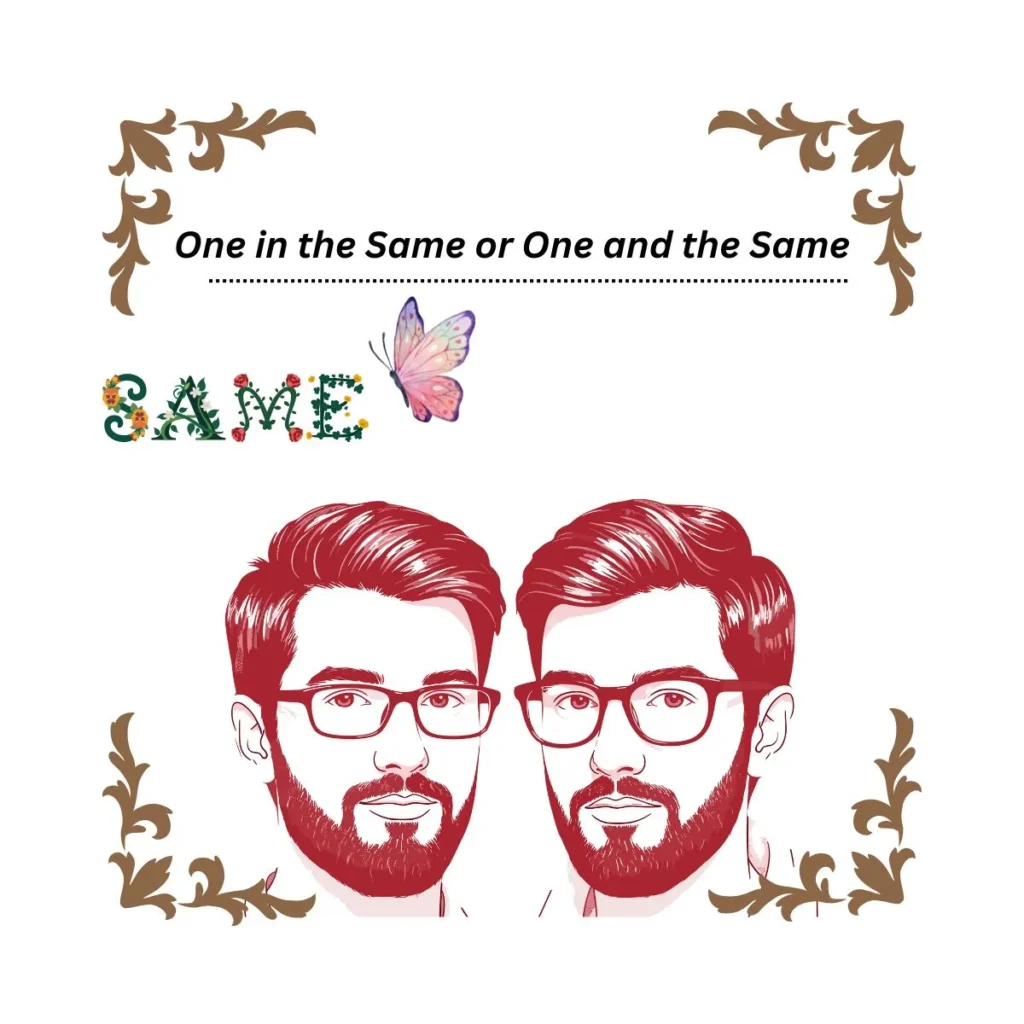
The phrase “one and the same” is a classic example of an idiomatic expression in the English language. Idioms are fixed phrases whose meanings cannot be inferred simply by understanding the individual words. Instead, they convey a figurative meaning that native speakers recognize intuitively.
What Makes “One and the Same” an Idiom?
The expression “one and the same” emphasizes that two things or people are identical or indistinguishable in nature. It is used to clarify that what might appear as separate entities are actually the same person, object, or concept.
Example:
- “The CEO and the founder are one and the same person.”
Here, the phrase highlights that the CEO and the founder refer to the exact same individual, even if the titles differ.
Why Idioms Like This Matter
Idiomatic expressions enrich language by allowing speakers to communicate complex ideas succinctly and colorfully. However, they also present challenges for learners and writers, especially when idioms are misheard or misused, as with the phrase “one in the same.”
Common Confusions with the Phrase
The idiomatic nature of “one and the same” makes it prone to errors in spoken English. Because “and the” sounds like “in the” when spoken quickly, many confuse the phrase. This confusion is an example of how phonetic similarity in language can lead to incorrect phrase usage.
Idiomatic Expressions and Clarity in Writing
Using idioms correctly is essential for clarity in communication. The phrase “one and the same” precisely conveys the idea of identity or equivalence. When used properly, it avoids ambiguity and strengthens the message.
Writers should treat idioms like this as fixed expressions that require careful usage. Misusing idioms can lead to reader misunderstanding and reduce the professionalism of the writing.
One in the Same or One and the Same – Quick Answer
The correct phrase is “one and the same.”
“One in the same” is incorrect and considered a nonstandard English expression.
Correct usage:
- They realized the suspect and the witness were one and the same.
- These two reports are one and the same document.
Incorrect usage:
- ❌ They are one in the same.
One and the same meaning: it emphasizes that two things are identical, the same person with different names, or expressing sameness or identity.
The Origin of “One and the Same”
The phrase “one and the same” dates back several centuries in English. It comes from legal and formal language, where precision mattered greatly. The structure combines one (a single entity) with and the same (reinforcing identity).
There has never been a historically correct version called one in the same. That version emerged later through spoken language influence. When said aloud, and the often blends together, leading listeners to misinterpret the phrase. This is similar to mondegreen examples, where people mishear phrases and repeat them incorrectly.
Over time, the incorrect version spread through casual speech, but it never became grammatically correct.
British English vs American English Spelling
There is no spelling difference between British English and American English for this phrase. Both standards recognize only one correct form.
| Version | British English | American English |
|---|---|---|
| one and the same | ✅ Correct | ✅ Correct |
| one in the same | ❌ Incorrect | ❌ Incorrect |
This consistency makes it easier for global writers aiming for formal writing accuracy.
Which Spelling Should You Use?
- US audience: Use one and the same
- UK/Commonwealth audience: Use one and the same
- Global or professional writing: Always use one and the same
There is no situation—formal or informal English usage—where one in the same is considered correct in standard English.
Common Mistakes with One in the Same or One and the Same
Here are frequent grammar mistakes to avoid:
- ❌ Writing one in the same because it “sounds right”
- ❌ Using the incorrect phrase in formal documents
- ❌ Assuming it’s a British vs American English difference
- ❌ Repeating the error due to spoken vs written English errors
Correction tip:
If you mean two things are identical, always choose one and the same.
One and the Same in Everyday Examples
Emails
- It turns out the two clients are one and the same.
News
- Investigators confirmed the alias and the suspect were one and the same.
Social Media
- Plot twist: the hero and villain are one and the same!
Formal Writing
- The author and the editor were later revealed to be one and the same individual.
These examples show correct English usage across contexts.
One in the Same or One and the Same – Google Trends & Usage Data
Search data shows that “one in the same” is commonly searched, even though it’s incorrect. This reflects widespread English language misconceptions and misinterpretation of idioms.
- “One and the same” appears more often in books, academic writing, and news.
- “One in the same” is mostly searched as a question, such as “is one in the same correct?”
This shows users want clarity and confirmation, not validation of the incorrect phrase.
Comparison Table: One in the Same vs One and the Same
| Phrase | Correct? | Meaning | Usage |
|---|---|---|---|
| one and the same | ✅ Yes | Emphasizing identical meaning | Formal & informal |
| one in the same | ❌ No | None (misheard phrase) | Avoid |
Frequently Asked Questions (FAQs)
1. How to use one and the same in a sentence?
Example: “The author and the editor are one and the same person.”
2. Is it in or on the same boat?
The correct phrase is “in the same boat,” meaning sharing the same situation or problem.
3. What is the word for one in the same?
The correct phrase is “one and the same,” meaning two things or people are identical.
4. What does “we’re one in the same” mean?
This is a common mistake; the correct phrase is “we’re one and the same,” meaning we are identical or the same person.
5. What are some common grammar mistakes?
Mixing up possessives and plurals, misplacing apostrophes, and confusing idioms like “one in the same” instead of “one and the same.”
6. What are some common phrasal verbs?
Examples include give up, look after, take off, and run into.
7. What is correct, on the same day or in the same day?
Both are correct but used differently: “on the same day” refers to a specific date; “in the same day” emphasizes time within that day.
8. What is meant by one in the same?
It is an incorrect version of “one and the same,” which means two things are identical.
Conclusion
One excellent illustration of how spoken language can impact written accuracy is the confusion between one in the same and one and the same. Even though it could sound natural in conversation, this phrase is wrong in English and should never be used in any kind of writing.
In English, the term “one and the same” has a long history of being used to highlight the identity of two objects. It is consistent throughout American, British, and international English. Comprehending this distinction enhances reader comprehension, prevents ambiguity in writing, and fortifies your mastery of English idiomatic idioms.
Learning these subtle differences helps authors, students, and professionals communicate more confidently and clearly. When in doubt, keep in mind this straightforward guideline: one and the same is always the best option if you’re referring to sameness or identification.