

Many people often search for the meaning of bear with me and wonder if it should be spelled bare with me or bear with me. This common confusion arises because these are English homophones—words that sound alike but have different meanings and spellings. Knowing the correct spelling bear with me is crucial to avoid common grammar mistakes and to maintain grammatical correctness in writing, especially in professional emails and formal communication. This article will explain the difference, origins, and how to use the phrase correctly to help you avoid embarrassing grammar errors and improve clarity in your writing.
Bare vs. Bear: Understanding the Key Differences
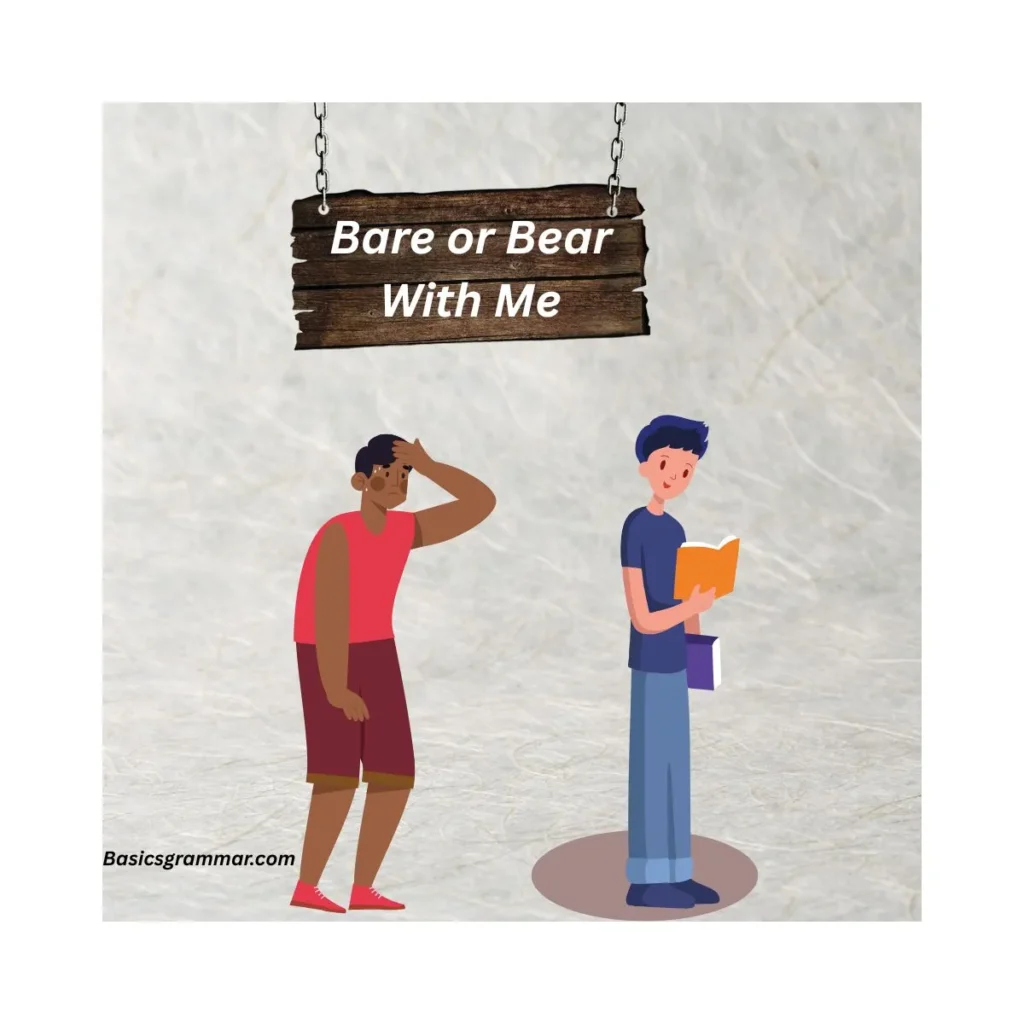
The words bare and bear are homophones—they sound alike but have different meanings and spellings. Bare primarily functions as an adjective or verb meaning “uncovered” or “to reveal.” For example, “bare skin” refers to exposed skin, and “to bare one’s soul” means to reveal personal feelings. On the other hand, bear is a versatile verb meaning “to carry,” “to endure,” or “to tolerate.” It can also be a noun referring to the animal. In the phrase “bear with me,” the verb “bear” requests patience or endurance. Understanding this distinction helps avoid common mistakes and ensures precise communication.
Easy Tips to Remember the Right Spelling
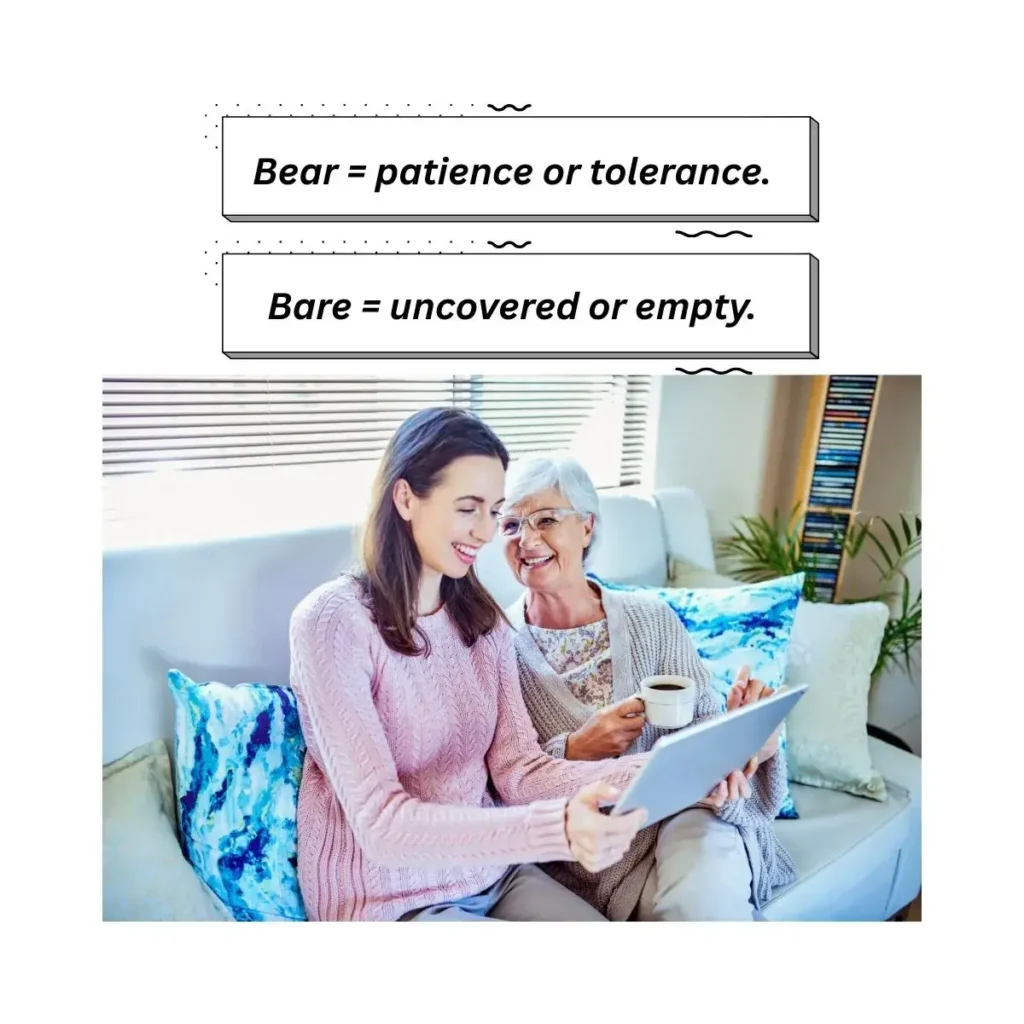
To avoid confusion between bare and bear, use simple memory aids. Remember that bare relates to being uncovered or exposed—think of the word “barefoot” or “bare walls.” Meanwhile, bear relates to carrying or enduring—imagine a bear carrying a heavy load or enduring winter hibernation. This visual connection can help you recall that in the phrase “bear with me,” the correct word is “bear” because you are asking someone to patiently endure or tolerate a situation. Consistently practicing this distinction improves spelling accuracy in writing.
Correct Usage and Meaning of “Bear With Me”
The phrase “bear with me” is a polite way to ask for someone’s patience during a delay, difficulty, or while completing a task. It means “please endure” or “please be patient with me.” This expression is commonly used in both formal and informal communication, including professional emails, customer service interactions, and everyday conversations. Using “bear with me” correctly enhances clarity and professionalism, while using the incorrect “bare with me” can cause confusion or unintended humor, as “bare” means to uncover or expose, which does not fit the intended meaning.
Bare or Bear With Me – Quick Answer
The phrase “bear with me” means asking for patience politely or “please be patient with me.” It is a correct phrase in professional emails and everyday language when you want someone to tolerate a delay or wait. On the other hand, “bare with me” literally means “uncover with me” and is mostly an incorrect usage in this context.
Example:
- Correct: Please bear with me while I finalize the report.
- Incorrect: Please bare with me while I finalize the report.
The Origin of Bare or Bear With Me
The verb bear means to endure or tolerate and comes from Old English beran. This explains why bear with me is used when asking someone to endure or be patient. Conversely, bare means to uncover or reveal something, such as in “bare your soul.” The confusion is common because these words are commonly confused words in English. Understanding this distinction helps avoid professional writing mistakes and common English spelling errors.
British English vs American English Spelling
Both British English and American English agree that the correct phrase is bear with me when requesting patience. There is no difference in spelling for this expression, making it universally applicable for English speakers worldwide.
| Phrase | Meaning | Correct Usage | Example |
|---|---|---|---|
| Bear with me | Be patient, tolerate | Yes | Bear with me as I check the details. |
| Bare with me | Uncover with me | No (incorrect here) | Bare with me while I undress. |
Which Spelling Should You Use?
Always use “bear with me” in both formal and informal contexts when you want to ask someone to be patient. This includes formal English expressions in business writing and informal English phrases in everyday conversations. Avoid bare with me unless you literally mean to uncover something.
Common Mistakes with Bare or Bear With Me
Many people make the mistake of using bare with me instead of the correct phrase. This confusion is often due to spelling confusion in English and the fact that both words are pronounced the same. This error can undermine the tone of your message and make it appear less professional. Use this phrase carefully to maintain polite requests in English and ensure writing clearly and correctly.
Bare or Bear With Me in Everyday Examples
- Emails: Please bear with me while I gather the necessary information.
- News articles: Officials ask the public to bear with them during the updates.
- Social media: Bear with me, this will just take a minute!
- Formal writing: We kindly ask that you bear with us during this transition period.
Bare or Bear With Me – Google Trends & Usage Data
Search data shows that bear with me is significantly more popular and widely used across English-speaking countries than bare with me, confirming its status as the correct form. This trend highlights the importance of grammatical correctness in writing and how common language misconceptions can impact clarity.
FAQs
Q: Do you bear it or bare it?
A: You bear it, meaning to endure or tolerate.
Q: Is it bare or bear the pain?
A: It is bear the pain, meaning to endure pain.
Q: Is it to bare or bear in mind?
A: It is bear in mind, meaning to remember or consider.
Q: Is it bear with me or bare with me?
A: It is bear with me, meaning please be patient.
Q: How do I say “please bear with me”?
A: Say “Please bear with me” to politely ask for patience.
Q: Why do we say “bear with me”?
A: Because “bear” means to endure or be patient.
Q: Why is it bear with me and not bare?
A: Because “bare” means to uncover, which doesn’t fit here.
Q: What to say instead of “bare with me”?
A: Say “please be patient” or “hold on a moment” instead.
Conclusion
The phrase “bear with me” is the correct English phrase used to request patience politely and is widely accepted in both British and American English. Knowing the difference between bear (to endure) and bare (to uncover) is essential to avoid common English spelling errors and improve communication. Whether in professional emails or casual conversations, using bear with me correctly helps maintain a respectful and clear tone. Keep in mind the simple tip—think of a bear enduring a long winter to remember the right spelling. Using the correct phrase not only prevents embarrassing grammar mistakes but also enhances your overall writing clarity and professionalism.
