

Back pain can stop your day. You wake up stiff. You sit too long and your lower back hurts. Many people quickly search “ice or heat for back pain” because they want fast relief at home. Some people use an ice pack for back pain, while others trust a heating pad for back pain. But confusion starts when advice online is different everywhere.
The real question is simple: when should you use heat, and when should you use ice? Choosing the wrong method can slow healing or even increase pain. This article clears that confusion. We explain how both treatments work, when each is best, and how they help with lower back pain relief, muscle strain back pain, and stiffness.
By the end, you will know the right choice for injury, swelling, or long-term pain, helping you recover faster and safely at home.
Heat vs Ice for Back Pain — When and Why to Use Each
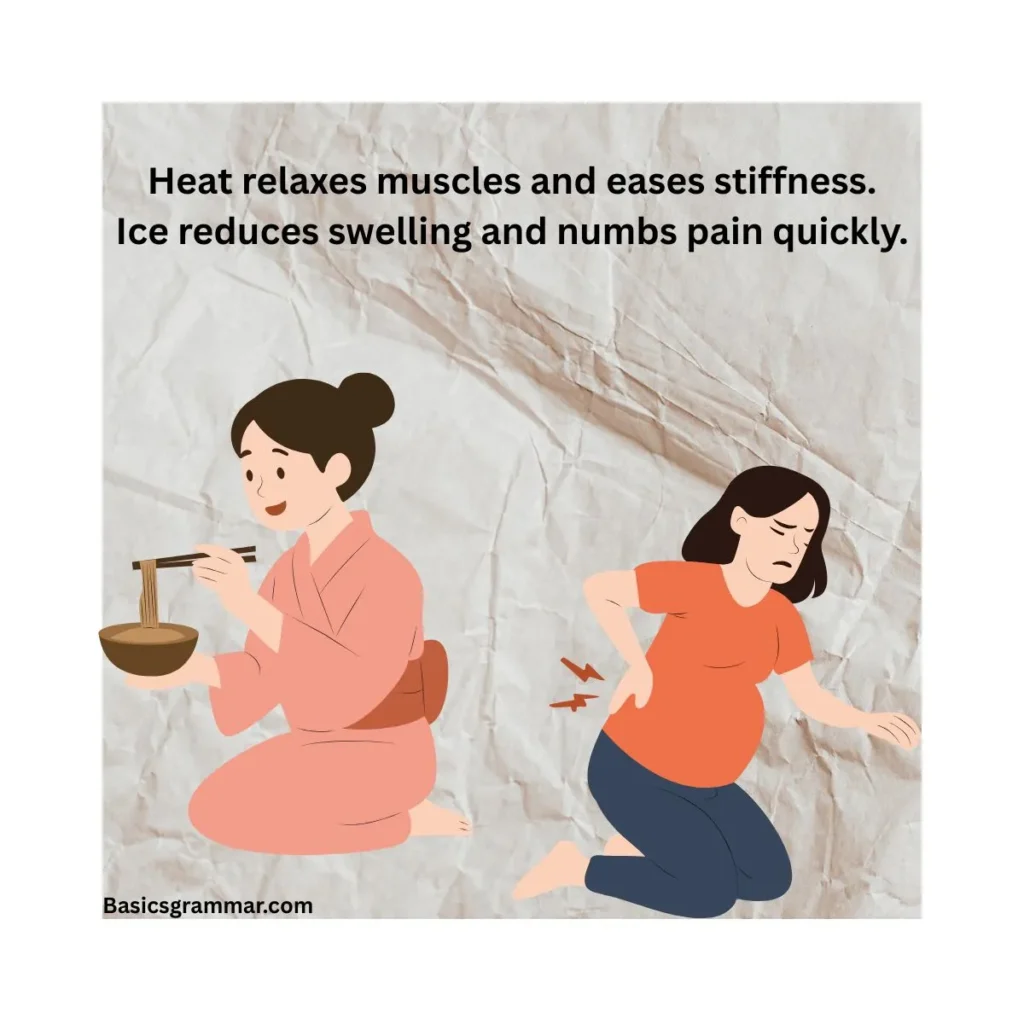
This section explains the difference between heat and ice therapy and when to use each based on the type and timing of back pain.
- When to use ice: Ice is best for recent injuries, swelling, or inflammation. It works by constricting blood vessels, reducing blood flow to the area, which lowers swelling and numbs pain. Ice is ideal within the first 24 to 72 hours after an injury or flare-up.
- When to use heat: Heat is best for chronic or long-term back pain, muscle stiffness, and tension. It relaxes muscles, increases blood circulation, and soothes soreness. Heat is helpful before activities like stretching or after long periods of inactivity.
- Why timing matters: Using heat too soon after injury can increase inflammation, while ice applied too late might slow healing by limiting blood flow.
- Examples: If you strained your back while lifting something heavy today, use ice. If you have ongoing stiffness from sitting at a desk all day, use heat.
Benefits, Risks, and Safe Use of Heat and Ice Therapy

This section covers the pros and cons of each therapy and how to apply them safely to avoid harm.
- Benefits of ice therapy: Reduces swelling, numbs pain, inexpensive and accessible.
- Risks of ice therapy: Can cause skin damage if applied too long or directly on skin, temporary relief only, not effective for stiffness.
- Benefits of heat therapy: Relaxes muscles, improves flexibility, helps chronic pain.
- Risks of heat therapy: May worsen inflammation if used too soon, risk of burns if too hot or left on too long.
- Safe usage tips: Always wrap ice packs in a cloth; limit sessions to 15-20 minutes; avoid sleeping with heating pads; keep heat at a warm (not hot) temperature.
- Common mistakes: Using heat on fresh injuries, overusing ice, ignoring skin reactions.
Best Recovery Plan for Back Pain Beyond Heat and Ice

This section suggests additional methods to manage and prevent lower back pain alongside heat and ice therapy.
- Combination therapy: Alternating ice and heat (contrast therapy) can reduce soreness and promote healing.
- Exercise and stretching: Gentle stretching and strengthening exercises improve muscle support and prevent future pain.
- Ergonomics: Maintaining good posture and using supportive chairs reduces strain.
- Physical therapy: Professional guidance can tailor treatments and exercises.
- Massage and relaxation: Help relieve muscle tension and improve circulation.
- When to seek medical help: Persistent pain, numbness, weakness, or loss of control need prompt medical evaluation.
- Lifestyle tips: Stress management, healthy weight, and regular activity support back health.
Ice or Heat for Back Pain – Quick Answer
Use ice for new injuries and swelling. Use heat for stiffness and long-term pain.
If your back pain just started or swelling is present, ice helps reduce inflammation. This is part of cold therapy for back injury and acute back pain relief.
If your muscles feel tight or sore, heat improves blood flow and relaxes muscles. This works well for chronic lower back pain treatment and back muscle stiffness relief.
Example:
- Hurt your back lifting something → use ice.
- Back feels stiff after sitting long → use heat.
Both methods are part of heat vs ice therapy and common back pain home remedies.
The Origin of Ice or Heat for Back Pain
The practice of using temperature for healing is very old. Ancient cultures used hot stones or cold water for pain. Modern medicine later explained these methods using science.
Cold therapy, also known as cryotherapy treatment, helps reduce swelling and slow nerve signals. Heat therapy improves circulation and muscle relaxation.
Today, doctors combine both under hot and cold therapy, often used in sports recovery and home treatment.
The phrase heat or ice for back pain became popular as people searched for simple back pain treatment at home options.
British English vs American English Spelling
There is no spelling difference in “ice” or “heat,” but usage and treatment advice can vary slightly.
| American English Term | British English Term | Meaning |
|---|---|---|
| Heating pad | Heat pad | Device for heat therapy |
| Ice pack | Ice pack | Cold compress tool |
| Physical therapy | Physiotherapy | Rehabilitation treatment |
| Therapy | Therapy | Treatment method |
Which Spelling Should You Use?
Use words based on your audience.
- US readers prefer terms like heating pad and physical therapy.
- UK readers often use physiotherapy and heat pad.
- Global blogs can use both for clarity.
For SEO, using both versions can help reach more readers searching for best therapy for back pain.
Common Mistakes with Ice or Heat for Back Pain
Mistake 1: Using heat right after injury.
Correction: Use ice first for back pain inflammation treatment.
Mistake 2: Applying ice too long.
Correction: Limit cold compress application to 15–20 minutes.
Mistake 3: Sleeping on heating pads.
Correction: Avoid burns; use heat safely.
Mistake 4: Using only temperature therapy without exercise.
Correction: Combine with physical therapy exercises and movement.
Ice or Heat for Back Pain in Everyday Examples
Email:
“I used a heating pad therapy last night, and my back feels better today.”
News:
“Athletes rely on ice therapy for faster injury recovery.”
Social Media:
“Gym injury again… ice or heat for back pain?”
Formal writing:
“Doctors recommend therapeutic temperature treatment for muscle spasm reduction.”
Ice or Heat for Back Pain – Google Trends & Usage Data
Search interest rises during winter and work-from-home periods. Countries with high search volume include the USA, UK, Canada, Australia, and India.
People commonly search during:
- Sports injuries
- Office work back pain
- Winter stiffness
- Exercise recovery
This shows strong demand for simple pain relief methods and home solutions.
Keyword Variation Comparison Table
| Keyword Variation | Meaning |
|---|---|
| Ice or heat for back pain | Main decision question |
| Heat vs ice therapy | Treatment comparison |
| Heat or ice for back pain | Alternative phrasing |
| Cold therapy for back injury | Ice treatment method |
| Heat therapy for muscle pain | Warm treatment use |
FAQs
Q: What’s better for back pain, ice or heat?
A: Use ice for recent injuries and swelling; use heat for muscle stiffness and chronic pain.
Q: What is the fastest way to cure lower back pain?
A: Rest, use ice or heat appropriately, and perform gentle stretches; consult a doctor if pain persists.
Q: How long do you alternate heat and ice for back pain?
A: Typically, apply ice for 10–15 minutes, wait 30–60 minutes, then apply heat for 15–20 minutes.
Q: What’s the worst thing to do for back pain?
A: Avoid prolonged inactivity and don’t ignore severe or worsening symptoms.
Q: What is the Big 3 for back pain?
A: The Big 3 exercises are the McGill Curl-Up, Side Plank, and Bird-Dog to strengthen core muscles.
Q: What is the most powerful painkiller for back pain?
A: Prescription medications like opioids are strong but should be used cautiously under medical advice.
Q: How to relieve back pain in 5 minutes?
A: Use ice or heat, perform gentle stretching, and maintain good posture.
Q: What is the Chinese method for back pain?
A: Traditional Chinese methods include acupuncture, cupping therapy, and herbal remedies.
Conclusion
Choosing between ice or heat for back pain depends on your situation. Ice works best when swelling or inflammation is present. It supports swelling and inflammation control and helps early healing. Heat is better for stiffness, muscle tightness, and long-term pain because it increases blood flow and supports the tissue recovery process.
For best results, combine temperature therapy with stretching, posture correction, and professional care when needed. Approaches like muscle tension relief, back muscle recovery, and rehabilitation therapy methods can prevent future pain.
Understanding when to use each method helps you recover faster and safely. If pain continues or worsens, seek medical advice. Smart choices today can protect your back for years.