
Many people stop when writing one simple sentence: “I have learnt…” or “I have learned…”? Both look correct. So which one should you use?
People search “learnt or learned” because English has many spelling differences. British and American English do not always match. Writers, students, bloggers, and professionals want to avoid mistakes in emails, exams, and work documents.
This confusion comes from English language spelling differences, changing grammar rules, and regional usage. Some countries prefer older verb forms. Others prefer modern spelling trends.
In this guide, you will get a quick answer, clear examples, grammar rules, and professional advice. We will also look at British vs American spelling learn, verb forms, usage data, and common mistakes.
By the end, you will confidently know which spelling to use in every situation.
Learnt vs Learned — Meaning, Usage, and Key Differences Explained
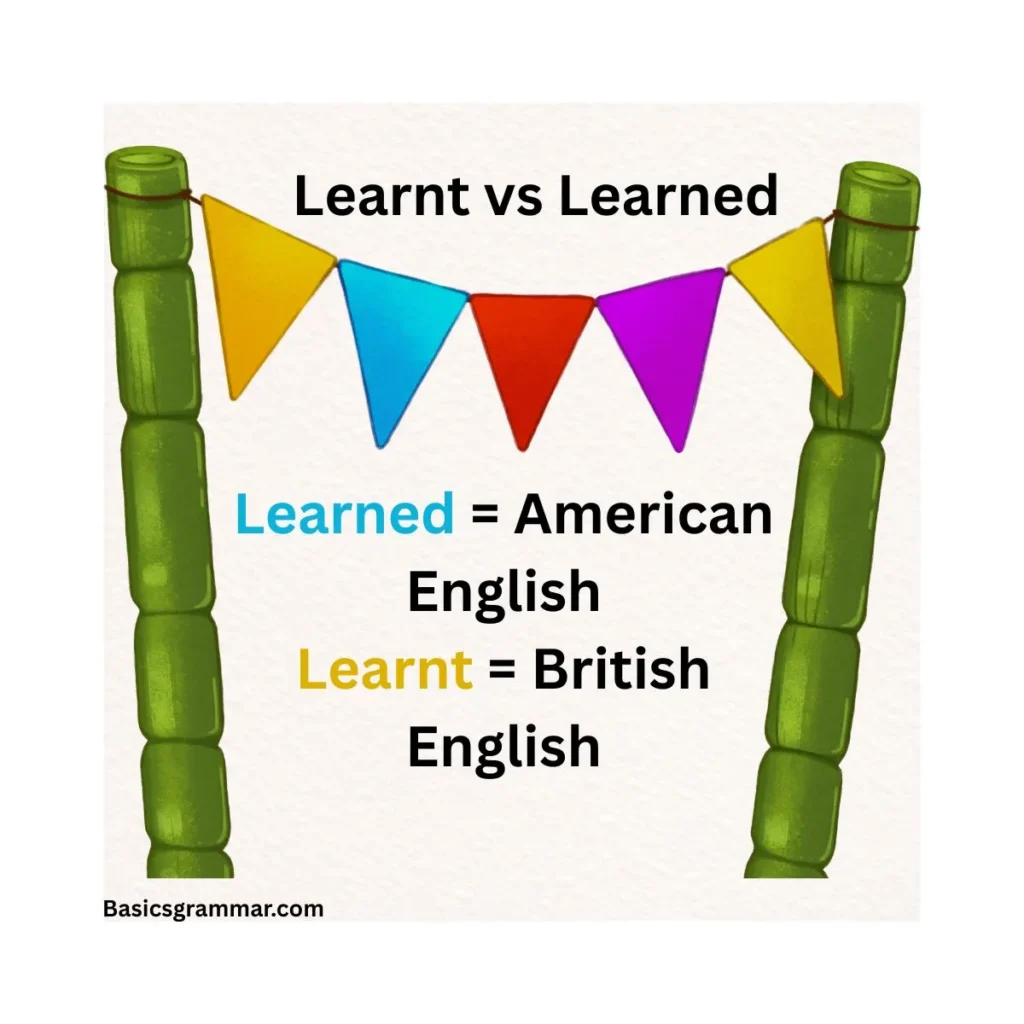
Learnt and learned are both correct past tense and past participle forms of the verb learn, meaning to gain knowledge or skills through study or experience. The choice depends mainly on region and writing style rather than meaning.
Learned is commonly used in American English and international writing, while learnt is preferred in British English and some Commonwealth countries. Both forms are correct, so writers should choose based on their audience and keep usage consistent throughout their writing.
Quick Quiz
Choose the correct option:
- She has ___ a new language. (learned / learnt)
- In American English, people usually write ___. (learned / learnt)
- UK writers commonly use ___. (learned / learnt)
- Both words have the same meaning. (True / False)
Answers: 1) learned/learnt, 2) learned, 3) learnt, 4) True.
Learnt or Learned – Quick Answer
Both learnt and learned are correct.
They are the past tense verb forms and past participle of learn.
Examples:
- I learned English in school.
- I learnt English in school.
- She has learned quickly.
- She has learnt quickly.
Difference:
- American English learned is more common in the US.
- British English learnt is common in the UK and many Commonwealth countries.
Both follow learn verb conjugation rules and show verb tense usage in English.
The Origin of Learnt or Learned
The verb learn comes from Old English leornian, meaning to gain knowledge.
In early English, many verbs changed form, creating irregular verbs in English. Over time, English simplified many verbs, adding -ed endings to make them regular.
So two patterns stayed:
- Regular form → learned
- Older irregular style → learnt
This created grammar spelling variations that still exist today.
Modern English accepts both forms. Usage depends on region and writing style.
British English vs American English Spelling
English spelling differs by region. This creates confusion in many words.
Examples:
- color / colour
- traveled / travelled
- learned / learnt
This shows English writing style differences and regional English spelling preference.
Comparison Table
| Usage Area | Preferred Form | Example Sentence |
|---|---|---|
| United States | learned | She learned French. |
| United Kingdom | learnt | She learnt French. |
| Australia | learnt (common) | He learnt quickly. |
| Canada | both used | She learned/learnt fast. |
| Global business English | learned | He learned the skill. |
This shows British English spelling differences and American English spelling rules in action.
Which Spelling Should You Use?
Choose based on audience.
Use learned if:
- Writing for US readers
- Writing academic or business English
- Writing for global audiences
- Following modern spelling trends
Use learnt if:
- Writing for UK readers
- Following British style guides
- Writing informal British content
In formal writing, consistency matters more than choice. This shows formal vs informal English usage differences.
Common Mistakes with Learnt or Learned
Writers often mix spellings incorrectly.
Mistake 1
❌ I learnt a lesson yesterday in an American essay.
✔ I learned a lesson yesterday.
Mistake 2
❌ She has learn the rule.
✔ She has learned the rule.
Mistake 3
❌ He learnted the skill.
✔ He learned the skill.
These errors happen when learners struggle with English verb conjugation patterns and grammar learning examples.
Learnt or Learned in Everyday Examples
Here are real-life uses.
Emails
“I learned a lot from the meeting.”
News writing
“The player learned from past mistakes.”
Social media
“I learnt something new today!”
Academic writing
“Students learned grammar through practice.”
Note: learned grammar usage appears more in academic writing, while learnt grammar usage appears more in British casual writing.
Also, remember:
- Learned can be an adjective.
- “He is a learned professor.”
Learnt or Learned – Google Trends & Usage Data
Usage trends show regional preference.
- USA searches mostly use learned
- UK, Australia, and New Zealand prefer learnt
- Global online content uses learned more often
This reflects global English language variations and modern teaching trends in English grammar education.
Pronunciation also differs slightly:
- Learned → lurnd
- Learnt → lernt
These small pronunciation differences learned learnt depend on accents.
Keyword Variation Comparison Table
| Form | Type | Example |
|---|---|---|
| learn | base verb | I learn daily. |
| learned | past tense / participle | I learned today. |
| learnt | past tense / participle | I learnt today. |
| learned (adj.) | adjective | A learned scholar. |
FAQs About Learnt or Learned
1. Is it correct to say learned or learnt?
Yes, both are correct; learned is American English, while learnt is common in British English.
2. Is it correct to say “I have learnt”?
Yes, it is correct in British English; Americans usually say “I have learned.”
3. Is it learned or learnt in the USA?
In the USA, learned is the standard spelling.
4. Why do people say “learnt”?
People say learnt because it follows traditional British English verb forms.
5. Was burned or was burnt?
Both are correct; burned is common in American English, burnt in British English.
6. What are some examples of learnt behavior?
Examples include language speaking, table manners, driving skills, and social habits learned from experience.
7. Is “I learned a lot” correct?
Yes, it is completely correct, especially in American English.
Conclusion
The confusion between learnt or learned comes from English history and regional usage. Both forms are correct. The choice depends on audience and writing style.
If your readers are in the United States or you write for international readers, learned is the safest choice. It matches modern spelling trends and professional writing standards. However, if your audience is British or follows Commonwealth English, learnt is perfectly natural.
Consistency is the most important lesson. Choose a writing style and stick with it. Errors in other terms can also be avoided by being aware of verb forms and spelling variations.
English offers for flexibility as languages change throughout time. Understanding these subtle variations improves the clarity and professionalism of your writing. You may now choose the right form with confidence in every circumstance.
