Quick Answer
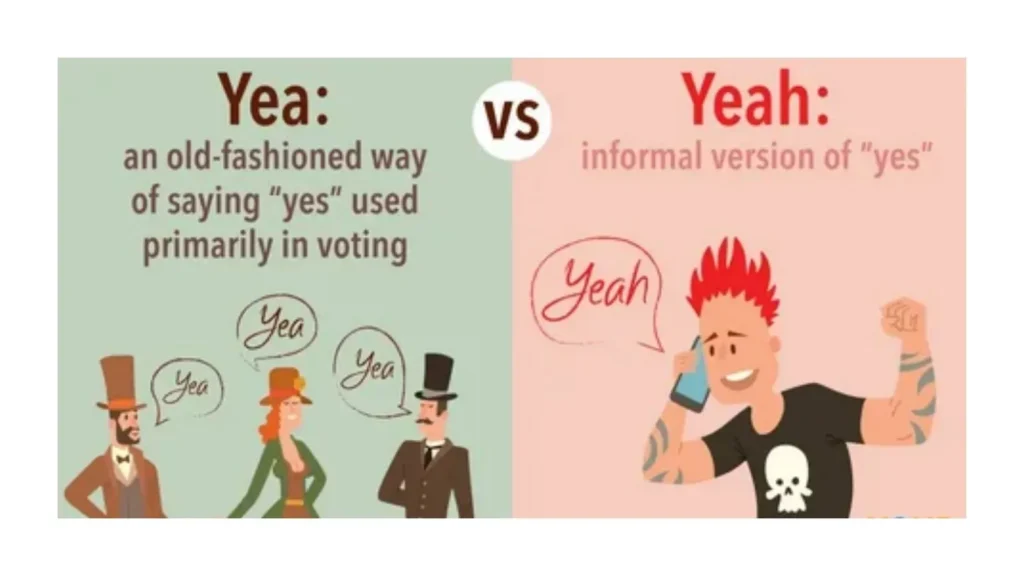
Yea and yeah are both real English words, but they have different meanings and uses.
- Yeah is an informal way of saying yes in everyday conversation.
- Yea is a formal word used mainly in voting, legal proceedings, and official decisions.
Examples
✅ Yeah, I’d love to join you.
✅ The committee voted yea on the proposal.
Using the wrong word can make your writing sound awkward or incorrect.
Meaning of Yea or Yeah
Although they sound similar, yea and yeah serve different purposes.
Meaning of Yeah
Yeah is an informal expression meaning yes.
Examples:
- Yeah, I understand.
- Yeah, that’s a good idea.
- Yeah, I’ll be there tomorrow.
It is commonly used in:
- Text messages
- Social media
- Casual conversations
- Informal emails
Meaning of Yea
Yea means an affirmative vote or agreement in a formal setting.
Examples:
- The motion passed with ten yea votes.
- Members voted yea on the bill.
It is often found in:
- Government proceedings
- Parliamentary voting
- Legal documents
- Official records
Why People Misspell Yea or Yeah
Many people confuse these words because they are pronounced similarly.
Common Reasons
Similar Sound
People hear “yeah” and assume the spelling is “yea.”
Fast Typing
Quick typing can cause mistakes, especially on mobile devices.
English Spelling Challenges
English contains many confusing spellings such as:
- address
- success
- accommodate
- necessary
Like these words, yea and yeah can be confusing because pronunciation does not always match spelling.
|See also: Nothing or not anything
Common Mistakes
❌ Yea, I agree with you.
✅ Yeah, I agree with you.
❌ The senate voted yeah on the proposal.
✅ The senate voted yea on the proposal.
Origin of Yea or Yeah
Origin of Yea
The word yea comes from Old English gēa, which meant “yes” or “indeed.”
It has been used for centuries in:
- Formal voting
- Religious texts
- Government records
Origin of Yeah
The word yeah developed later as a casual spoken form of yes.
It became popular in everyday English conversations and eventually appeared in written communication.
Historical Development
Over time:
- Yea remained formal.
- Yeah became informal and conversational.
Today, both words continue to exist but serve different purposes.
Everyday Examples
Informal Conversation
- Yeah, I know the answer.
- Yeah, let’s go.
Text Messages
- Yeah, sounds great.
- Yeah, see you later.
Formal Voting
- The board voted yea unanimously.
- Three members voted yea and one voted nay.
News Reports
|See more: Either or neither
- Legislators voted yea on the new budget proposal.
Common Mistakes
Mistake 1
❌ Yea, I would like coffee.
✅ Yeah, I would like coffee.
Mistake 2
❌ The council voted yeah.
✅ The council voted yea.
Mistake 3
Using yea and yeah interchangeably.
Remember:
- Yeah = casual yes
- Yea = formal vote
Interesting Facts
- The opposite of yea in voting is nay.
- Yeah is one of the most frequently used informal English words.
- Yea appears commonly in parliamentary records.
- Both words trace their origins back to older forms of English.
Summary
The difference between yea and yeah is simple once you understand their purpose. Yeah is the informal version of yes used in everyday speech and casual writing. Yea is a formal term used mainly during voting and official decision-making. Although they sound alike, they are not interchangeable. Choosing the correct word improves clarity and professionalism in your writing.
FAQs
Is yea the same as yeah?
No. Yeah means an informal yes, while yea is primarily used in formal voting.
When should I use yea?
Use yea when referring to official votes, legislative decisions, or formal approvals.
When should I use yeah?
Use yeah in casual conversations, texts, social media posts, and informal writing.
Is yea an old-fashioned word?
In everyday conversation, yes. However, it remains common in voting and official procedures.
Which word is more common?
Yeah is much more common because it is widely used in daily speech and online communication.
Conservation Awareness Message
Language is an important part of human culture and communication. Learning the correct use of words like yea and yeah helps preserve clarity, improves writing skills, and supports effective communication across generations. Small spelling distinctions can make a big difference in meaning and professionalism.

Hi, I’m Lily Brown, the voice behind Grammar Meaning! I make grammar simple and easy for everyone. I create helpful content on basicsgrammar.com.