English spelling can be tricky, especially when dealing with words that sound similar but have very different meanings. Oversight or oversite is one such pair that confuses many writers, students, and professionals. People often search for this keyword to clarify whether they are referring to a mistake due to neglect or a supervisory function.
The confusion arises because the words are homophones—they sound alike—but their meanings are distinct. Misusing them can change the meaning of a sentence, potentially affecting credibility in professional, academic, or formal writing. For instance, using “oversite” instead of “oversight” in a business report may appear unprofessional.
This guide will explain the meanings, spelling differences, examples, and proper usage of oversight and oversite, helping you write with confidence and accuracy. By the end, you’ll clearly understand when to use each word and why it matters for your writing.
Oversight or Oversite – Quick Answer
Quick Answer:
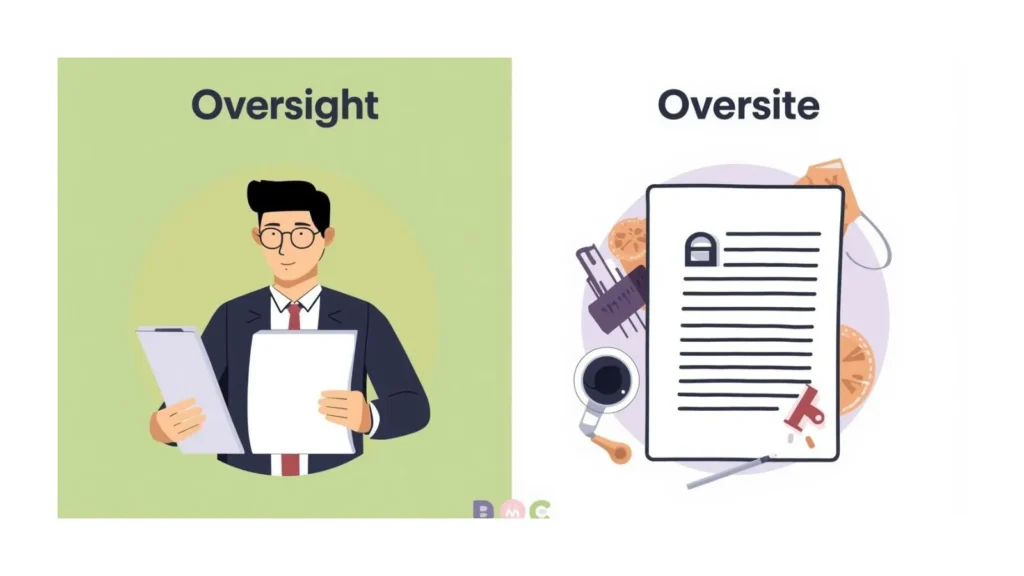
- Oversight = an unintentional mistake, or careful supervision
- Oversite = rarely used; sometimes a misspelling of oversight
Examples:
- “The accountant missed the error due to an oversight.”
- “The manager has oversight of the project.”
👉 Simple rule: Use oversight in almost all cases; oversite is uncommon and usually incorrect.
Meaning and Usage
Oversight
Oversight has two primary meanings:
- A mistake due to neglect:
- “It was an oversight that the invoice wasn’t sent on time.”
- Supervision or watchful care:
- “The committee provides oversight of financial operations.”
Oversite
- Oversite is rarely used in modern English. Most dictionaries mark it as a misspelling of oversight. Some niche sources may use it to mean “a site that is overseen,” but this is uncommon.
Rule of thumb: Stick to oversight for professional and general writing.
The Origin of Oversight or Oversite
The word oversight comes from the Old English roots: “over” + “sight,” originally meaning “to watch over”. Over time, the meaning evolved to include errors made due to missing details.
Oversite is derived from “over” + “site,” but this usage is not standard in modern English. Its rare usage can create confusion, reinforcing the importance of understanding the correct term.
British English vs American English Spelling
Interestingly, oversight and oversite are spelled the same in both British and American English when using the correct word. Unlike verbs with -ise/-ize endings (organise/organize, realise/realize), there is no regional spelling variation here.
| Word | British English | American English | Meaning |
|---|---|---|---|
| Oversight | oversight | oversight | Mistake or supervision |
| Oversite | oversite | oversite | Rare, usually incorrect |
Similar Verbs With Regional Differences
| British English | American English |
|---|---|
| organise | organize |
| realise | realize |
| recognise | recognize |
| apologise | apologize |
| enrol | enroll |
Unlike these verbs, oversight does not change spelling between regions. The key issue is meaning, not convention.
Spell Checkers and Language Settings
Modern spell checkers automatically detect oversight as correct and flag oversite as potentially wrong. However, if you are using niche documents where oversite is occasionally valid, your spell checker might not recognize the context.
Tip: Always set your word processor to your preferred English variant (UK or US). Even though oversight is universal, spell checkers can help catch context-based errors or homophone mistakes.
Why Choosing the Correct Word Matters
Using oversight or oversite correctly ensures professionalism, clarity, and credibility. Misusing the word can:
- Confuse your audience
- Make formal documents appear careless
- Lead to misinterpretation of important information
Example:
- ❌ Incorrect: “The manager had oversite of the project.”
- ✔ Correct: “The manager had oversight of the project.”
Proper usage demonstrates attention to detail, especially in professional, academic, or editorial contexts.
Oversight or Oversite in Everyday Examples
Emails:
- “Please review the report for any oversight before submission.”
Social Media:
- “Oops! That was an oversight on my part 😅”
News Articles:
- “The financial committee exercised strict oversight of the budget.”
Academic Writing:
- “The study revealed a minor oversight in data collection.”
Common Mistakes With Oversight or Oversite
| Mistake | Correct Usage | Explanation |
|---|---|---|
| Oversite instead of oversight | Oversight | “Oversite” is rarely correct; use oversight in almost all cases |
| Confusing supervision vs error | Oversight | Context determines whether it means a mistake or supervision |
| Misspelling in formal reports | Oversight | Ensures professionalism |
Google Trends & Usage Data
- Oversight is widely searched and used globally.
- Oversite has negligible usage and appears mainly as a typo.
- Most searches are about oversight meaning or oversight vs oversight in supervision vs mistake.
Key insight: Use oversight to align with search intent, professional writing, and clarity.
Conclusion
Understanding oversight or oversite is essential for clear and professional communication. While both words sound similar, oversight is the correct and widely accepted spelling for almost all contexts. It can refer to a mistake due to neglect or a supervisory role, whereas oversite is rare and often considered incorrect.
Using the wrong word can confuse readers and affect credibility, especially in business, academic, or formal writing. By consistently using oversight and understanding its context, you can communicate more accurately and professionally. Awareness of homophones like this one improves writing, prevents errors, and demonstrates attention to detail.
Always double-check your writing, rely on spell checkers, and remember that oversight is the safe, universally accepted choice.

Hi, I’m Mark Cole, the voice behind Grammar Meaning! I explain tricky grammar rules in simple ways. I write useful guides on basicsgrammar.com.