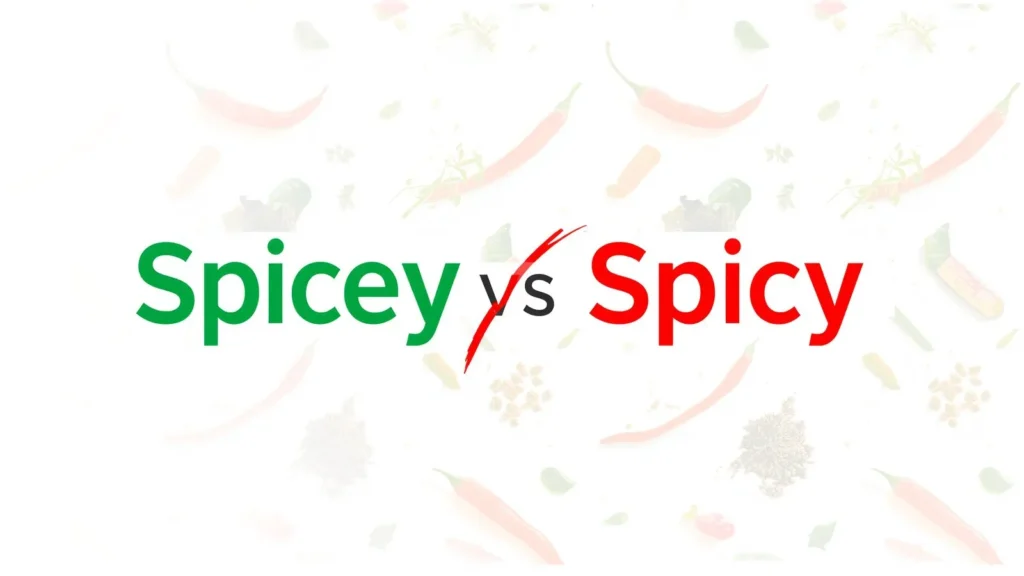
Have you ever typed “spicey” and wondered if it’s right? You are not alone. Many people search for “spicey or spicy” because both look correct at first glance. English spelling can be tricky, especially when words sound the same but are written differently.
This confusion often happens when writing recipes, food reviews, or social media posts. A small spelling mistake can affect your writing quality, or even professionalism. That’s why people want a clear and simple answer.
In this guide, you will learn the correct spelling, why the confusion exists, and when to use the word properly. We will also look at spelling rules, common mistakes, and real-life examples. By the end, you will never confuse “spicey” and “spicy” again.
Spicey or Spicy – Quick Answer
The correct spelling is “spicy.”
“Spicey” is incorrect and not used in standard English.
✅ Correct: The curry is very spicy.
❌ Incorrect: The curry is very spicey.
Why?
When adding “-y” to “spice,” the “e” is dropped → spice + y = spicy
The Origin of Spicey or Spicy
The word “spicy” comes from the noun “spice.” The term “spice” has roots in Old French and Latin words related to aromatic or flavorful substances.
Over time, English formed adjectives by adding “-y” to nouns. When this happens, the final “e” is often removed.
Example pattern:
- spice → spicy
- ice → icy
- juice → juicy
The incorrect form “spicey” likely comes from people trying to keep the original word “spice” unchanged. But English spelling rules remove the “e” in this case.
British English vs American English Spelling
Good news: Both British and American English use “spicy.” There is no difference here.
| Version | Correct Spelling | Example |
|---|---|---|
| American English | Spicy | I love spicy food |
| British English | Spicy | This sauce is spicy |
| Incorrect Form | Spicey | ❌ Not correct |
👉 Unlike words like “color/colour,” this word stays the same worldwide.
Which Spelling Should You Use?
You should always use “spicy”, no matter your audience.
- US audience: Use “spicy”
- UK audience: Use “spicy”
- Global audience: Use “spicy”
There is no situation where “spicey” is correct. Using the wrong spelling may harm your credibility, especially in blogs, emails, or professional writing.
Common Mistakes with Spicey or Spicy
Here are common errors people make:
❌ Writing “spicey” instead of “spicy”
✔ Fix: Always drop the “e”
Confusing with similar words❌
✔ Example: “nice → nicey” (wrong) → “nicely” (correct form)
❌ Overthinking spelling rules
✔ Tip: If the word ends in “-ce,” drop the “e” before adding “-y”
Spicey or Spicy in Everyday Examples
Here’s how “spicy” is used in daily life:
Emails:
- The dish you recommended was very spicy. Thank you!
Social Media:
- This burger is so spicy 🔥
News Writing:
- The restaurant is famous for its spicy dishes.
Formal Writing:
- The cuisine is known for its rich and spicy flavors.
Spicey or Spicy – Google Trends & Usage Data
Search data shows that:
- “Spicy” is the correct and widely used spelling worldwide
- “Spicey” is searched often due to spelling confusion
- Countries like the US, UK, India, and Pakistan all prefer “spicy”
👉 “Spicey” appears mainly in typo searches, not real usage.
Comparison Table: Spicey vs Spicy
| Word | Correct? | Usage | Example |
|---|---|---|---|
| Spicy | ✅ Yes | Standard English | Spicy noodles |
| Spicey | ❌ No | Misspelling | Not correct |
FAQs
1. Is “spicey” ever correct?
No. It is always incorrect.
2. Why do people write “spicey”?
Because they try to keep the base word “spice” unchanged.
3. Is “spicy” used in both UK and US English?
Yes. It is the same in both.
4. What is the rule behind “spicy”?
Drop the “e” before adding “-y.”
5. Is “spicy” only used for food?
No. It can describe anything exciting or bold.
6. Can “spicy” be used in formal writing?
Yes, it is fully correct and acceptable.
7. What are similar words to “spicy”?
Hot, flavorful, zesty, tangy.
Conclusion
The confusion between “spicey or spicy” is common, but the answer is simple. The correct spelling is always “spicy.” The incorrect version “spicey” comes from misunderstanding English spelling rules.
When forming adjectives, English often drops the final “e” before adding “-y.” This is why “spice” becomes “spicy.” The rule is clear and applies to many similar words. Understanding this pattern can help you avoid other spelling mistakes too.
There is no difference between British and American English in this case. Both use “spicy,” making it the universal choice. Whether you are writing a blog, email, or social media post, using the correct spelling improves clarity and professionalism.
To stay accurate, always remember:
👉 Spicy is correct. Spicey is wrong.

Hi, I’m Mark Cole, the voice behind Grammar Meaning! I explain tricky grammar rules in simple ways. I write useful guides on basicsgrammar.com.