
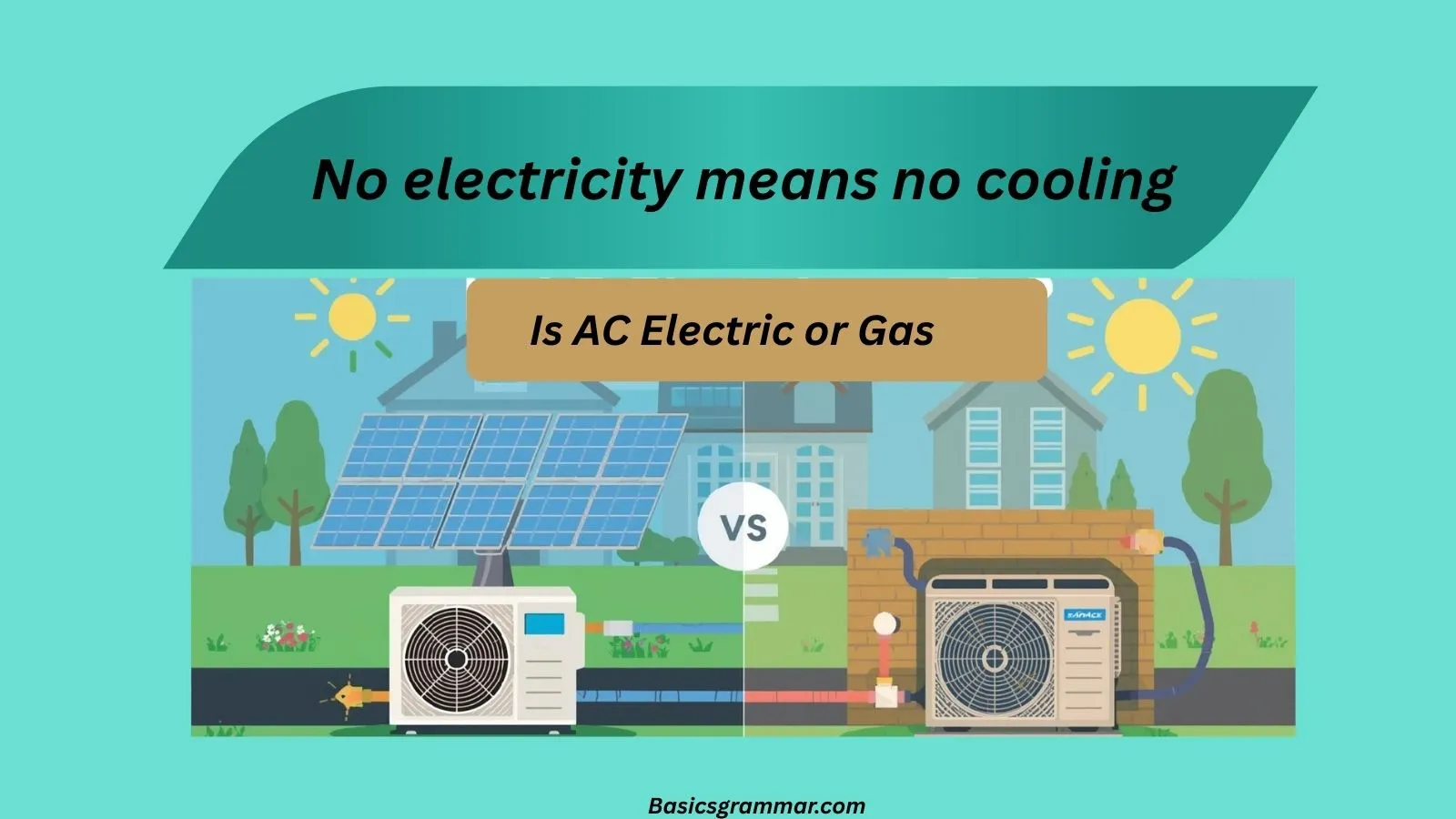
Because air conditioning systems might be perplexing, many people look for “is AC electric or gas.” Wires, outdoor units, and occasionally gas lines are visible in the vicinity. That raises the question of what actually drives an air conditioner. Is it power? Is that gas? Or both?
Homeowners, renters, and anyone purchasing an air conditioner for the first time frequently ask this question. Gas expenses are a concern for some people. Others are curious about how their electricity bills will change. The fact that the gas used by AC systems is not fuel adds to the confusion. It is simple to confuse things.
That confusion is swiftly and simply resolved in this article. First, you will receive a direct response. After that, you will discover how AC systems operate, the source of the confusion, and how people discuss this subject on a regular basis. This guide provides all the information you need, whether you’re looking for a quick fix, a more thorough explanation, or useful guidance.
How Power Supply Affects AC Performance

The power supply plays a direct role in how well an air conditioner works. An AC needs a stable and correct voltage to run smoothly. When the power supply is weak or unstable, the AC cannot perform at its best.
Low voltage can cause slow cooling, frequent shutdowns, or system errors. High voltage can damage internal parts like the compressor and control board. Power cuts also interrupt the cooling cycle, making the AC work harder when electricity returns.
A proper power supply helps the AC cool faster, run quietly, and last longer. This is why many manufacturers recommend voltage stabilizers or surge protectors, especially in areas with unstable electricity.
The Role of Electricity in Cooling Systems
Electricity is the main power source for all standard air conditioning systems. It runs the compressor, fans, sensors, and control system that make cooling possible.
Without electricity, the AC cannot circulate refrigerant or remove heat from the room. Even though refrigerant gas is used inside the system, it does not work without electrical power.
Electricity allows the AC to control temperature, airflow, and humidity. From turning the unit on to maintaining a steady indoor climate, every cooling function depends on electric power.
Does AC and Heat Use Gas in a Car
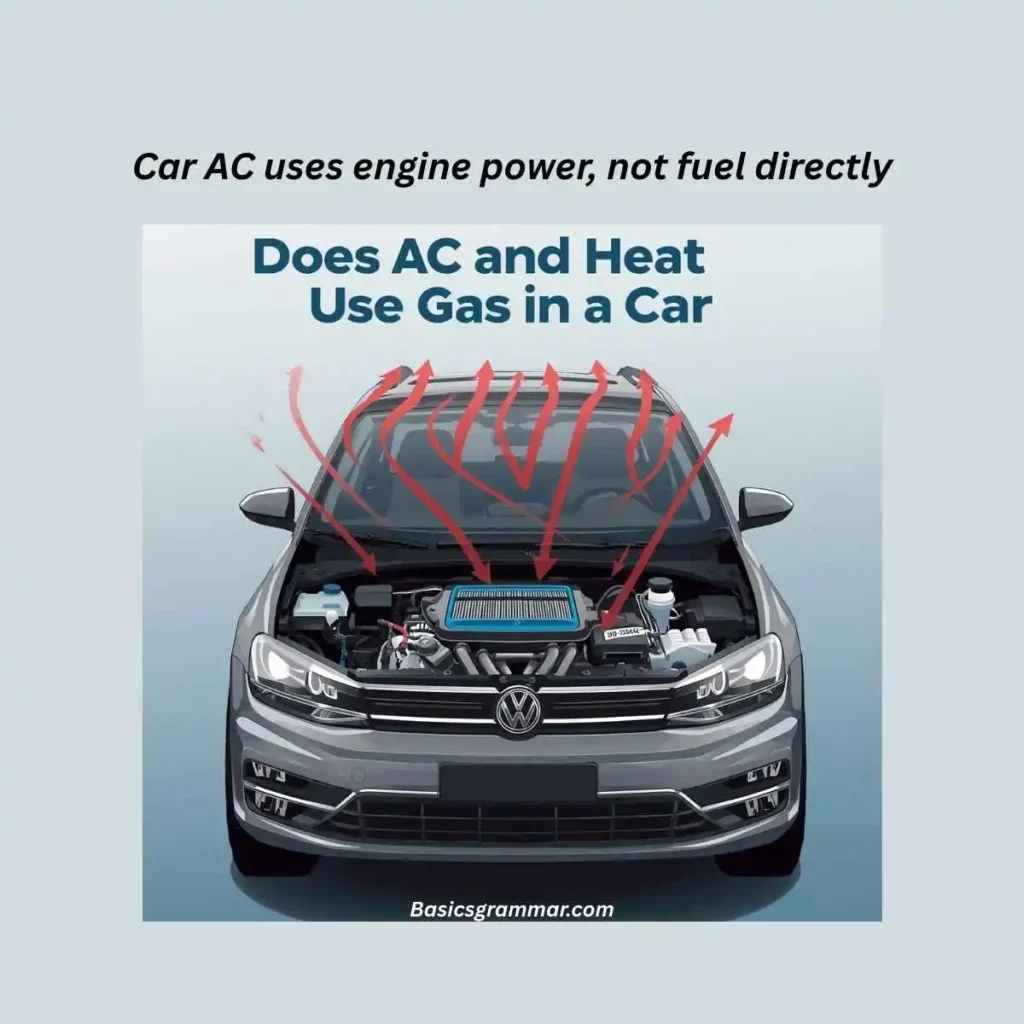
In a car, AC and heat work differently and do not use fuel in the same way.
The car air conditioner (AC) runs on engine power and electricity, not gasoline directly. When the engine is running, it turns the AC compressor through a belt system or electric motor. The AC also uses refrigerant gas, but this gas does not act as fuel. It only helps move heat out of the cabin.
The car heating system does not use extra gas. It uses waste heat from the engine. When the engine burns gasoline, it produces heat. The heating system captures this heat and blows warm air into the car using a heater core.
However, using AC can slightly increase fuel consumption because the engine works harder to power the compressor. Heating usually does not increase gas usage unless the engine is still warming up.
Is AC Electric or Gas – Quick Answer
An AC is electric, not gas.
Air conditioners run on electricity. They use electric power to run the compressor, fan, and control system. They do not burn gas to create cooling.
Why people get confused:
AC units contain a refrigerant gas, but this gas does not create energy. It only moves heat from inside to outside.
Simple example:
- Your AC stops working during a power outage → proof it needs electricity.
- No gas line connects directly to a standard AC unit.
The Origin of “Is AC Electric or Gas”
The phrase “is AC electric or gas” comes from modern home energy questions. As homes added both gas and electric systems, people began to compare them.
In older homes, gas powered heating systems. Cooling came later and used electricity. Over time, people saw gas pipes near HVAC systems and assumed AC might use gas too.
There is no spelling variation in this keyword. It is a full question, not a single word. The confusion is about energy source, not language.
British English vs American English Spelling
There is no spelling difference for this keyword in British or American English.
Both regions use:
- AC
- air conditioner
- electric
Comparison Table
| Term | American English | British English |
|---|---|---|
| AC | AC | AC |
| Air conditioner | Air conditioner | Air conditioner |
| Electric AC | Electric AC | Electric AC |
The meaning stays the same in all English-speaking countries.
Which Spelling Should You Use?
Use “is AC electric or gas” exactly as written when:
- Writing for a global audience
- Targeting search engines
- Answering common homeowner questions
For the US, UK, and Commonwealth countries, the same wording works well. There is no need to localize spelling for this keyword.
Common Mistakes with “Is AC Electric or Gas”
Here are common errors people make:
- ❌ “AC runs on gas”
✅ AC runs on electricity - ❌ “Refrigerant gas is fuel”
✅ Refrigerant moves heat, not power - ❌ “AC and gas heater work the same way”
✅ They use different energy sources - ❌ “No electricity needed for AC”
✅ Electricity is required at all times
“Is AC Electric or Gas” in Everyday Examples
Email:
“Our AC bill is high because the unit is electric.”
News:
“Power outages affected electric air conditioners during the heatwave.”
Social Media:
“Fun fact: AC uses electricity, not gas.”
Formal Writing:
“Residential air conditioning systems operate using electrical energy.”
Is AC Electric or Gas – Google Trends & Usage Data
Search interest for “is AC electric or gas” is highest in:
- Hot climate countries
- Summer months
- Areas with mixed gas and electric homes
People usually search this term when:
- Buying a new AC
- Seeing high energy bills
- Comparing heating vs cooling costs
The keyword is informational, not commercial. Users want clarity, not sales.
Keyword Variations Comparison Table
| Variation | Meaning |
|---|---|
| Is AC electric or gas | Main user question |
| Electric air conditioner | Correct system type |
| Gas AC | Incorrect term |
| AC power source | General explanation |
| Does AC use gas | Common confusion |
FAQs
1. Does an AC use gas to cool air?
No. It uses electricity. The gas inside only transfers heat.
2. Why is there gas inside an AC?
The refrigerant gas absorbs and releases heat.
3. Can an AC work without electricity?
No. Electricity is required.
4. Is AC cheaper than gas cooling?
AC is electric. Gas cooling is rare and different.
5. Do HVAC systems use gas?
Heating may use gas. Cooling does not.
6. Is a window AC electric or gas?
Electric only.
7. Does AC increase gas bills?
No. It increases electricity bills.
Conclusion
Is AC gas or electric, then? The solution is straightforward. Electricity powers air conditioners. They don’t run on gas power or burn gas. The system’s refrigerant gas, which is not fuel, is the source of the mistake.
Knowing this makes it easier for you to control your energy costs. Speaking with technicians or purchasing a new air conditioner both benefit from it. Your air conditioner is dependent on energy if it shuts off during a blackout.
This keyword does not have any regional linguistic problems or spelling variations. Globally, the meaning remains constant. Be unambiguous whether writing or speaking, and use the phrase “electric air conditioner” wherever necessary.
Time, money, and stress can all be saved by knowing the right response. You can confidently describe how air conditioning systems actually operate the next time someone asks..