“Is it better to quit or be fired?” is one of the most stressful career concerns.
It’s likely that something is wrong at work if you’re asking. Perhaps there are rumors of layoffs, your manager appears aloof, or your performance is being evaluated. After losing your job, you can be concerned about your financial security, mental well-being, or professional reputation.
People look up this question because it has a complicated answer. Although quitting seems safer for your reputation, being fired might result in severance pay or unemployment benefits. Confusion quickly increases when anxiety, burnout, and worries about work security are added.
That misconception is cleared up in this article.
You’ll receive a prompt, frank response, real-world examples, typical blunders to steer clear of, and expert guidance on making career decisions, exiting a job, and long-term career repercussions. This book helps you make decisions with clarity rather than panic, whether you’re planning your next step or weighing voluntary resignation against firing.
Is It Better to Get Fired or Quit to Collect Unemployment?
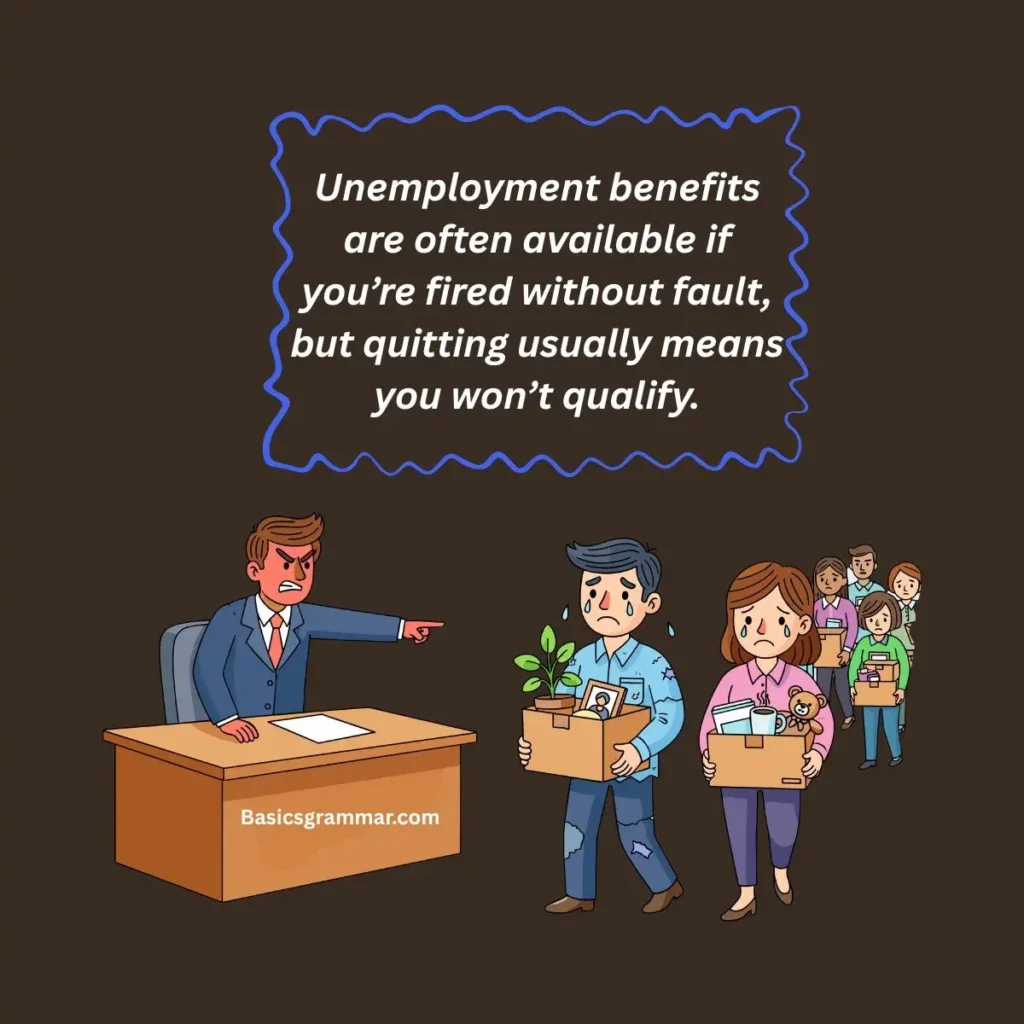
Getting fired is usually better than quitting if your goal is to collect unemployment benefits. In most cases, unemployment is only available when you lose your job through no fault of your own, such as layoffs or role elimination.
Quitting voluntarily often disqualifies you from benefits unless you can prove a valid reason, like workplace harassment, health issues, or unsafe conditions. If financial support is your priority, being fired (without misconduct) is usually the safer choice.
Is It Better to Resign or Be Made Redundant?
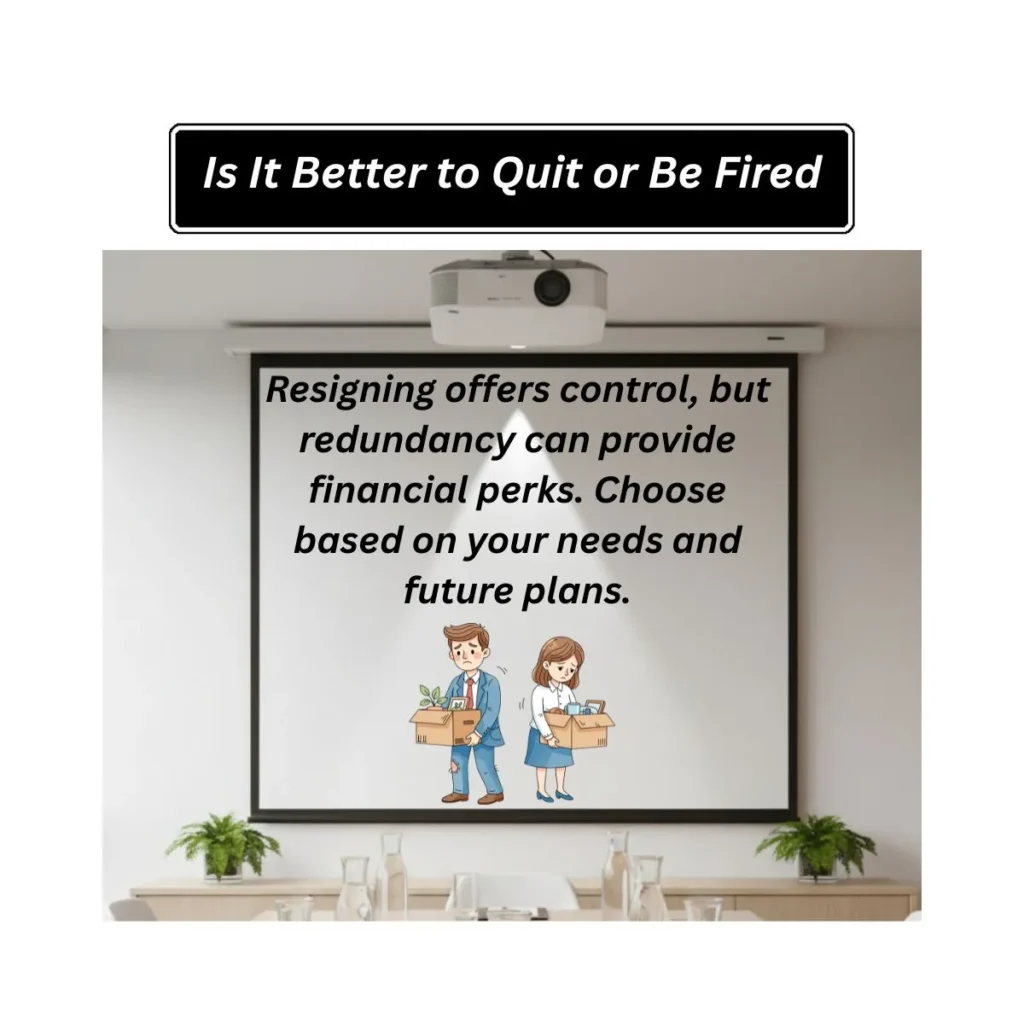
Being made redundant is usually better than resigning because redundancy often comes with severance pay, notice benefits, and unemployment eligibility. It also shows the job ended for business reasons, not performance.
Resigning gives you more control over timing but may mean losing financial benefits and support. If job security and compensation matter, redundancy is often the safer option.
Is It Better to Quit or Be Fired? – Quick Answer
Short answer:
👉 It depends on what matters most—your reputation or your finances.
- Quit if protecting your professional image, mental health, or long-term career is your top priority.
- Get fired if you need unemployment compensation eligibility, possible severance, or legal protection.
Example:
- A senior manager may quit to protect reputation and network.
- An early-career worker may wait to be fired to secure income support.
There is no one-size-fits-all answer.
The Origin of “Is It Better to Quit or Be Fired?”
This phrase comes from modern workplace culture, not language history.
It evolved as job markets became competitive and employment laws tied benefits to involuntary vs voluntary job exit.
The question reflects real fears:
- Job termination consequences
- Career impact of getting fired
- Financial survival after losing a job
Unlike idioms, there are no spelling variations—the confusion lies in decision-making, not language.
British English vs American English Spelling
There is no spelling difference between British and American English for this phrase. However, employment terms differ slightly.
Comparison Table
| Term | American English | British English |
|---|---|---|
| Quit | Quit | Resign |
| Fired | Fired | Dismissed |
| Laid off | Laid off | Made redundant |
| Severance | Severance pay | Redundancy pay |
| Unemployment | Unemployment benefits | Jobseeker’s Allowance |
Which Term Should You Use?
- US audience: “Quit or be fired,” “unemployment benefits,” “severance”
- UK/Commonwealth: “Resign or be dismissed,” “redundancy,” “benefits”
- Global readers: Use both terms together for clarity
Example: “Resign (quit) or be dismissed (fired)”
Common Mistakes with “Quit or Be Fired”
❌ Quitting without checking employee resignation rights
Error Assuming being fired always ruins your career
❌ Ignoring mental health and burnout
Error Not planning a professional exit strategy
❌ Failing to negotiate severance before termination
✔ Always review contracts and local labor laws
✔ Prepare an exit plan before acting
“Is It Better to Quit or Be Fired?” in Everyday Examples
Email:
“I’ve decided to resign to focus on long-term career growth.”
News:
“The executive resigned ahead of expected termination.”
Social media:
“Sometimes quitting saves your peace before burnout hits.”
Formal writing:
“Voluntary resignation often offers more control over professional reputation.”
Is It Better to Quit or Be Fired? – Google Trends & Usage Data
Search interest spikes during:
- Economic downturns
- Layoff seasons
- Performance review cycles
Top regions:
- United States
- Canada
- United Kingdom
- Australia
Most searches relate to:
- Quit vs fired
- Unemployment benefits quitting vs fired
- Quitting a job without another job
- Fired from job what to do next
Quit vs Fired – Keyword Comparison Table
| Variation | Meaning | Best Use |
|---|---|---|
| Quit vs fired | Core question | Blogs & guides |
| Resign or be terminated | Formal | Legal & HR |
| Fired vs laid off | Cause clarity | Benefits & law |
| Voluntary resignation vs termination | Legal distinction | Contracts |
| Quitting a job vs getting fired | User intent | Career advice |
FAQs
- Is it better to get fired or quit?
It depends—quitting protects reputation, while getting fired may allow unemployment benefits. - Why do employers want you to quit instead of firing you?
It reduces legal risk and saves the company severance or unemployment costs. - Can future employers see if I was fired?
No, they usually only see dates and job titles unless you tell them or references share details. - Does getting fired look bad on a resume?
Not always—how you explain it matters more than the firing itself. - Is my career ruined if I get fired?
No, many successful people were fired and still built strong careers. - What is the 3 month rule in a job?
It means giving a new job at least 90 days before deciding if it’s a good fit. - How long is too long to stay in one position?
Usually 3–5 years is normal unless you’re still learning and growing. - Should you list a job you were fired from on a resume?
Yes, if it fills a gap—focus on skills and results, not the termination.
Conclusion
So, is it preferable to be fired or quit?
Your job stage, financial requirements, and emotional health will determine the best response.
You gain control, safeguard your reputation, and experience less emotional strain at work when you quit. Severance and unemployment compensation may offer temporary financial comfort in the event of a dismissal. Your response determines your future, not either choice.
Making a strategic career decision rather than an emotional one is the best course of action. Examine your legal rights, evaluate any concerns about work stability, make plans for your departure, and get ready for your future move. Resigning or being fired should be handled calmly and professionally.
Failures do not equate to career setbacks. They are pivots. This moment has the potential to be the beginning of something better with careful planning.
