
Many writers get confused between totalling or totaling when writing online content, emails, and reports. This confusion happens because of British vs American spelling, spelling differences, and changing English spelling rules. Understanding the double consonant rule and regional spelling variations helps writers choose correct forms for global audiences. This guide explains why both versions exist, when to use each, and how professionals maintain consistent spelling across blogs, academic work, and business communication, ensuring clarity, credibility, and search visibility for readers seeking quick grammar solutions in modern digital writing spaces worldwide, avoiding errors that reduce trust and weaken professional communication today, especially for multilingual online content creators everywhere seeking accuracy daily.
Totalling or Totaling Examples
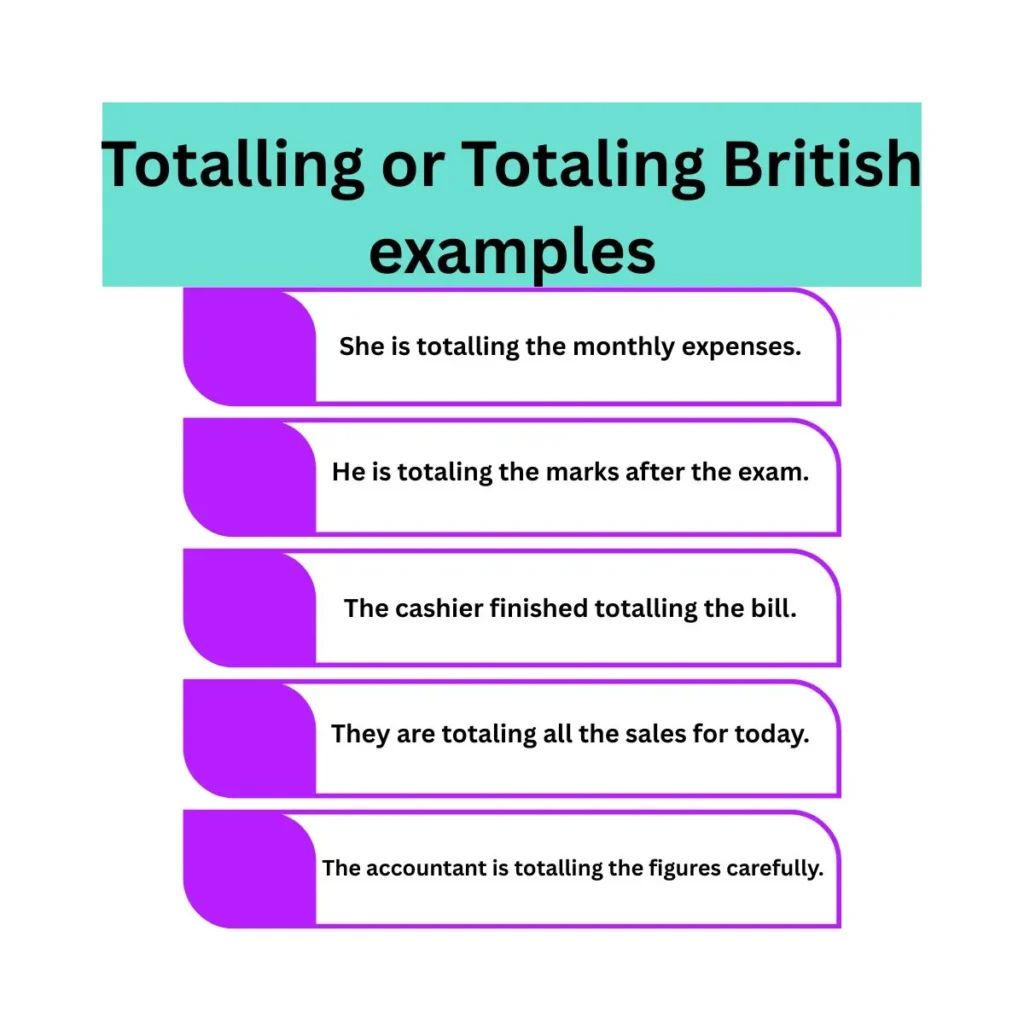
In British English, the preferred spelling is “Totalling” (with double L). It is used when talking about adding numbers together or calculating a final amount. The meaning is the same as American English “totaling,” only the spelling is different.
British English Examples
They finished totalling the bill at the counter.
She is totalling the weekly expenses.
The teacher is totalling the students’ marks.
He spent the evening totalling all the receipts.
The figures are totalling more than expected.
The Final Rule to Remember
The final rule is simple: match the spelling to your audience.
Use “totaling” for American English and “totalling” for British English.
Both spellings mean the same thing, and neither is wrong. Problems only arise when writers mix both forms in one piece of writing. Pick one style, stay consistent, and your writing will look clear, professional, and correct every time.
Use in Business and Accounting
In business and accounting, both “totalling” and “totaling” are correct, but the spelling you choose should match your regional and professional standards. The meaning is the same in all cases: adding numbers to reach a final amount.
In American business documents—such as invoices, financial reports, balance sheets, and tax records—“totaling” is the standard spelling. It is commonly used in accounting software, spreadsheets, and official reports.
Example: The expenses are totaling $25,000 for this quarter.
In British and Commonwealth business writing, “totalling” is preferred. It appears in formal reports, audits, contracts, and financial summaries.
Example: The costs are totalling £25,000 for the year.
The most important rule in business writing is consistency. Mixing both spellings in one report can look unprofessional. Always follow your company’s style guide or the regional market you are working in to maintain clarity and credibility.
Simple Rule for Beginners
For beginners, the rule for totalling or totaling is very easy. Both spellings are correct, and both mean adding numbers to get a final amount. The only difference is where the spelling is used.
If you are writing for an American audience, use “totaling.”
If you are writing for a British or Commonwealth audience, use “totalling.”
You do not need to worry about meaning, grammar, or form. Just choose one spelling based on your audience and use it the same way everywhere in your writing. Avoid mixing both spellings in one document. This simple habit will make your English look clear, professional, and confident.
Quick Answer
Both spellings are correct.
- Totalling → British English
- Totaling → American English
Examples:
- UK: The costs are totalling £500.
- US: The costs are totaling $500.
The Origin of Totalling or Totaling
The word total comes from the Latin totalis, meaning “whole” or “entire.”
The spelling difference appears when adding -ing:
- British English often doubles the final “l”
- American English usually uses one “l”
This pattern also appears in words like:
- Travelling (UK) / Traveling (US)
- Cancelling (UK) / Canceling (US)
The difference is based on spelling rules, not meaning.
British English vs American English Spelling
British and American English follow different rules for adding endings to verbs ending in “l.”
Comparison Table
| Form | British English | American English |
|---|---|---|
| Base | total | total |
| -ing | totalling | totaling |
| -ed | totalled | totaled |
Both versions mean the same thing.
Which Spelling Should You Use?
Choose based on your audience:
- United States → Use totaling
- UK, Australia, Canada → Use totalling
- Global or mixed audience → Pick one style and stay consistent
Tip:
Follow the spelling style used by your company, school, or publication.
Common Mistakes with Totalling or Totaling
Mistake 1
❌ Mixing styles in one document
✅ Use only totalling or totaling, not both
Mistake 2
Error Thinking one spelling is wrong
Write Both are correct—context matters
Mistake 3
❌ Assuming grammar tools always fix it
✅ Spellcheck may not change regional spelling
Totalling or Totaling in Everyday Examples
Emails
- “The invoice is totaling $1,200.”
- “Expenses are totalling £1,200.”
News
- “Damages are totalling millions.”
Social Media
- “My bills are totaling way too much!”
Formal Writing
- “The report shows costs totalling over €10,000.”
Google Trends & Usage Data
Search data shows:
- Totaling is more common in the United States
- Totalling is more popular in the UK and Commonwealth countries
The usage depends on regional writing standards, especially in finance, education, and journalism.
Totalling vs Totaling – Side-by-Side Comparison
| Feature | Totalling | Totaling |
|---|---|---|
| English Type | British | American |
| Meaning | Adding amounts | Adding amounts |
| Usage Area | UK, Commonwealth | United States |
| Correct | Yes | Yes |
FAQs: Totalling or Totaling
Q: Which is correct, totaling or totalling?
A: Both are correct; totaling is American English, while totalling is British English.
Q: Does totaling have one L or two?
A: In the US, it uses one L (totaling); in the UK, it uses two (totalling).
Q: How to use totaling?
A: Use it when adding numbers or describing something reaching a total amount.
Q: How do you spell totalling in the US?
A: In American English, it is spelled totaling with one L.
Q: Is totalling with two Ls British spelling?
A: Yes, totalling with two Ls is the British English spelling.
Q: Why did Americans change spelling?
A: American spelling was simplified in the 1800s to make writing easier and more consistent.
Q: Why do the British say our before a name?
A: It’s a cultural way to show closeness or familiarity with someone.
Q: What are the 7 rules of spelling?
A: Common rules include silent “e,” doubling consonants, “i before e,” suffix changes, plural forms, prefixes, and syllable patterns.
Conclusion
In conclusion, choosing between totalling or totaling depends on audience and region, but clarity matters most. Writers should follow bold spelling consistency to keep content professional and easy to read. Understanding bold grammar accuracy helps avoid confusion in global communication. Focusing on bold writing clarity ensures readers quickly understand your message in articles, reports, and online posts. Knowing bold regional spelling preferences lets businesses and bloggers connect better with local audiences. Finally, applying bold professional writing standards builds trust and improves search visibility. When you stay consistent and audience-focused, both spellings work correctly, helping writers communicate confidently across academic, business, and digital platforms worldwide today.