Many people search for “sence or sense” because the two words look similar but feel confusing. English spelling can be tricky, especially when words sound the same but have different meanings or correctness. This confusion often happens in writing emails, school work, or social media posts.
The truth is simple: one spelling is correct, and the other is not. But people still mix them up due to pronunciation and typing habits. If you have ever paused while writing and wondered which one to use, you are not alone.
|RELATED: spicey or spicy
Sence or Sense – Quick Answer
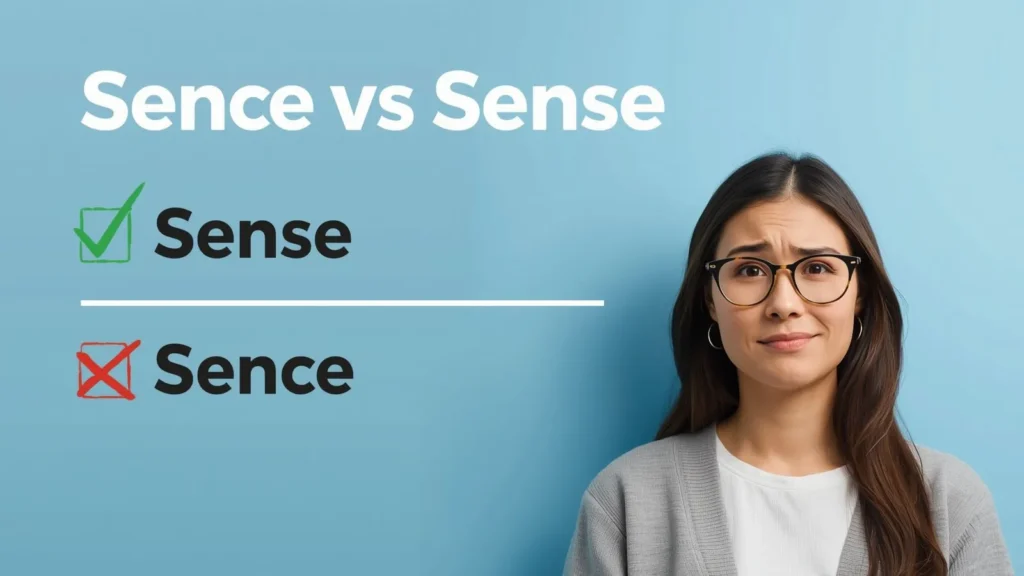
“Sense” is correct. “Sence” is incorrect.
✔ Correct: I have a good sense of direction.
❌ Incorrect: I have a good sence of direction.
👉 Sense means understanding, feeling, or awareness.
👉 Sence is just a misspelling and should not be used.
The Origin of Sence or Sense
The word sense comes from the Latin word sensus, which means “feeling” or “perception.” Over time, it moved into Old French as sens, and then into English as sense.
There has never been a correct English word spelled “sence.” The confusion likely comes from:
- Similar sounding words like since
- Phonetic spelling habits
- Fast typing mistakes
So, sense has a long history, while sence has none.
British English vs American English Spelling
Good news: there is no difference between British and American English for this word.
Both use sense as the correct spelling.
Comparison Table
| Version | Correct Spelling | Example Sentence |
|---|---|---|
| British English | Sense | That makes perfect sense. |
| American English | Sense | That makes perfect sense. |
| Incorrect Version | Sence | ❌ Not used in any English form |
Which Spelling Should You Use?
No matter your audience, always use sense.
- 🇺🇸 US audience → Use sense
- 🇬🇧 UK audience → Use sense
- 🌍 Global audience → Use sense
👉 Simple rule: “Sense” works everywhere. “Sence” works nowhere.
Common Mistakes with Sence or Sense
Here are some common errors people make:
❌ This makes no sence.
✔ This makes no sense.
I can sence something is wrong.❌
I can sense something is wrong.✔
❌ Mixing with “since”
✔ Since = time (Since yesterday)
✔ Sense = feeling or meaning
👉 Tip: If it relates to understanding or feeling, use sense.
Sence or Sense in Everyday Examples
Emails
✔ Your idea makes a lot of sense.
News
✔ The policy makes economic sense.
Social Media
✔ That post makes no sense!
Formal Writing
✔ The argument lacks logical sense.
👉 In all cases, sense is the correct choice.
Sence or Sense – Google Trends & Usage Data
- “Sense” is widely used in all English-speaking countries
- “Sence” appears mainly as a typo in searches
- High search regions include:
- United States
- United Kingdom
- India
- Pakistan
👉 People search this keyword mostly to:
- Check correct spelling
- Improve writing
- Avoid mistakes
Comparison Table: Sence vs Sense
| Feature | Sense ✅ | Sence ❌ |
|---|---|---|
| Correct Word | Yes | No |
| Meaning | Feeling, logic, awareness | No meaning |
| Usage | Formal & informal writing | Not used |
| Dictionary | موجود (Exists) | Not موجود |
| Example | That makes sense | ❌ That makes sence |
FAQs
1. Is “sence” ever correct?
No, “sence” is always incorrect.
2. Why do people write “sence”?
Because it sounds like “sense” and is a typing mistake.
3. What does “sense” mean?
It means understanding, feeling, or awareness.
4. Is “sense” used in both UK and US English?
Yes, both use the same spelling.
5. How can I remember the correct spelling?
Think: Sense = Sensible (both have “s”).
6. Is “sense” formal or informal?
It is used in both formal and informal writing.
7. What is the difference between “sense” and “since”?
- Sense = meaning or feeling
- Since = time or reason
Conclusion
Understanding the difference between sence or sense is simple once you know the rule. The correct spelling is always sense, and it is used in every form of English worldwide. The word has a strong history from Latin and is widely used in daily communication, from emails to professional writing.
On the other hand, sence is just a common mistake. It has no meaning and should never be used in correct writing. Many people make this error due to pronunciation or fast typing, but it is easy to fix with practice.
To improve your writing, always double-check words that sound similar. A small spelling mistake can change how professional your content looks. By remembering this simple rule, you can avoid confusion and write with confidence.
👉 Final tip: If it relates to understanding, logic, or feeling, the correct word is always sense.

Hi, I’m Lily Brown, the voice behind Grammar Meaning! I make grammar simple and easy for everyone. I create helpful content on basicsgrammar.com.