You’ve likely seen both “bare with me” and “bear with me” online—and wondered which one is correct. This confusion is very common because both words, bare and bear, are real English words with different meanings. But only one fits this phrase properly.
People search for “bare or bear with me” because they want to avoid embarrassing mistakes in emails, messages, or professional writing. A small spelling error can change the meaning completely—or make your writing look less polished.
|See also: Cadillac or Lincoln – Which Luxury Car Brand Should You Choose?
Bare or Bear With Me – Quick Answer
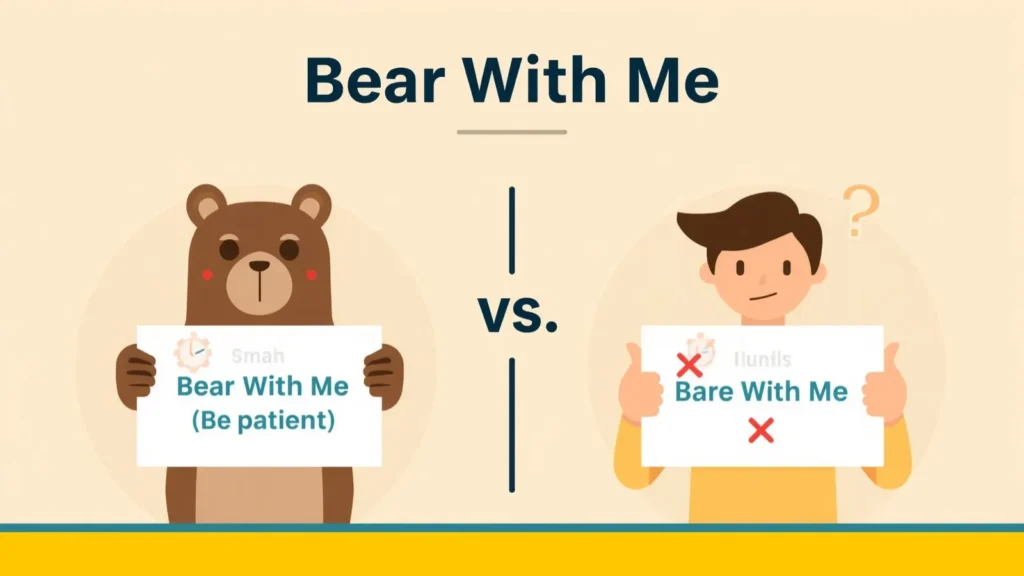
Correct phrase: “Bear with me.”
Meaning:
It means please be patient with me or wait for me while I finish something.
Examples:
- ✅ Bear with me while I check this information.
- ❌ Bare with me while I check this information.
Why?
- Bear = to تحمل (endure or be patient)
- Bare = naked or uncovered
The Origin of Bare or Bear With Me
The phrase “bear with me” comes from the verb “bear,” meaning to carry, endure, or tolerate. This meaning has been used in English for centuries.
In older English, people would say things like:
- “Bear this burden”
- “Bear the pain”
Over time, “bear with me” evolved to politely ask someone to tolerate a delay or difficulty.
The confusion happens because:
- “Bare” sounds exactly like “bear”
- English has many homophones (same sound, different meaning)
But historically, only “bear” has ever been correct in this phrase.
British English vs American English Spelling
Good news—there is no difference between British and American English for this phrase.
Both forms use:
- ✅ “Bear with me” (correct)
- ❌ “Bare with me” (incorrect)
Comparison Table
| Version | Correct Spelling | Meaning | Usage |
|---|---|---|---|
| British English | Bear with me | Be patient | Standard |
| American English | Bear with me | Be patient | Standard |
| Incorrect Form | Bare with me | Wrong meaning | Avoid |
Which Spelling Should You Use?
Always use “bear with me”—no matter your audience.
Audience-Based Advice:
- US audience: Use “bear with me”
- UK/Commonwealth: Use “bear with me”
- Global audience: Use “bear with me”
There is no regional variation here. One correct phrase fits all.
Common Mistakes with Bare or Bear With Me
1. Using “bare” instead of “bear”
- ❌ Bare with me
- ✅ Bear with me
2. Misunderstanding the meaning
- “Bare” means exposed or naked
- “Bear” means tolerate or endure
3. Overthinking spelling rules
This is not like “color vs colour.”
There is only one correct version.
Quick Tip:
If you mean “be patient,” always choose “bear.”
Bare or Bear With Me in Everyday Examples
Emails:
- “Please bear with me while I review your request.”
Customer Support:
- “Bear with me for a moment while I fix this issue.”
Social Media:
- “Bear with me guys, uploading the video soon!”
News or Formal Writing:
- “Officials asked citizens to bear with delays during the process.”
Casual Conversation:
- “Hey, bear with me—I’m almost done.”
Bare or Bear With Me – Google Trends & Usage Data
Search data shows that:
- “Bear with me” is the correct and dominant phrase worldwide
- “Bare with me” is frequently searched due to confusion
Popular Regions:
- High usage: USA, UK, Canada, Australia
- Common mistake regions: Global (especially learners of English)
Why the Confusion?
- Same pronunciation
- Fast typing habits
- Lack of grammar awareness
Despite the confusion, professional and published content always uses “bear with me.”
Keyword Comparison Table
| Phrase | Correct? | Meaning | Example |
|---|---|---|---|
| Bear with me | ✅ Yes | Be patient | Bear with me while I finish |
| Bare with me | ❌ No | Incorrect usage | Avoid using this |
| Bear the pain | ✅ Yes | Endure something | He bore the pain |
| Bare your soul | ✅ Yes | Reveal emotions | She bared her feelings |
FAQs
1. Is “bare with me” ever correct?
No. It is always incorrect in this context.
2. What does “bear with me” mean?
It means please be patient or wait for me.
3. Why do people confuse bare and bear?
They sound the same but have different meanings.
4. Is this a British vs American difference?
No. Both use “bear with me.”
5. Can I use “bear with me” in formal writing?
Yes. It is polite and widely accepted.
6. What is an easy way to remember?
Think: bear = (patience)
7. Is “bear with me” professional?
Yes. It is commonly used in emails and business communication.
Conclusion
The difference between “bare with me” and “bear with me” is simple once you understand it. Only “bear with me” is correct, and it means asking someone to be patient. The confusion exists because both words sound the same, but their meanings are completely different.
“Bear” relates to endurance, and patience—making it the perfect fit for this phrase. On the other hand, “bare” refers to something uncovered or exposed, which does not make sense in this context.
There are no regional differences between British and American English here. The correct phrase stays the same worldwide. By remembering this rule, you can avoid a very common mistake and improve your writing instantly

Hi, I’m John Miles, the voice behind Grammar Meaning! I share clear and practical grammar tips. You’ll find my work on basicsgrammar.com.