Because both gout and sesamoiditis can produce discomfort close to the big toe, people sometimes mix the two illnesses. They are quite different medical issues, though.
Knowing the difference enables you to avoid chronic foot discomfort and receive the appropriate therapy more quickly.
|SEE LEARN MORE: Or hospital meaning
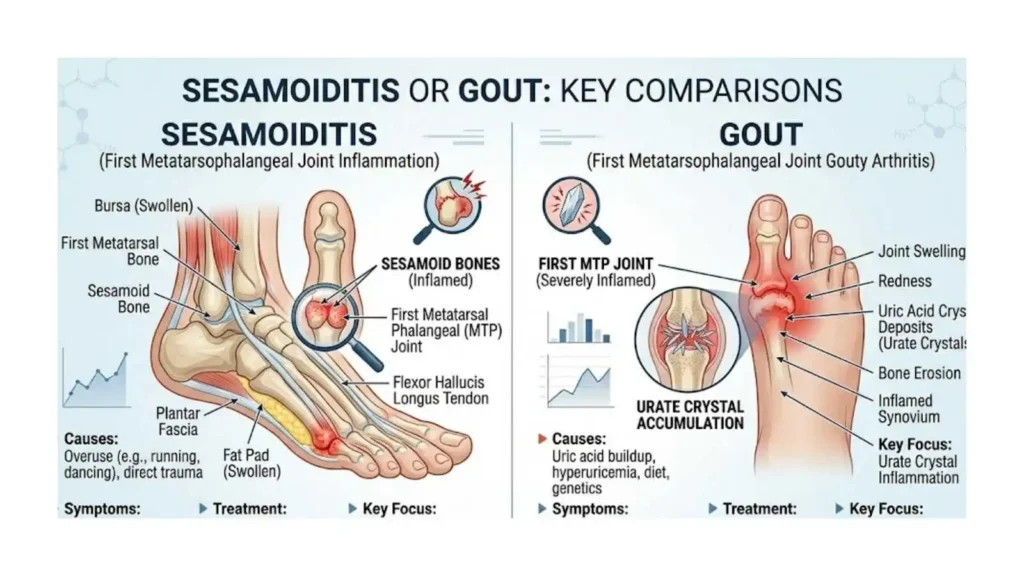
Sesamoiditis or Gout – Quick Answer
Sesamoiditis:
Is an inflammation injury affecting the small sesamoid bones under the big toe due to pressure or overuse.
Gout:
Is a form of arthritis caused by uric acid crystal buildup in the joints.
Example:
- A runner with pain after exercise may have sesamoiditis.
- A person with sudden swelling, redness, and severe toe pain may have gout.
Although both conditions affect the foot, their causes, symptoms, and treatments are completely different.
Meaning of Sesamoiditis or Gout
What Is Sesamoiditis?
Sesamoiditis happens when the tiny sesamoid bones beneath the big toe become irritated or inflamed. These bones help movement, balance, and pressure control while walking or running.
Examples:
- Dancers developing pain from repeated toe pressure
- Athletes feeling soreness under the foot
- Wearing tight shoes causing stress on foot bones
What Is Gout?
Gout is a painful inflammatory arthritis condition caused by high uric acid levels in the blood. Sharp uric acid crystals form inside joints and trigger sudden attacks.
Examples:
- Swollen big toe after eating rich foods
- Sudden night pain in the foot joint
- Redness and heat around the toe
Unlike sesamoiditis, gout is connected to body chemistry and diet.
Symptoms of Sesamoiditis vs Gout
Sesamoiditis Symptoms
- Dull pain beneath the big toe
- Pain during walking or running
- Swelling under the foot
- Difficulty bending the toe
- Gradual pain increase
Gout Symptoms
- Sudden severe toe pain
- Red, warm joint
- Swelling and tenderness
- Pain attacks at night
- Difficulty touching the area
Gout pain is usually more intense and sudden than sesamoiditis pain.
Causes of Sesamoiditis or Gout
Sesamoiditis causes
- Repetitive pressure on the foot
- Running or dancing
- High-impact sports
- Improper footwear
- Foot structure problems
Causes of Gout
- High uric acid levels
- Eating red meat and seafood
- Alcohol consumption
- Kidney problems
- Family history
Why People Confuse Sesamoiditis or Gout
People confuse these conditions because both affect the big toe area. Both may cause swelling, pain, and walking difficulty.
However:
- Sesamoiditis develops slowly from stress.
- Gout appears suddenly because of crystal buildup.
Doctors may use physical exams, X-rays, blood tests, or imaging to identify the correct condition.
Why People Misspell Sesamoiditis or Gout
Medical words like sesamoiditis are difficult because they contain multiple vowels and uncommon spelling patterns. English spelling rules also confuse writers.
Common spelling mistakes include:
- sesmoiditis
- sesamoiditus
- goutt
English words with double letters, like address and success, often create confusion during typing. Long medical terms increase the chance of keyboard errors and autocorrect mistakes.
Origin of the Keyword
Origin of Sesamoiditis
The word sesamoid comes from the Greek word sesamon, meaning sesame seed, because the bones resemble sesame seeds in shape. The suffix -itis comes from Latin and Greek, meaning inflammation.
Origin of Gout
The word gout comes from the Latin word gutta, meaning “drop.” Ancient doctors believed disease entered the body like drops of liquid.
Both terms have centuries of medical history connected to pain and inflammation.
Sesamoiditis vs Gout Treatment
Sesamoiditis Treatment
- Rest and reduced activity
- Ice therapy
- Cushioned footwear
- Orthotic inserts
- Anti-inflammatory medicine
Gout Treatment
- Uric acid control
- Prescription medications
- Diet changes
- Drinking more water
- Avoiding alcohol
Never self-diagnose severe foot pain without medical advice.
How Doctors Diagnose Sesamoiditis or Gout
Doctors may use:
- Physical examination
- Blood tests
- X-rays
- MRI scans
- Ultrasound imaging
Blood tests are especially helpful for diagnosing gout because they measure uric acid levels.
Interesting Facts About Sesamoiditis and Gout
- Sesamoid bones are very small but important for walking.
- Gout was once called the “disease of kings.”
- Athletes commonly develop sesamoiditis.
- Gout attacks often happen during the night.
- Both conditions can affect mobility if untreated.
Summary
It’s critical to comprehend gout and sesamoiditis because they each have distinct effects on the foot. Gout arises from the accumulation of uric acid crystals, whereas sesamoiditis is brought on by pressure and abuse.
|See also: Waterboy or phenomenon
People can seek appropriate care more promptly and have less chronic pain if they are aware of the symptoms, causes, and available treatments.
FAQs
Is sesamoiditis the same as gout?
No. Sesamoiditis is an overuse injury, while gout is a form of arthritis caused by uric acid crystals.
Can gout feel like sesamoiditis?
Yes. Both can cause pain near the big toe, which creates confusion.
How do doctors tell the difference?
Doctors use symptoms, physical exams, blood tests, and imaging scans.
Does sesamoiditis cause swelling?
Yes. Mild swelling and tenderness under the big toe are common.
What foods trigger gout?
Red meat, seafood, sugary drinks, and alcohol can increase gout attacks.
Conservation Awareness Message
Healthy movement starts with healthy feet. Early diagnosis, supportive footwear, balanced nutrition, and proper medical care can protect long-term mobility and overall wellness.

Hi, I’m John Miles, the voice behind Grammar Meaning! I share clear and practical grammar tips. You’ll find my work on basicsgrammar.com.