Many English learners and even native speakers often get confused between “suppose to” or “supposed to.” At first glance, both phrases sound similar in everyday speech, which is why this mistake appears so often in writing. However, only one of these forms is grammatically correct in standard English.
People search for this keyword because they want a quick, clear answer and a deeper understanding of why the mistake happens. Whether you’re writing emails, academic content, or social media posts, using the wrong phrase can affect your credibility and clarity.
This guide solves that confusion by explaining the correct usage, origin, common mistakes, and practical examples. By the end, you’ll confidently know when and how to use “supposed to” correctly—and avoid the common error of writing “suppose to.”
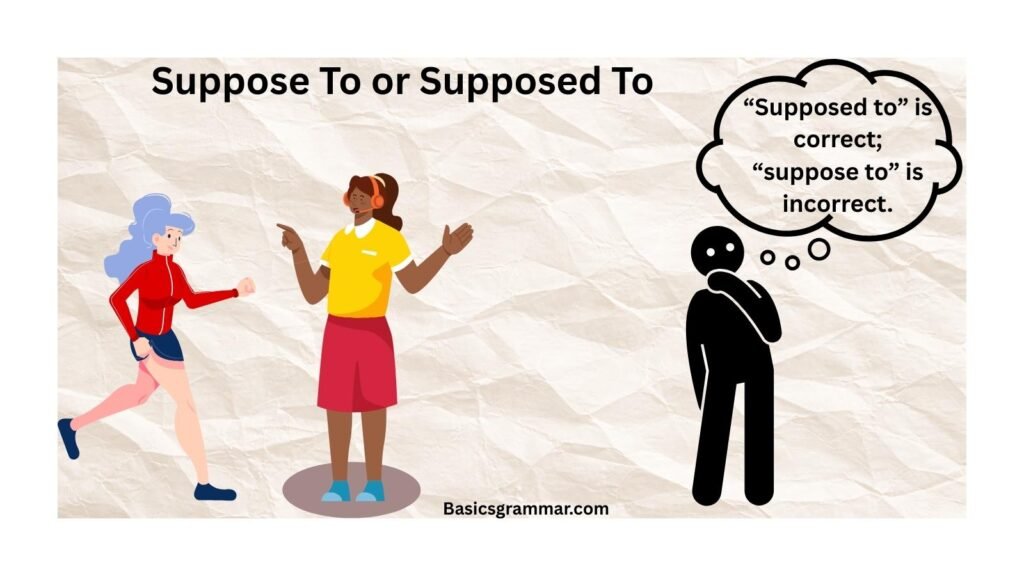
Suppose To or Supposed To – Quick Answer
👉 Correct phrase: “Supposed to”
👉 Incorrect phrase: “Suppose to”
✅ Correct Examples:
- I am supposed to finish this work today.
- She is supposed to call me later.
❌ Incorrect Examples:
- I am suppose to finish this work today.
- He was suppose to come early.
✔ Quick Rule:
Always use “supposed to” when talking about obligation, expectation, or duty.
The Origin of Suppose To or Supposed To
The phrase “supposed to” comes from the verb “suppose,” which originates from Latin supponere, meaning “to assume” or “to place under.” Over time, English speakers began using “supposed to” to express expectations or responsibilities.
The confusion happens because in fast speech, people often pronounce “supposed to” as “suppose to.” This phonetic simplification leads many writers to drop the “-d” in written form.
However, grammatically, the “-ed” form is essential because it reflects the past participle used in the correct structure.
British English vs American English Spelling
Interestingly, there is no difference between British and American English for this phrase. Both follow the same grammar rule.
| Phrase | British English | American English | Correct Usage |
|---|---|---|---|
| supposed to | ✅ | ✅ | Correct |
| suppose to | ❌ | ❌ | Incorrect |
✔ Unlike other spelling differences (like colour vs color), this is a grammar issue, not a regional spelling variation.
Which Spelling Should You Use?
No matter your audience, you should always use “supposed to.”
Audience-Based Advice:
- United States: Always use “supposed to”
- UK & Commonwealth: Same rule applies
- Global/Professional Writing: Use only “supposed to”
👉 Important Tip:
Using “suppose to” in professional writing (emails, blogs, essays) can make your content look unpolished or incorrect.
Common Mistakes with Suppose To or Supposed To
Here are the most frequent errors and how to fix them:
1. Dropping “-ed”
❌ I am suppose to go
✅ I am supposed to go
2. Wrong tense usage
❌ He suppose to finish work
✅ He is supposed to finish work
3. Informal speech confusion
People say “suppose to” while speaking, but writing must remain correct.
Suppose To or Supposed To in Everyday Examples
📧 Emails
- You are supposed to submit the report by Friday.
📱 Social Media
- I was supposed to wake up early… but I didn’t 😅
📰 News Writing
- The meeting is supposed to address economic concerns.
📄 Formal Writing
- Participants are supposed to follow the guidelines strictly.
👉 Notice how “supposed to” fits naturally in all contexts.
Suppose To or Supposed To – Google Trends & Usage Data
- “Supposed to” has significantly higher search volume worldwide.
- Countries like the US, UK, India, and Canada frequently search this keyword.
- “Suppose to” appears mostly in error-based searches, showing users are trying to correct their writing.
Key Insight:
- Most searches come from learners trying to fix grammar mistakes.
- SEO content should target both phrases but clearly explain the correct form.
FAQs
1. Is “suppose to” ever correct?
No, it is grammatically incorrect in standard English.
2. Why do people say “suppose to”?
Because of fast pronunciation, the “-ed” sound is often dropped in speech.
3. What does “supposed to” mean?
It means expected, required, or intended to do something.
4. Can I use “supposed to” in formal writing?
Yes, it is fully correct and widely used in formal and informal contexts.
5. How can I remember the correct form?
Always include the “-ed” → supposed to = correct
Conclusion
Understanding the difference between “suppose to or supposed to” is simple once you know the rule. The correct form, “supposed to,” expresses obligation, expectation, or duty and is used in all types of writing. On the other hand, “suppose to” is a common mistake caused by pronunciation habits and should be avoided in written English.
By using the correct phrase, you improve clarity, professionalism, and overall writing quality. Whether you’re writing emails, articles, or social media posts, sticking to “supposed to” ensures your message is accurate and credible. Keep practicing with real examples, and soon this confusion will disappear completely.

Hi, I’m Lily Brown, the voice behind Grammar Meaning! I make grammar simple and easy for everyone. I create helpful content on basicsgrammar.com.