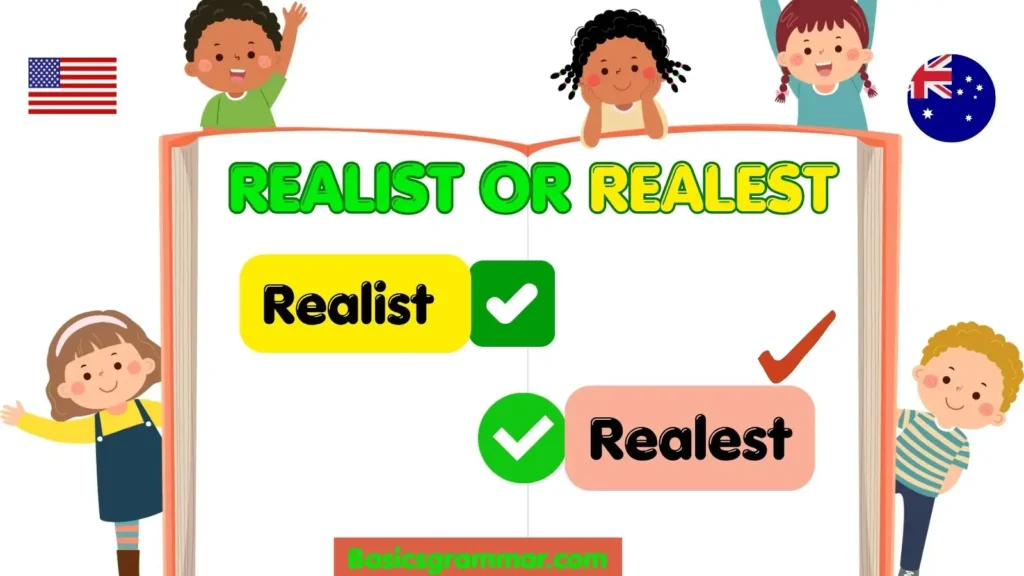
Have you ever written a sentence and suddenly stopped because you could not decide between realist or realest? You are not alone. These two words look similar, but they do very different jobs in a sentence. One describes a person’s way of thinking, while the other usually describes someone or something as extremely genuine or “most real.”
This confusion becomes even more common online. Social media, texting, music, and casual conversations often use realest in ways that may seem different from traditional English. Meanwhile, realist remains a standard English word that appears in everyday speech, academic writing, and professional discussions.
So, what is the difference between realist and realest? Is one correct and the other incorrect? Can you use realest in formal writing? And when should you choose realist instead?
In this guide, we will answer all these questions in simple English. You will learn their meanings, differences, examples, common mistakes, related words, and practical usage tips. By the end, choosing between realist or realest will feel much easier.
Table of Contents
- What Does Realist or Realest Mean?
- Background and Origin
- Contexts Where Realist and Realest Are Used
- Usage Across Different Platforms
- Common Misconceptions
- Common Mistakes
- Similar Words and Alternatives
- How to Respond to Realist or Realest
- Realist and Realest in Different Languages
- Difference Between Realist and Similar Words
- Realist and Realest in Online Conversations
- Popularity and Usage Over Time
- Frequently Asked Questions
- Conclusion
What Does Realist or Realest Mean?
The words realist and realest both come from the word real, but they have different meanings and grammatical functions.
A realist is a person who looks at situations realistically and accepts facts instead of expecting unrealistic results.
Realest means “most real.” In casual English, it can also mean extremely genuine, honest, authentic, or relatable.
Here is the difference at a glance:
| Word | Meaning | Grammar | Example |
|---|---|---|---|
| Realist | A person who accepts reality | Noun | She is a realist. |
| Realest | Most real or genuine | Superlative adjective | He is the realest person I know. |
What Does Realist Mean?
A realist is someone who sees things as they are. A realist usually considers facts, limitations, and likely results before making decisions.
Example:
Jake is a realist, so he knows the project will take several months.
The sentence describes Jake’s attitude toward reality.
You can also say:
I’m a realist. I don’t expect everything to go perfectly.
Here, realist refers to a person.
What Does Realest Mean?
Realest is the superlative form of real. In simple terms, it means most real.
However, everyday speakers often use realest in a more informal way. It can describe someone who seems very honest, genuine, loyal, authentic, or relatable.
For example:
You’re the realest friend I’ve ever had.
This sentence does not mean that the friend is somehow “more real” physically. It means the friend is extremely genuine and trustworthy.
Another example is:
That was the realest thing anyone has said all day.
Here, realest means especially honest or relatable.
Easy Way to Remember the Difference
Use this simple rule:
Realist = a person
Realistic = practical or possible
Realest = most real or genuine
Example:
She is a realist.
She has a realistic plan.
She is the realest person I know.
Once you remember this pattern, the difference becomes much easier.
Background and Origin
Both realist and realest developed from the basic word real.
The word real describes something genuine, actual, or existing. From this word, English developed several related forms, including realism, realist, and realistic.
The word realist has been used for a long time in English. It can describe someone who accepts reality and practical limitations. It also appears in subjects such as philosophy, politics, literature, and art.
Realest has a simpler grammatical origin. English often forms the superlative of adjectives by adding -est.
Example:
- real → realest
- fast → fastest
- small → smallest
- strong → strongest
In modern informal English, realest has also developed a popular slang sense. People use it to praise someone for being genuine, honest, loyal, or authentic.
Social media has helped spread this informal meaning. You may see phrases such as:
You’re the realest.
or
That’s the realest thing I’ve heard today.
The meaning depends heavily on context.
Contexts Where Realist and Realest Are Used
The two words can appear in many situations, but speakers use them differently.
In Serious Conversations
Realist works well when discussing someone’s practical attitude.
For example:
My brother is a realist when it comes to money.
This means he understands financial limits and does not expect unrealistic results.
Another example:
A realist would consider the risks before making that decision.
This usage works well in serious conversations.
Between Friends
Friends often use realest as a compliment.
For example:
You’re seriously the realest person I know.
This means the person is honest, genuine, or loyal.
Another example:
Thanks for always keeping it real. You’re the realest!
This usage sounds casual and friendly.
Online Gaming
Gamers may use realest to praise a teammate.
You gave me your last health pack? You’re the realest!
Here, the speaker is showing appreciation.
Realist can also appear when someone talks about strategy:
He’s a realist. He knows we can’t win without better equipment.
Social Media
The word realest fits naturally into social media comments and captions.
For example:
She’s the realest person on this app.
Or:
That is the realest post I’ve seen today.
The word often expresses admiration, agreement, or emotional connection.
Dating Apps
Both words can appear in dating conversations.
For example:
I’m a realist when it comes to relationships.
This means the speaker has practical expectations.
Meanwhile:
You’re the realest person I’ve met on this app.
This means the person seems honest and authentic.
Usage Across Different Platforms
| Platform | Example | Typical Usage |
|---|---|---|
| You’re the realest! | Friendly conversations | |
| Messenger | I’m a realist about this. | Everyday discussion |
| Discord | He’s the realest teammate. | Gaming and friendship |
| TikTok | That’s the realest thing ever. | Comments and reactions |
| My realest friend ❤️ | Captions and compliments | |
| Twitter/X | I’m just a realist. | Opinions and discussions |
| Snapchat | You’re the realest 😂 | Casual conversations |
| Slack | We need a realistic plan. | Professional communication |
| Teams | Let’s be realistic. | Workplace discussions |
In professional environments, realistic usually sounds more natural than realest.
Common Misconceptions About Realist or Realest
Misconception 1: Realist Means “Most Real”
This is one of the biggest mistakes.
Realist does not normally mean “most real.”
A realist is a person who accepts reality.
Maria is a realist.
If you mean “most genuine,” you might say:
Maria is the realest person here.
Misconception 2: Realest Is Always Wrong
Some people believe that realest is incorrect English.
That is not true.
Realest is a valid superlative form of real, although its use as slang or informal praise is more casual.
For example:
He is the realest person in the group.
This sentence works in informal English.
Misconception 3: Realist and Realest Mean the Same Thing
They do not.
Compare these sentences:
Tom is a realist.
This describes Tom’s practical attitude.
Tom is the realest person I know.
This praises Tom’s honesty or authenticity.
The words have completely different roles.
Misconception 4: Realest Always Means Honest
Not necessarily.
Depending on context, realest can mean genuine, authentic, relatable, loyal, straightforward, or emotionally honest.
Context determines the exact meaning.
Common Mistakes When Using Realist or Realest
Mistake 1: Using Realist Instead of Realest
Incorrect for the intended meaning:
You are the realist friend I have.
If you mean “most genuine,” write:
You are the realest friend I have.
Mistake 2: Using Realest Instead of Realist
If you are describing someone’s practical personality, use realist.
She is a realist when it comes to business.
Do not use realest here unless you mean “most genuine.”
Mistake 3: Confusing Realist With Realistic
These words are closely related but not identical.
Realist = a person
Realistic = an adjective describing something practical or possible
For example:
Daniel is a realist.
Daniel has realistic expectations.
Mistake 4: Using Realest in Formal Writing
Although realest can be correct, its slang meaning often sounds casual.
In formal writing, you might choose:
- most genuine
- most authentic
- most sincere
- most honest
Instead of:
She is the realest person in the organization.
A formal alternative could be:
She is the most authentic person in the organization.
Similar Words and Alternatives
Several words can replace realist or realest, depending on what you mean.
| Word | Meaning | Best Use |
|---|---|---|
| Realist | A person who accepts reality | Describing people |
| Realest | Most real or genuine | Informal praise |
| Realistic | Practical or possible | Plans and expectations |
| Genuine | Truly sincere or authentic | People and feelings |
| Authentic | True to one’s character | Formal or casual writing |
| Honest | Truthful and sincere | People and communication |
| Practical | Focused on workable solutions | Decisions and plans |
| Down-to-earth | Practical and unpretentious | Casual descriptions |
How to Respond to Realist or Realest
If someone calls you the realest, they are usually giving you a compliment.
Funny Reply
Finally, someone appreciates my professional level of realism. 😂
Friendly Reply
Haha, thanks! I really appreciate that.
Serious Reply
I just try to be honest with people.
Flirty Reply
Maybe you just bring out the real me. 😉
Short Emoji Reply
😂❤️
Your response should match the conversation. If someone uses realest jokingly, a serious response might make the conversation unnecessarily awkward.
Realist and Realest in Different Languages and Cultures
The concept of being realistic or genuine exists in many languages. However, the informal English slang use of realest does not always have a direct translation.
| Language | Related Expression | General Meaning |
|---|---|---|
| Spanish | Realista | Realist |
| Arabic | واقعي | Realistic or practical |
| Hindi | यथार्थवादी | Realist |
| Urdu | حقیقت پسند | A person who accepts reality |
| Tagalog | Realist / realistic | Often understood through English |
| Tamil | Realist / realistic | English terms may appear online |
| Malayalam | Realist / realistic | English borrowing is common |
| Marathi | Realist / realistic | English may appear in digital speech |
Among younger internet users, the English word realest may remain untranslated, especially in social media posts, memes, comments, and chats.
Difference Between Realist and Similar Words
The easiest way to understand these words is to compare their grammatical roles.
| Word | Part of Speech | Meaning | Example |
|---|---|---|---|
| Realist | Noun | A person who accepts reality | He is a realist. |
| Realistic | Adjective | Practical or possible | That’s a realistic goal. |
| Realest | Superlative adjective | Most real or genuine | She’s the realest friend I have. |
| Genuine | Adjective | Truly sincere | He gave a genuine apology. |
| Authentic | Adjective | True to character | Her personality feels authentic. |
| Practical | Adjective | Focused on what works | We need a practical solution. |
A simple formula can help:
Person → realist
Plan or expectation → realistic
Most genuine → realest
Realist and Realest in Online Conversations and Social Media
The internet has made the informal use of realest much more visible.
People often use it as a quick way to praise a statement, person, or situation.
For example:
That’s the realest thing I’ve read all week.
This usually means:
That is extremely honest or relatable.
You might see realest in:
- TikTok comments
- Instagram captions
- YouTube comments
- Reddit discussions
- Discord chats
- Gaming communities
- Group messages
- Dating conversations
- Memes
The word realist appears online too, but its meaning stays closer to standard English.
For example:
I’m a realist, so I know this plan needs more work.
The difference remains clear even in casual online communication.
Popularity and Usage Over Time
The word realist has been part of standard English for many years. Its use extends beyond everyday conversation and appears in areas such as philosophy, politics, art, literature, and social discussions.
The informal use of realest developed differently. Popular culture, music, and later social media helped make the expression more familiar.
| Period | General Usage |
|---|---|
| Earlier English | Real developed as a word for something genuine or actual |
| 19th–20th centuries | Realist became established in standard English |
| 2000s | Informal uses of realest became more visible in popular culture |
| 2010s | Social media helped spread the slang meaning |
| 2020s | Realest remains popular in casual online communication |
Today, both words remain useful, but they serve different purposes.
Frequently Asked Questions
What is the difference between realist and realest?
Realist means a person who accepts reality and thinks practically. Realest means “most real” and can also mean most genuine or authentic in informal English.
Is realest a correct word?
Yes. Realest is the superlative form of real. It can also have an informal meaning related to authenticity or honesty.
Is realist a noun or adjective?
Realist is primarily a noun when it describes a person who accepts reality.
For example:
She is a realist.
What does realest mean in texting?
In texting, realest often means extremely genuine, honest, authentic, loyal, or relatable.
For example:
You’re the realest!
This usually works as a compliment.
Should I say realist or realistic?
Use realist for a person and realistic for an idea, plan, expectation, or situation.
He is a realist.
He has realistic expectations.
Is realest formal English?
The word itself can be grammatically valid, but its slang meaning sounds informal. In formal writing, most genuine, most authentic, or most sincere may sound more appropriate.
Conclusion
The choice between realist or realest becomes simple once you understand what each word does. A realist is a person who accepts reality and thinks about situations in a practical way. Realest, meanwhile, means “most real” and often carries an informal meaning such as most genuine, authentic, honest, or relatable.
Remember this easy formula: realist = person, realistic = practical, and realest = most real.
For example, you can say, “She is a realist,” when talking about her practical attitude. You can say, “She has a realistic plan,” when describing her practical idea. And you can say, “She is the realest person I know,” when praising her authenticity.
So, are you still confused about realist or realest? Probably not. English has finally given your brain permission to leave that grammar meeting.

Hi, I’m John Miles, the voice behind Grammar Meaning! I share clear and practical grammar tips. You’ll find my work on basicsgrammar.com.