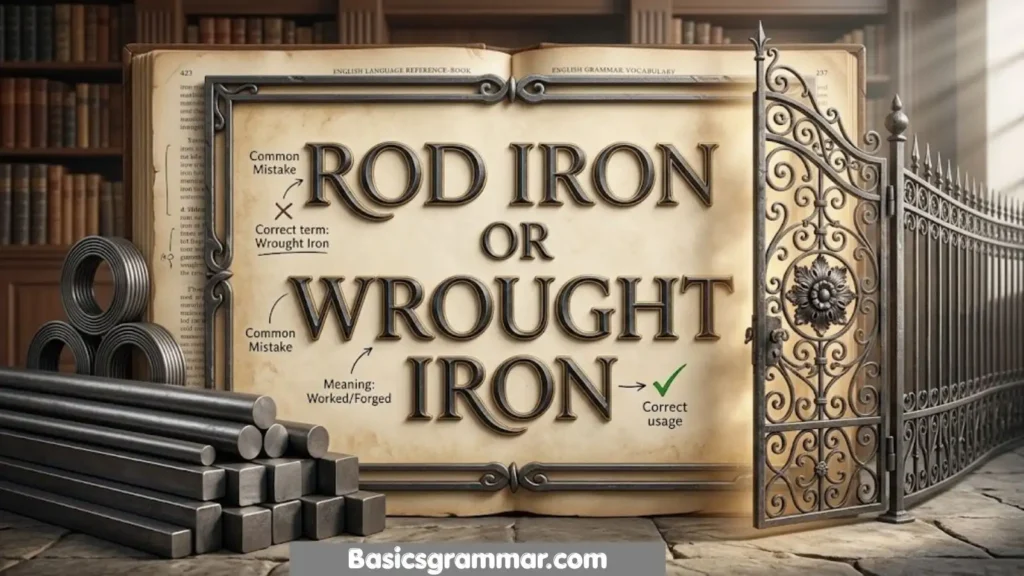
If you have ever searched for “rod iron or wrought iron,” you are not alone. These two phrases sound similar, so it is easy to wonder which one is correct. You may have seen “rod iron” used in online listings, home improvement articles, furniture descriptions, or everyday conversations. However, the standard term is wrought iron.
The word wrought means “worked” or “shaped.” Therefore, wrought iron refers to iron that was traditionally worked by hammering, rolling, bending, or forging. The phrase has a long history in metalworking and is still widely used today.
People often search for rod iron or wrought iron because the pronunciation of “wrought” can be confusing. Some people also write what they hear. This creates forms such as “rod iron” and “rot iron.”
Rod Iron or Wrought Iron – Quick Answer
The correct term is wrought iron.
Rod iron is usually a spelling or pronunciation mistake when someone means traditional decorative or worked iron. The standard phrase is:
- ✅ wrought iron gate
- ✅ wrought iron fence
- ✅ wrought iron railing
- ❌ rod iron gate
- ❌ rod iron fence
- ❌ rot iron railing
The confusion happens because wrought sounds very different from how it looks. It is pronounced approximately like “rot.”
The word comes from an old form of work. In simple terms, wrought iron means “worked iron.”
There is one small technical point. Rod iron can describe iron made or shaped into rods in some specialized contexts. However, it is not the normal term people mean when discussing decorative gates, railings, furniture, or ornamental metalwork.
Grammar & Hyphenation Rules
- Before a Noun (Compound Adjective): Use a hyphen when modifying a noun that follows.
- Example: They installed a wrought-iron gate around the garden.
- After a Noun: Do not hyphenate when it follows the verb/noun.
- Example: The balcony railings are made of wrought iron.
- Incorrect Usage:
- ❌ They bought a rod-iron fence.
- ❌ The table is rot iron.
Rod Iron vs. Wrought Iron: Quick Comparison
| Term | Correct? | Meaning | Common Use |
|---|---|---|---|
| Wrought iron | ✅ Yes | Worked or forged iron | Gates, railings, furniture |
| Rod iron | ⚠️ Usually no | Iron in rod form | Rare technical use |
| Rot iron | ❌ No | Common spelling error | Avoid |
| Wrought-iron | ✅ Yes | Compound adjective | Wrought-iron gate |
| Wrought iron | ✅ Yes | Material noun | The gate is made of wrought iron |
The Origin of Rod Iron or Wrought Iron
The key to this spelling question is the word wrought.
Wrought is an old past form of the verb work. In metalworking, something that was wrought had been worked, shaped, or formed. Therefore, wrought iron literally means worked iron.
Historically, blacksmiths heated iron and shaped it through hammering and other forms of mechanical work. This process helped produce useful objects such as tools, chains, nails, rails, horseshoes, handrails, and decorative metalwork.
Wrought iron became important because it was relatively soft, tough, and easy to shape when hot. It was also much less brittle than cast iron.
The term rod iron creates confusion because a rod is a real object. A rod is a long, narrow piece of material. Therefore, someone may naturally assume that “rod iron” means iron used in rods.
However, the phrase wrought iron describes the traditional material and working process.
Modern metalwork adds another layer of confusion. True wrought iron is no longer produced commercially on the same large scale. Many modern products sold as “wrought iron” are actually made from mild steel but have the traditional wrought-iron appearance.
British English vs American English Spelling
There is no major British-versus-American spelling difference between these terms.
Both British and American English normally use:
wrought iron
The mistake is not like colour/color or centre/center. You should not change wrought to rod based on the country where you write.
| English Variety | Correct Form | Example |
|---|---|---|
| 🇺🇸 American English | wrought iron | The house has a wrought iron fence. |
| 🇬🇧 British English | wrought iron | The garden has a wrought iron gate. |
| 🇨🇦 Canadian English | wrought iron | They installed a wrought iron railing. |
| 🇦🇺 Australian English | wrought iron | The balcony has wrought iron details. |
| 🇳🇿 New Zealand English | wrought iron | The old wrought iron gate looks beautiful. |
The main difference may come from style guides, local trade language, or product descriptions, not from spelling rules.
Wrought Iron as a Compound Adjective
You may also see wrought-iron with a hyphen.
Use the hyphen when the phrase works together before another noun:
- a wrought-iron gate
- a wrought-iron fence
- a wrought-iron chair
- a wrought-iron railing
Usually, no hyphen is needed when the phrase comes after the noun:
- The gate is made of wrought iron.
- The railing contains wrought iron.
- The furniture is made from wrought iron.
Which Spelling Should You Use?
The safest choice is simple:
For American English
Use wrought iron.
The company makes custom wrought iron gates.
For British and Commonwealth English
Use wrought iron as well.
The historic building has a beautiful wrought iron entrance.
For Global English
Use wrought iron whenever you mean the traditional material or decorative metalwork.
This spelling is recognized internationally and will make your writing clearer.
If you are writing for a website, product page, blog, school assignment, or professional document, avoid rod iron unless you specifically mean iron that is physically supplied in rod form.
For SEO content, it can still be useful to mention “rod iron” because people search for the incorrect phrase. You can explain the mistake naturally:
Many people search for “rod iron,” but the correct term is “wrought iron.”
This approach answers the reader’s question while maintaining correct English.
Common Mistakes with Rod Iron or Wrought Iron
Several errors appear because the word wrought has an unusual spelling and pronunciation.
1. Rod Iron
❌ rod iron gate
✅ wrought iron gate
“Rod iron” is commonly used as a mistaken form of “wrought iron.”
2. Rot Iron
❌ rot iron fence
✅ wrought iron fence
Because wrought is pronounced roughly like “rot,” some people spell it phonetically.
3. Wroughtiron
❌ wroughtiron gate
✅ wrought-iron gate
The phrase contains two words. When it acts as a compound adjective before a noun, a hyphen is often appropriate.
4. Wrong Pronunciation
Some people try to pronounce every letter in wrought.
The word is pronounced approximately:
wrought = rot
The w is silent.
5. Confusing Wrought Iron With Cast Iron
These materials are not identical.
Wrought iron was traditionally worked mechanically, while cast iron was formed by pouring molten metal into a mold. Wrought iron was valued for its toughness and malleability, while cast iron is more brittle.
Rod Iron or Wrought Iron in Everyday Examples
Knowing the correct spelling becomes easier when you see it in real sentences.
In Emails
We would like a quote for a wrought iron gate for our front entrance.
Another example:
Please send us the design options for the wrought-iron railing.
In News Writing
The historic building still features its original wrought iron gates.
News writers generally use the established term wrought iron rather than “rod iron.”
On Social Media
Someone might post:
I love the old wrought iron fence around this garden.
A user may also write:
Is it called rod iron or wrought iron?
The second sentence is a question about spelling, so both terms can appear in the same discussion.
In Formal Writing
The restoration project included repairs to the building’s original wrought iron balcony.
Product Descriptions
This decorative wrought-iron table features a classic design.
In Everyday Conversation
We need a new wrought iron gate for the backyard.
These examples show that wrought iron works naturally in casual, professional, and formal English.
Rod Iron or Wrought Iron – Google Trends & Usage Data
Search interest for “rod iron” exists because many people hear or remember the phrase incorrectly. Language-error websites and discussions regularly identify rod iron as a common mistaken form of wrought iron.
However, search volume should not be confused with correctness.
A search engine may show searches for:
- rod iron
- wrought iron
- rot iron
- wrought iron gate
- wrought iron fence
- wrought iron railing
- wrought iron furniture
The correct standard term remains wrought iron.
Usage also depends on context. People searching for home improvement products may use phrases such as wrought iron gates or wrought iron railings. Meanwhile, people asking spelling questions may search directly for rod iron or wrought iron.
Exact Google Trends numbers can change over time and depend on the selected country, date range, and search category. Therefore, it is better to treat search popularity as evidence of search behavior, not as evidence that an alternative spelling is correct.
Interestingly, recent online discussions still show people asking whether “rod iron” is the correct phrase, which confirms that the confusion continues.
Usage Comparison
| Variation | Standard English? | Typical Reason |
|---|---|---|
| wrought iron | ✅ Yes | Correct established term |
| wrought-iron | ✅ Yes | Compound adjective |
| rod iron | ⚠️ Usually incorrect | Mishearing or spelling error |
| rot iron | ❌ Incorrect | Phonetic spelling |
| iron rod | ✅ Yes | A rod made from iron |
Rod Iron vs. Wrought Iron: Side-by-Side
| Feature | Rod Iron | Wrought Iron |
|---|---|---|
| Standard term for decorative metalwork | ❌ No | ✅ Yes |
| Common spelling mistake | ✅ Yes | ❌ No |
| Refers to traditional worked iron | ❌ Usually | ✅ Yes |
| Used for gates and railings | Rarely correct | ✅ Common |
| Pronunciation confusion | Common | “Wrought” sounds like “rot” |
| Recommended in formal writing | ❌ No | ✅ Yes |
| SEO keyword variation | Can appear in searches | Primary correct term |
FAQs About Rod Iron or Wrought Iron
1. Is it rod iron or wrought iron?
The correct term is wrought iron when you mean traditional worked or decorative iron. Rod iron is usually a spelling or pronunciation mistake.
2. Why do people say rod iron?
People often say rod iron because “wrought” has an unusual spelling and is pronounced like “rot.” The word can be easy to mishear.
3. Is wrought iron pronounced “rot iron”?
Yes. Wrought is pronounced approximately like “rot.” The w is silent.
4. Is rod iron a real term?
It can have a specialized meaning for iron in rod form, but it is not the standard term for decorative worked iron. Most people who say “rod iron” mean wrought iron.
5. Should I write wrought iron or wrought-iron?
Use wrought iron when it functions as a noun. Before another noun, wrought-iron can be used as a compound adjective.
Examples:
- The fence is made of wrought iron.
- We bought a wrought-iron fence.
Conclusion
When choosing between rod iron or wrought iron, the answer is clear: use wrought iron when you mean traditional worked or decorative iron. The phrase rod iron is usually a mistaken spelling or pronunciation, although “rod iron” can have a limited technical meaning when referring to iron shaped into rods.
The unusual word wrought comes from the old form of work. It describes iron that was worked, shaped, or forged. That history explains why the phrase is called wrought iron.
There is also no major British-American spelling difference here. Writers in the United States, United Kingdom, Canada, Australia, and other English-speaking regions generally use wrought iron.
So, whether you are writing a blog post, product description, email, school assignment, or formal document, choose wrought iron. If you are targeting people who search for “rod iron,” you can mention the phrase as a common mistake and then provide the correct spelling. That gives readers the answer they need while keeping your writing accurate and professional.

Hi, I’m Lily Brown, the voice behind Grammar Meaning! I make grammar simple and easy for everyone. I create helpful content on basicsgrammar.com.