Quick Answer
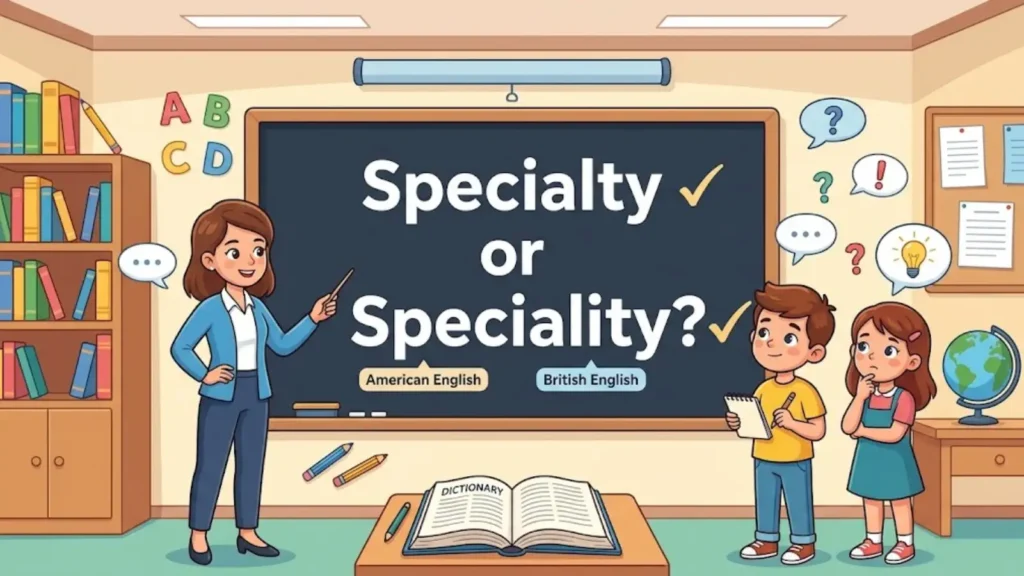
Specialty and speciality are both correct spellings. The main difference is regional: specialty is the standard spelling in American English, while speciality is more common in British English and many other varieties. Both words describe a special skill, field, subject, product, or area of expertise. For example, “Her specialty is pediatric medicine” and “Her speciality is pediatric medicine” are both grammatically correct.
Meaning of Specialty or Speciality
Specialty/speciality means a particular area in which someone has special skills, knowledge, ownership, control, or experience. It can describe a person’s professional field, a business’s main product, or an abstract quality that makes something stand out.
For example, “Italian cooking is his specialty” means he is especially skilled at it. Likewise, “Fresh seafood is the restaurant’s speciality” means seafood is one of its distinctive offerings.
RELATED: Break Metal or Brake Metal: Understanding the Correct Usage
Why People Misspell Specialty or Speciality
The spelling can confuse learners because English contains many words with double letters. Words such as address, success, and necessary require careful attention to repeated letters.
When people type quickly, they may remove a letter or add one unnecessarily. Since specialty and speciality already look unusual, writers sometimes create incorrect forms. Slowing down and checking the word pattern can prevent these common typing mistakes.
Origin of Specialty or Speciality
The word comes from the Latin specialis, meaning “particular” or “special.” It entered English through Old French and developed into words connected with something distinctive or particular.
Over time, English speakers used the word for a particular subject, skill, product, or professional area. The spelling later developed differently in American and British English, giving us specialty and speciality.
British vs American English
The two spellings are mainly a matter of regional preference, not meaning. American English normally uses specialty, while British English generally prefers speciality. Canadian, Australian, and other varieties may use either form depending on context and style.
| English Variety | Preferred Spelling | Example |
|---|---|---|
| 🇺🇸 American English | Specialty | Cooking is her specialty. |
| 🇬🇧 British English | Speciality | Cooking is her speciality. |
| 🇦🇺 Australian English | Speciality is common | Cooking is his speciality. |
| 🇨🇦 Canadian English | Both occur | This is her specialty. |
Neither spelling is inherently wrong. The best choice depends on your audience, country, and style guide.
When to Use Specialty or Speciality
Use specialty when writing for an American audience. It works naturally in essays, assignments, emails, work reports, legal documents, websites, and casual writing.
Use speciality when following British spelling conventions. Most importantly, stay consistent throughout a document. If your article uses British English, speciality is usually the better choice; for American English, choose specialty.
Professional Examples
- My specialty is digital marketing.
- Her speciality is children’s literature.
- The firm’s specialty is corporate law.
- His speciality involves historical research.
Common Mistakes
The biggest mistake is assuming that one spelling must be wrong. In reality, specialty and speciality are legitimate regional forms.
Another problem occurs when writers type too quickly and alter the middle or ending of the word. Remember that the American form ends in -ty, while the British form uses -ity.
| ❌ Incorrect | ✅ Correct |
|---|---|
| Speciallty | Specialty |
| Speciallity | Speciality |
| Specialtee | Specialty |
| Specialety | Specialty |
Everyday Examples
You can find these words in everyday emails, social media posts, school assignments, and professional writing. A restaurant might advertise its seafood specialty, while a doctor may describe cardiology as their specialty.
On social media, either spelling can appear depending on the writer’s location. In formal writing, however, matching the spelling to your chosen variety of English makes your writing look more polished and consistent.
Usage Comparison Table
| Context | Correct American English | Correct British English |
|---|---|---|
| Object/product | This cake is our specialty. | This cake is our speciality. |
| Skill | Writing is her specialty. | Writing is her speciality. |
| Legal field | Tax law is his specialty. | Tax law is his speciality. |
| Daily speech | What’s your specialty? | What’s your speciality? |
| Professional work | Cybersecurity is our specialty. | Cybersecurity is our speciality. |
The meaning stays the same. Only the preferred spelling changes.
How to Remember the Spelling
A simple trick is to connect the spelling with the variety of English you are using. Think American = specialty and British = speciality.
Also, remember that specialty is shorter, while speciality keeps the extra i before the final -ty. Once you associate each form with its regional variety, choosing the correct spelling becomes much easier.
FAQs About Specialty or Speciality
Is specialty or speciality correct?
Both are correct. American English generally prefers specialty, while British English usually uses speciality.
Is specialty American English?
Yes. Specialty is the standard and more common spelling in American English.
Is speciality British English?
Yes. Speciality is the traditional and commonly preferred British spelling.
How do I remember the spelling?
Remember: American English → specialty and British English → speciality. This simple association makes the difference easier to remember.
Does specialty mean speciality?
Yes. Both words have essentially the same meaning. They can describe a special skill, professional field, product, or area of expertise.
Which spelling should I use in an American essay?
Use specialty if your essay follows American English conventions.
Which spelling is better for British writing?
Use speciality for British English writing, especially when following a British style guide.
Conclusion
Specialty and speciality are both correct, so you do not need to worry about choosing a “wrong” word. The important difference is regional spelling: American English favors specialty, while British English generally prefers speciality.
For polished writing, choose one form based on your audience and use it consistently. If you are writing for American readers, remember specialty. For British readers, remember speciality. With that simple distinction, this spelling choice becomes much easier.

Hi, I’m Mark Cole, the voice behind Grammar Meaning! I explain tricky grammar rules in simple ways. I write useful guides on basicsgrammar.com.