Quick Answer – All Right or Alright
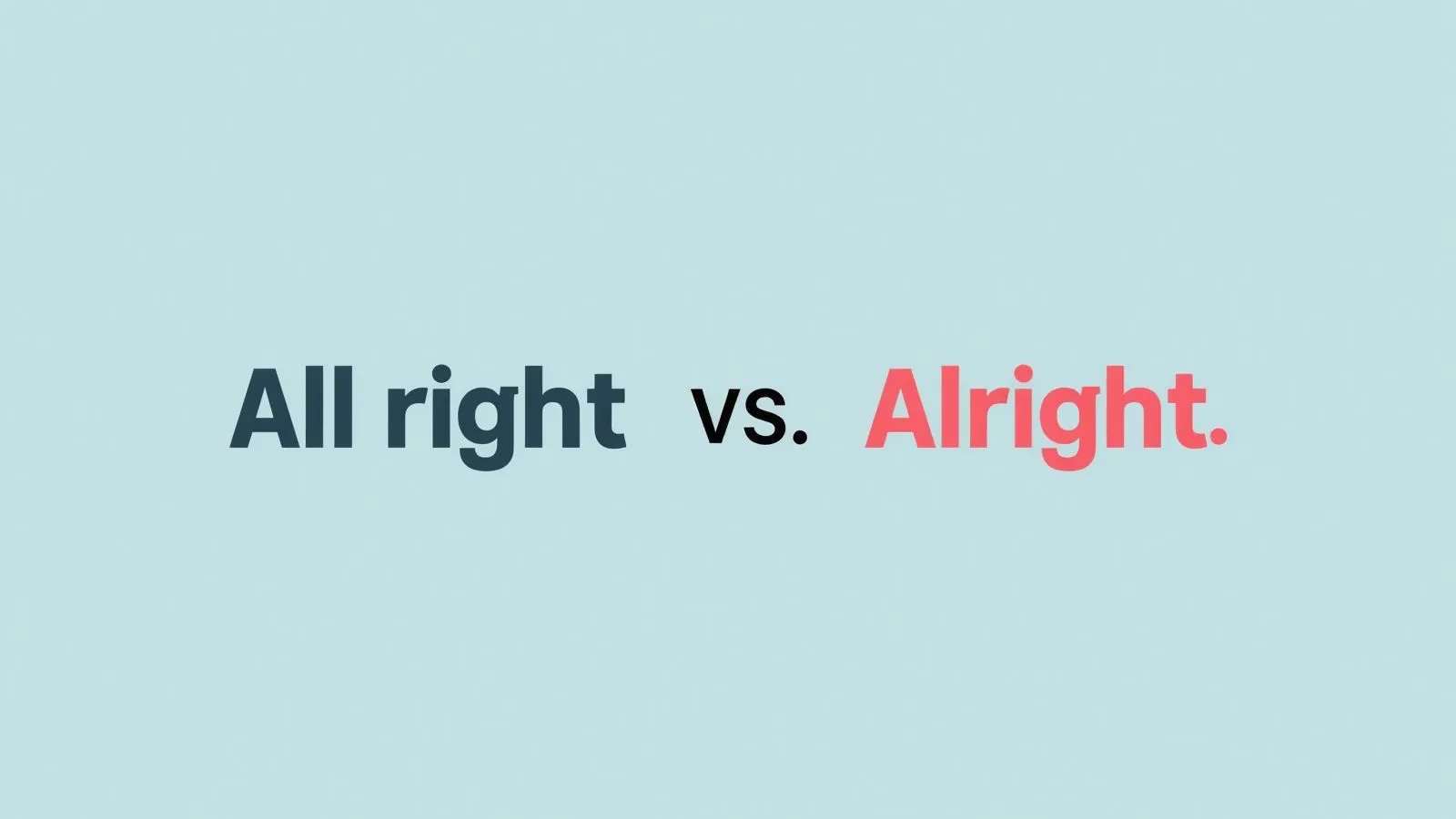
The correct and safest choice is “all right.” Most formal writing guides prefer this version. While “alright” appears in casual usage, it is still considered nonstandard in many contexts. If you’re writing essays, emails, or reports, always use all right to avoid mistakes.
Meaning of All Right or Alright
Both all right and alright mean “acceptable,” “fine,” or “okay.” They can describe conditions, skills, or outcomes. For example, “The project is all right” means the project meets expectations. Similarly, “She sings all right” highlights ability. These words don’t indicate ownership but express quality, control, or approval. In essence, they convey that something is satisfactory without being exceptional.
Why People Misspell All Right or Alright
Confusion arises because English often merges words over time. Think of “already” or “altogether.” Writers assume alright follows the same pattern. Additionally, double letters in words like “address” and “success” complicate spelling habits. Fast typing also contributes to errors. As a result, many people unintentionally use alright instead of the correct all right in formal writing.
Origin of All Right or Alright
The phrase all right originated from Old English roots. “All” comes from Germanic origins meaning “entire,” while “right” stems from Latin-influenced words implying correctness or justice. Historically, writers kept the words separate to preserve meaning. Over time, informal speech blended them into alright, but traditional grammar rules still favor all right in formal contexts.
British vs American English
Interestingly, both British English and American English agree on this rule. The preferred spelling remains consistent.
| Version | Preferred Form | Notes |
|---|---|---|
| British English | all right | Used in formal and academic writing |
| American English | all right | Standard in professional contexts |
| Informal Usage | alright | Acceptable in casual writing only |
When to Use All Right or Alright
Use all right in essays, assignments, emails, reports, and legal documents. It maintains professionalism and clarity. You may use alright in casual writing, such as text messages or social media posts. However, avoid it in formal communication. When in doubt, choose all right to ensure grammatical accuracy and credibility.
Common Mistakes
Many writers mistakenly use alright in formal contexts. Others confuse spacing or consistency.
- ❌ Everything is alright in the report.
- ✅ Everything is all right in the report.
- ❌ Is this assignment alright?
- ✅ Is this assignment all right?
Typing quickly or relying on autocorrect often causes these errors. Always double-check your spelling.
Possess in Everyday Examples
In daily communication, both forms appear frequently. However, context matters.
- Emails: “The document looks all right.”
- Social Media: “I’m alright now 😊”
- Professional Writing: Always use all right
- School Assignments: Stick with all right for better grades
Choosing the correct form improves clarity and credibility in every situation.
Usage Comparison Table
| Context | Correct Sentence | Incorrect Sentence |
|---|---|---|
| Objects | The design looks all right. | The design looks alright. |
| Skills | He plays guitar all right. | He plays guitar alright. |
| Legal Terms | The agreement is all right. | The agreement is alright. |
| Daily Speech | I feel all right today. | I feel alright today (informal only) |
FAQs
1. Is “alright” ever correct?
Yes, but only in informal writing. Formal contexts require all right.
2. How can I remember the correct spelling?
Think of “all” + “right” as two separate words. This trick prevents mistakes.
3. Why do people use “alright”?
Because of evolving language patterns and fast typing habits.
4. Is “alright” in dictionaries?
Some dictionaries list it as informal, but not standard.
5. Should I use “alright” in essays?
No. Always use all right in academic writing.
6. Do grammar checkers accept “alright”?
Many flag it as incorrect in formal writing.
7. Is “all right” outdated?
Not at all. It remains the preferred and correct form.
Conclusion
Choosing between all right or alright becomes simple once you understand the rule. Use all right for formal writing and professionalism. Reserve alright for casual situations only. Remember, small spelling choices shape how readers perceive your writing. Stay consistent, proofread carefully, and you’ll always get it all right.