Confused about then or than? You’re not alone. These two tiny words look similar, sound alike, and often get mixed up—even by fluent English speakers. Whether you’re writing an email, essay, or social media post, using then vs than correctly can make a big difference in clarity and professionalism.
Many people search for this keyword because they struggle with choosing the right word in comparisons or sequences. This article clears that confusion with simple explanations, examples, and practical tips so you never mix up then or than again.
|See also: Sence or Sense – Which Spelling Is Correct?
Then or Than – Quick Answer
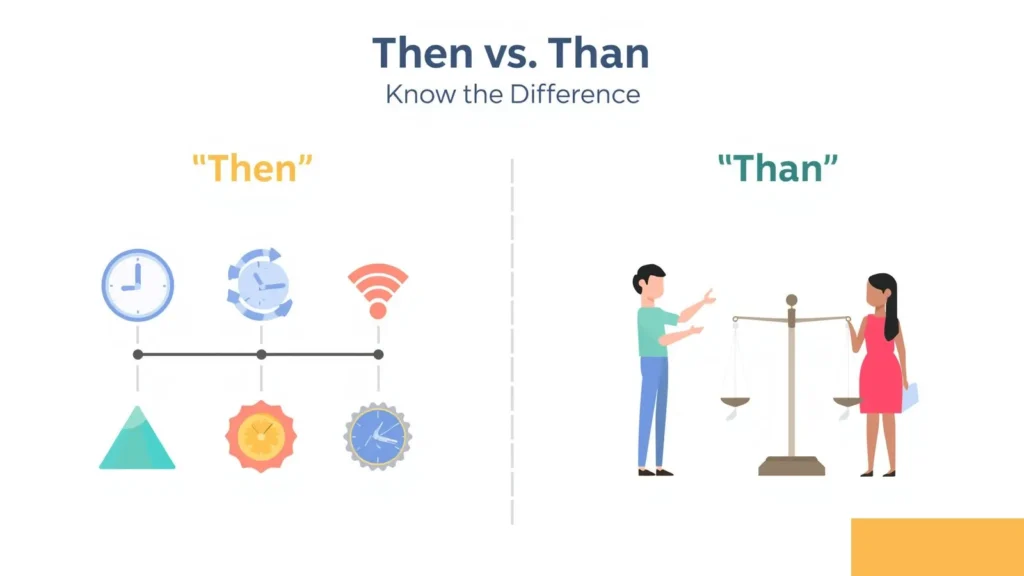
The difference between then or than is simple:
- Than is used for comparison
→ She is taller than her sister. - Then is used for time, sequence, or result
→ We ate dinner, and then we watched a movie.
👉 Remember: Than = Compare | Then = Time
Meaning of Then or Than
Understanding the meaning of then or than helps you use them confidently.
- Than shows comparison between two things.
→ This phone is better than that one.
It compares qualities, skills, or differences. - Then refers to time, order, or consequence.
→ Finish your work, then relax.
It describes sequence or what happens next.
Think of then vs than this way: one compares, the other connects events.
Why People Misspell Then or Than
Many writers confuse then or than due to similar pronunciation and fast typing habits.
English already has tricky spellings like:
- address
- success
These patterns make it easy to mix up then vs than, especially when typing quickly. Autocorrect may not catch it because both are real words.
👉 The mistake isn’t about spelling ability—it’s about context confusion.
Origin of Then or Than
The words then or than have different origins despite their similarity.
- Than comes from Old English “þanne”, used for comparisons.
- Then also comes from “þanne”, but evolved to represent time and sequence.
Over time, English separated their meanings, but the similar roots still cause confusion today. Knowing their history helps reinforce why then vs than serve different purposes.
British vs American English
Good news: then or than are spelled the same in both dialects.
| Usage Type | British English | American English |
|---|---|---|
| Comparison | than | than |
| Time/Sequence | then | then |
👉 There is no variation in spelling or usage between regions.
When to Use Then or Than
You’ll use then or than in almost every type of writing:
- Essays & Assignments → More effective than before
- Emails → Reply now, then we’ll proceed
- Work Reports → Higher growth than last year
- Legal Documents → Greater liability than expected
- Casual Writing → We met, then talked for hours
Mastering then vs than improves both clarity and credibility.
Common Mistakes
Here are typical errors with then or than:
❌ Incorrect: She is smarter then him.
✔ Correct: She is smarter than him.
❌ Incorrect: Finish your homework than play.
✔ Correct: Finish your homework then play.
Mistakes often happen when:
- Typing quickly
- Not checking context
- Relying on sound instead of meaning
👉 Always ask: Am I comparing or sequencing?
Then or Than in Everyday Examples
You’ll see then vs than everywhere:
- Emails: Submit the file, then notify me.
- Social Media: This is better than last year!
- Professional Writing: Higher efficiency than expected.
- School Assignments: First explain, then conclude.
Using then or than correctly makes your writing clearer and more professional.
Usage Comparison Table
| Context | Correct Sentence | Incorrect Sentence |
|---|---|---|
| Objects | This car is faster than that one. | This car is faster then that one. |
| Skills | She sings better than me. | She sings better then me. |
| Sequence | We studied, then took a test. | We studied, than took a test. |
| Daily Speech | Eat first, then sleep. | Eat first, than sleep. |
| Comparison | He is stronger than before. | He is stronger then before. |
FAQs
1. What is the difference between then or than?
Than is for comparison, while then relates to time or sequence.
2. How can I remember then vs than?
Use this trick:
👉 Than = Compare | Then = Time
3. Is “then” ever used for comparison?
No. Then is never used for comparison—only for time or order.
4. Why do people confuse then or than?
Because they sound similar and are often typed quickly without checking context.
5. Can then and than be used interchangeably?
No, they have completely different meanings.
6. Which is correct: better then or better than?
✔ Correct: better than
7. Is this mistake common in English?
Yes, even advanced writers sometimes mix up then vs than.
Conclusion
Understanding then or than is essential for clear and accurate writing. Remember:
- Than = Comparison
- Then = Time or sequence
This small distinction makes a big impact on your communication. Whether you’re writing an email, essay, or post, choosing the correct word improves clarity and professionalism.

Hi, I’m Mark Cole, the voice behind Grammar Meaning! I explain tricky grammar rules in simple ways. I write useful guides on basicsgrammar.com.