When it comes to English grammar, “laying down or lying down” often confuses writers. Both phrases involve resting or placing something, but they are used differently depending on the context. Understanding the distinction ensures your writing is accurate, professional, and clear.
Quick Answer
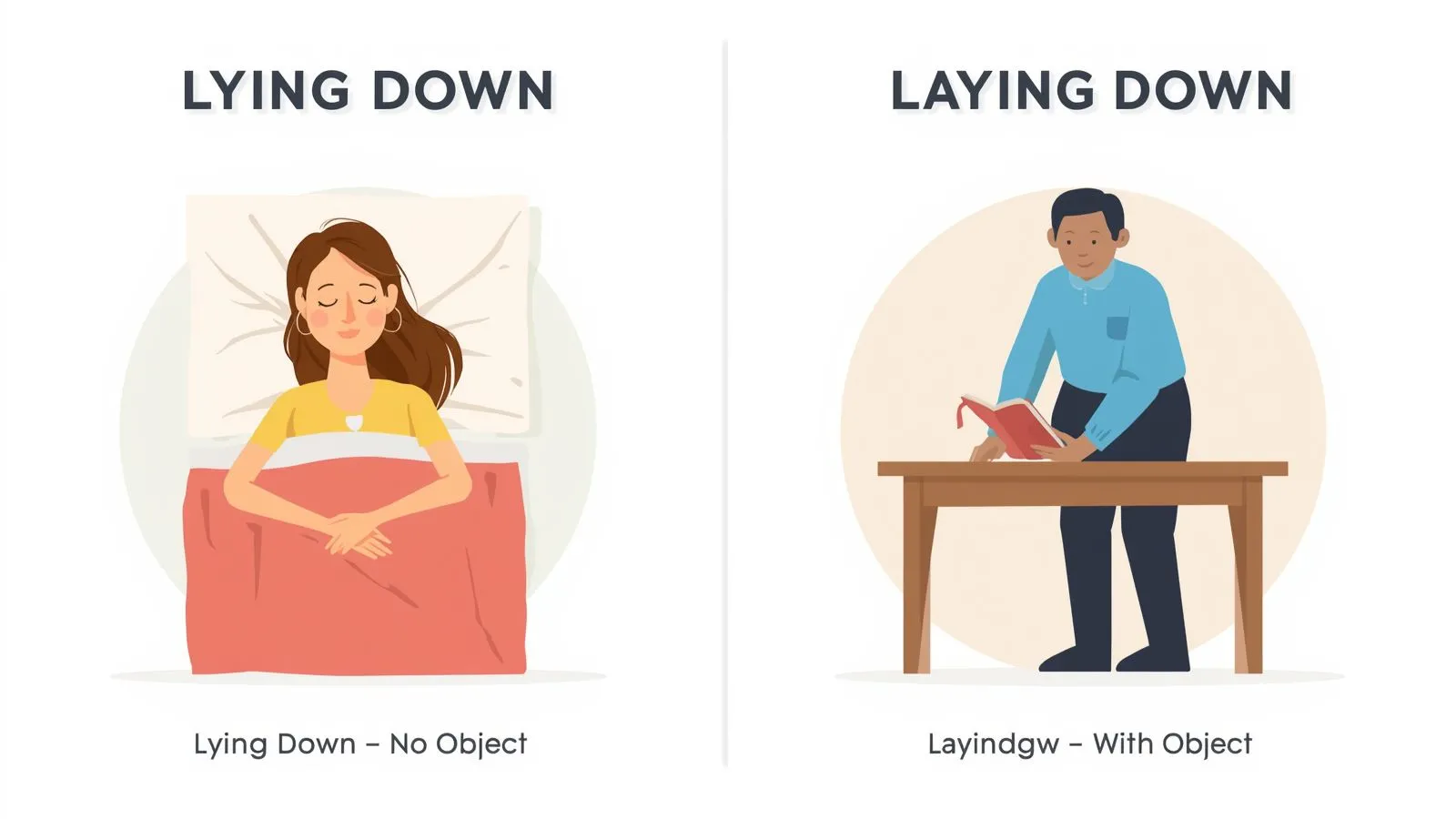
“Lying down” is correct when someone reclines or rests on a surface. “Laying down” requires a direct object—something you actively place down. For example:
- Correct: I am lying down on the couch.
- Correct: I am laying down the book on the table.
Remember: if there is no object, use lying down.
Meaning of Laying Down or Lying Down
Lying down refers to resting or reclining, while laying down means placing an object or establishing rules. Both phrases involve control and intention.
- Example (lying down): She is lying down after a long day.
- Example (laying down): He is laying down new rules at work.
Abstractly, “lying” implies passive state, while “laying” implies active action.
Why People Misspell Laying Down or Lying Down
English double letters often cause confusion, much like in “address” or “success.” Common mistakes include:
- Typing laying instead of lying when no object exists.
- Forgetting double letters due to fast typing.
- Mishearing the words in conversation.
Correct awareness prevents these mistakes in writing and typing.
Origin of Laying Down or Lying Down
The verbs lie and lay have Old English and Latin roots.
- Lie (Old English licgan) – to recline.
- Lay (Old English lecgan, from Latin lectum) – to put or place.
Historically, these verbs maintained their distinct meanings in English, though they often confuse modern writers due to their similarity.
British vs American English
Spelling for laying down or lying down is consistent across dialects. Both British and American English follow the same rules for verb forms.
| Verb Form | Example (UK) | Example (US) |
|---|---|---|
| Lie | She is lying down. | She is lying down. |
| Lay | He is laying down the book. | He is laying down the book. |
No regional spelling differences exist here.
When to Use Laying Down or Lying Down
These phrases appear in:
- Essays: “He was lying down in the park.”
- Assignments: “I am laying down the steps for the project.”
- Emails & Reports: Clarifying physical states or actions.
- Legal Documents: Specifying placement or establishment of rules.
- Casual Writing: Social media posts or notes.
Using the correct phrase adds clarity and professionalism.
Common Mistakes
Typical errors include:
- Using laying down without an object (Incorrect: I am *laying down).
- Forgetting double letters.
- Typing quickly without reviewing.
Correct vs Incorrect:
- Incorrect: I am laying down on the bed.
- Correct: I am lying down on the bed.
Possess in Everyday Examples
- Emails: I am lying down for a quick break.
- Social Media: Finally lying down after a long day!
- Professional Writing: We are laying down guidelines for the team.
- School Assignments: He is lying down while reading a book.
Using the right phrase ensures your message is understood clearly.
Usage Comparison Table
| Context | Correct | Incorrect |
|---|---|---|
| Object placement | I am laying down the papers. | I am lying down the papers. |
| Resting | She is lying down on the sofa. | She is laying down on the sofa. |
| Skills/Tasks | He is laying down instructions. | He is lying down instructions. |
| Legal Terms | The contract is laying down terms. | The contract is lying down terms. |
| Daily Speech | I will lie down for a nap. | I will lay down for a nap. |
FAQs
1. How to remember the spelling?
Think: lying = no object, laying = placing an object.
2. Can I use “laying down” for myself?
Only if you are placing something; otherwise, use lying down.
3. Are these terms the same in UK and US English?
Yes, both follow the same rules.
4. What is the past tense of lying down?
Past tense: lay (e.g., I lay down yesterday).
5. What is the past tense of laying down?
Past tense: laid (e.g., He laid the book on the desk).
6. Can these phrases be used in legal writing?
Yes, laying down often refers to rules or procedures.
7. How do I avoid mistakes in writing?
Read carefully, use the object rule, and double-check verb forms.
Conclusion
Understanding the difference between laying down or lying down is crucial for clear writing. Remember:
- Lying down = reclining, no object.
- Laying down = placing an object or establishing rules.
- Watch double letters and verb forms.