You may have seen both “moulding” and “molding” and wondered which one is correct. This small spelling difference confuses many writers, students, and professionals. It appears in everyday writing, construction terms, art, and even cooking. So why do two versions exist?
The answer is simple but important: it depends on the type of English you are using. People often search for “moulding or molding” because they want to avoid mistakes in writing, exams, or professional work. Using the wrong spelling can make your content look less polished, especially if you are writing for a specific audience.
Moulding or Molding – Quick Answer
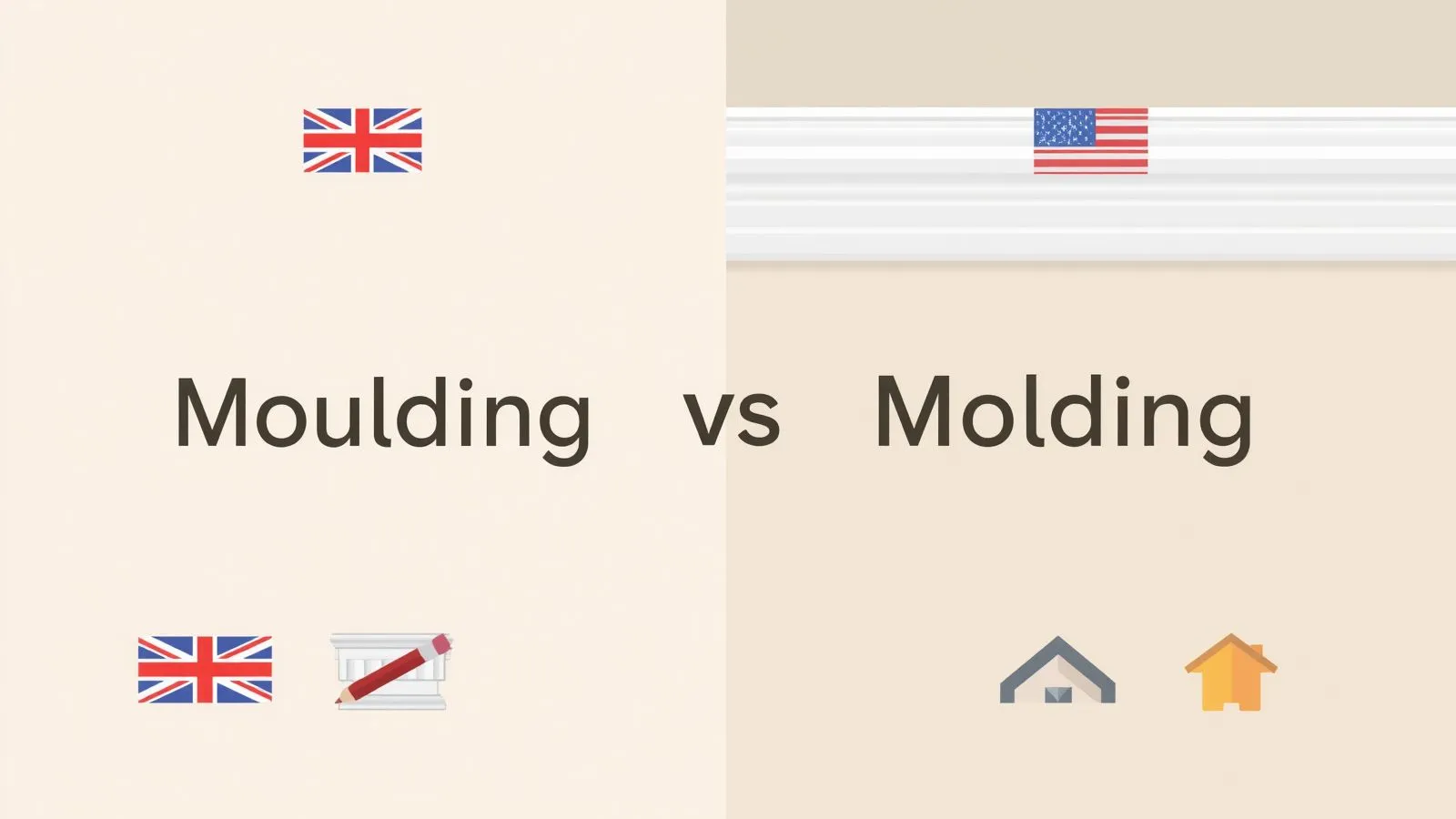
- “Moulding” is the British English spelling.
- “Molding” is the American English spelling.
Both words have the same meaning.
Examples:
- UK: The carpenter fixed decorative moulding on the wall.
- US: The carpenter installed wooden molding around the ceiling.
The Origin of Moulding or Molding
The word comes from the Old French word “modle” and Latin “modulus,” meaning a small measure or form.
Over time, English split into different styles:
- British English kept the “ou” spelling (mould).
- American English simplified it to “o” (mold).
This change happened during spelling reforms in the United States, where simpler forms became standard.
British English vs American English Spelling
The difference follows a common rule:
- British English uses “ou”
- American English uses “o”
Examples:
- Colour → Color
- Honour → Honor
- Moulding → Molding
Comparison Table
| Feature | British English | American English |
|---|---|---|
| Correct spelling | Moulding | Molding |
| Usage region | UK, Australia, Pakistan | USA |
| Style | Traditional | Simplified |
| Meaning | Same | Same |
Which Spelling Should You Use?
Choose based on your audience:
- For US readers: Use molding
- For UK/Commonwealth readers: Use moulding
- For global content:
- Pick one style and stay consistent
- American English is often preferred online
Tip:
If you are writing for SEO or international readers, “molding” may reach a wider audience.
Common Mistakes with Moulding or Molding
Here are frequent errors and how to fix them:
Mixing both spellings in one article❌
✔ Stick to one version only
Using British spelling for US clients❌
✔ Match your audience’s language
❌ Thinking meanings are different
✔ Both words mean the same thing
Writing “mould” in US content❌
✔ Use “mold” instead
Moulding or Molding in Everyday Examples
Emails:
- Please approve the new wall moulding design. (UK)
- The molding needs repair in the office. (US)
News:
- The building features classic wood moulding.
- Experts restored the antique ceiling molding.
Social Media:
- Loving this modern wall molding style!
- Victorian homes often have detailed moulding.
Formal Writing:
- Decorative moulding enhances interior design aesthetics.
- Crown molding is widely used in modern architecture.
Moulding or Molding – Google Trends & Usage Data
Search trends show clear patterns:
- “Molding” is more popular in the United States
- “Moulding” is used more in the UK, Australia, and Commonwealth countries
Key Insight:
- Globally, “molding” gets more searches
- Professionally, both are correct depending on region
Keyword Comparison Table
| Variation | Region | Popularity |
|---|---|---|
| Moulding | UK/Commonwealth | Medium |
| Molding | USA/Global | High |
| Decorative moulding | UK | Medium |
| Crown molding | USA | High |
FAQs
1. Is moulding or molding correct?
Both are correct. It depends on whether you use British or American English.
2. Do moulding and molding mean the same thing?
Yes, they have the exact same meaning.
3. Which spelling is more common?
“Molding” is more common globally, especially online.
4. Should I use moulding in Pakistan?
Pakistan follows British English, so “moulding” is preferred.
5. Is molding wrong in British English?
It is not wrong, but it is not the standard British spelling.
6. What is molding used for?
It refers to shaping material or decorative trim in buildings.
7. Can I use both spellings in one article?
No, always stay consistent with one style.
Conclusion
The difference between moulding and molding is simple but important. Both words mean the same thing, but their spelling depends on the type of English you use. British English prefers moulding, while American English uses molding.
Understanding this helps you write clearly and professionally. It also ensures your content matches your audience’s expectations. If you are writing for a global audience, choosing one style and staying consistent is key. Many writers prefer American English because it is widely used online.
Still, there is no “wrong” choice—only the right one for your readers. Whether you are writing emails, articles, or social posts, using the correct spelling builds trust and clarity. Now you can confidently use “moulding” or “molding” without confusion