
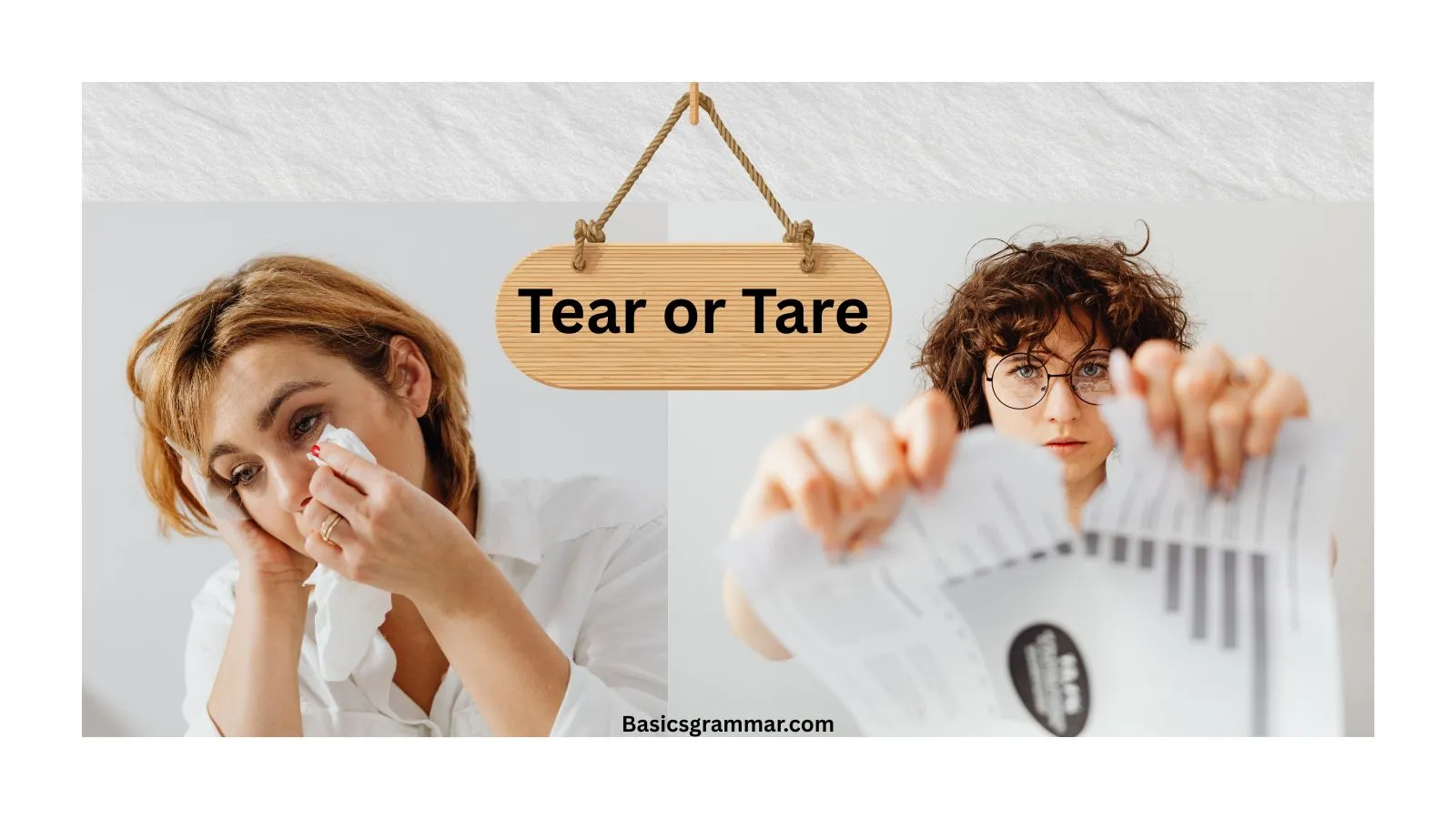
Many people get confused between the words tear and tare because they sound alike but have very different meanings. Searching for tear or tare often happens when people want to understand the correct usage of these words, especially since they appear in different contexts. This confusion can cause mistakes in writing or speech. This article explains the tare vs. tear difference clearly, helps with tare and tear usage, and offers tips for how to use tare in a sentence or how to use tear correctly. Whether you’re talking about a rip in fabric or weighing goods, this guide solves your doubts and improves your English.
The Role of Tear and Tare in Different Industries

The words tear and tare have very specific uses in various industries, which is why understanding their meanings is important. In the shipping and logistics industry, tare refers to the weight of the packaging or container that holds the goods. This weight is subtracted from the gross weight to calculate the net weight of the product being shipped. Accurate calculation of tare weight is essential for billing, safety regulations, and inventory management.
In agriculture, tare can also mean a type of weed, especially one that grows among grain crops. Farmers need to identify and remove these weeds to protect their harvest. On the other hand, tear is widely used in the fashion and textile industries. It describes damage to fabric, such as rips or holes, which impacts the quality and value of clothing or upholstery. Understanding these terms helps professionals communicate clearly and avoid costly mistakes.
How Context Determines Meaning: Tear vs Tare

The words tear and tare are homophones—they sound alike but have different meanings. This often causes confusion, but the meaning becomes clear when looking at the sentence context. For example, if you read about “subtracting the tare weight from a shipment,” it clearly relates to weighing and packaging. However, if you see “there was a tear in the fabric,” it refers to a rip or damage.
Context also helps distinguish tear as a noun or verb. As a noun, it can mean a rip in material or the salty drop from your eyes. As a verb, it means to rip something apart. Meanwhile, tare is almost always a noun related to weight or a type of weed. Recognizing these differences through sentence clues allows readers and speakers to use the right word naturally and avoid confusion in both writing and conversation.
Quick Quiz
Try to pick the correct word in the following sentences:
- Please subtract the ______ (tear/tare) weight before recording the shipment’s net weight.
- She cried, and a single ______ (tear/tare) rolled down her cheek.
- The jacket had a small ______ (tear/tare) near the sleeve.
- Farmers found ______ (tear/tare) growing among the wheat crops.
- Don’t ______ (tear/tare) the paper when you remove it from the envelope.
Answers:
- tare
- tear
- tear
- tare
- tear
Tear or Tare – Quick Answer
The word tare is a noun that means the weight of a container or packaging. This weight is subtracted from the total weight to find the net weight of the product. For example, “The tare weight of the box was subtracted before weighing the fruit.” This concept is important in industries like shipping and farming.
On the other hand, tear can be a noun or a verb. As a noun, it means a rip in material or the salty drops from your eyes. As a verb, it means to pull something apart by force. For example, “She made a tear in her shirt,” or “Don’t tear the paper.” Knowing the difference between tare and tear helps avoid common mistakes.
The Origin of Tear and Tare
The word tear comes from Old English teran, meaning to rip or pull apart. It has been part of English language for centuries and is used in two main ways: the act of ripping or the liquid from the eyes.
Tare originates from Middle French tare, which meant a deduction or fault, especially in trade. It became a technical term for subtracting container weight in weighing goods. Understanding this history explains why tare in weighing is a specific and important term in commerce.
British English vs American English Spelling
Both tear and tare are spelled the same in British and American English. The confusion is about pronunciation and meaning, not spelling.
| Word | Meaning | Pronunciation (US/UK) |
|---|---|---|
| Tear | Rip or liquid from the eye | /tɪər/ (tear drops) or /ter/ (rip) |
| Tare | Weight of packaging/container | /tɛər/ |
There are no spelling differences, but the words have different uses and sounds. This is important for clear communication.
Which Word Should You Use?
Use tare when referring to the weight of containers in weighing, such as “Please press the tare button on scale before measuring.” This term is common in shipping, farming, and retail.
Use tear for anything involving ripping or the salty drops from your eyes. For example, “Be careful not to tear the fabric,” or “A tear rolled down her cheek.”
No matter if you are in the US, UK, or elsewhere, these rules stay the same. Knowing the tare vs tear usage tips helps in all English-speaking countries.
Common Mistakes with Tear and Tare
A common error is mixing up tare with tear because they sound alike. Sometimes people use “tear” when they mean the tare weight for packaging, which is incorrect.
Another mistake is mispronouncing these words, causing confusion. Remember that tare is pronounced /tɛər/, while tear can be /tɪər/ or /ter/, depending on its meaning.
Avoid mistakes by focusing on context: weighing goods (tare) or ripping/eye liquid (tear).
Tear or Tare in Everyday Examples
In formal emails or business, you might write: “The tare weight was deducted to calculate the net shipment weight.”
On social media or news, you might see: “There was a tear in the curtain,” or “Tears streamed down her face.”
In casual talk: “Don’t tear your shirt!” or “Hit the tare button before you start weighing.”
Understanding these examples improves your grasp of tare and tear difference.
Tear or Tare – Google Trends & Usage Data
Search trends show “tear” is searched much more often than “tare,” because tear relates to emotions, fabric damage, and daily life.
However, “tare” searches increase in farming, shipping, and packaging industries due to its technical meaning related to tare in grain fields and tare subtraction.
Comparison Table: Tear vs Tare
| Feature | Tear | Tare |
|---|---|---|
| Part of speech | Noun and verb | Noun |
| Meaning | Rip or liquid from the eye | Weight of packaging or container |
| Usage context | Fabric damage, emotions, eyes | Weighing goods, shipping, farming |
| Pronunciation | /tɪər/ or /ter/ | /tɛər/ |
| Common mistakes | Confused with tare | Confused with tear |
FAQs
Q: Does tare mean a rip?
A: No, tare means the weight of a container, not a rip.
Q: How do you spell “tear a piece of paper”?
A: It is spelled tear when meaning to rip paper.
Q: How do you spell tear as in crying?
A: It is spelled tear for the liquid from the eye.
Q: Is it tear or tare?
A: Use tear for ripping or crying, and tare for container weight.
Q: Why does tear have two meanings?
A: Because tear is a homograph with different origins and pronunciations.
Q: How do I spell tear in my eye?
A: It is spelled tear, pronounced like “teer.”
Q: How to use tare in a sentence?
A: Example: “Subtract the tare weight from the total to get the net weight.”
Conclusion
Knowing the difference between tear or tare makes your English clearer and more accurate. Use tare when talking about weighing and packaging weight. Use tear when talking about ripping or eye liquid. Both words have the same spelling but different sounds and meanings. Paying attention to pronunciation and context will help you avoid common errors. Practice using these words in sentences to build confidence. This knowledge is useful for everyday English, business, and academic writing.
