Have you ever typed “verbage” and wondered if it looked wrong?
Many people search for “verbage or verbiage” because both forms appear online, and the difference is not always clear. People want to sound correct and professional, but one small spelling mistake can change that impression.
The difference between “verbage” and “verbiage” is simple but important.
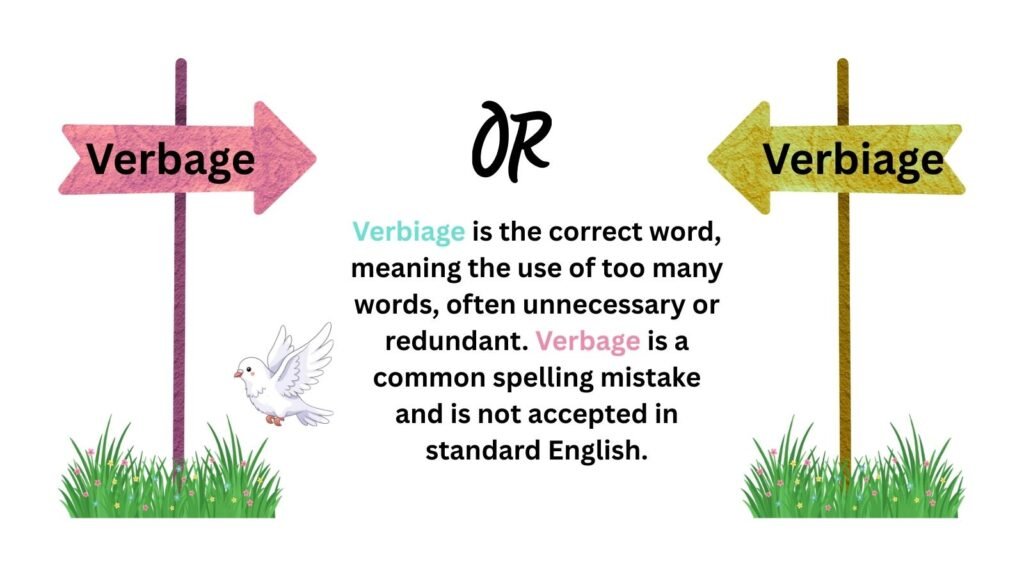
✅ Verbiage (Correct Word)
“Verbiage” is the correct spelling.
It means either:
- “Too many words”
- “The way something is written or expressed”
Examples:
- The contract is full of unnecessary verbiage.
- Please simplify the verbiage in this paragraph.
❌ Verbage (Incorrect or Nonstandard)
“Verbage” is usually a misspelling of “verbiage.”
It is not accepted in standard English writing.
Some people use it by mistake because it sounds similar.
Example (Incorrect):
- The report has too much verbage.
🔍 Key Difference
- Verbiage = Correct and standard word
- Verbage = Incorrect spelling (avoid using it)
👉 Tip:
Always use verbiage in professional writing, emails, and academic work.
Verbage or Verbiage – Quick Answer
The correct spelling is “verbiage.”
“Verbage” is considered a misspelling in standard English.
Meaning of verbiage:
- Too many words
- Extra or unnecessary language
Examples:
- “The report had too much verbiage.”
- “Keep your message short. Avoid verbiage.”
The Origin of Verbage or Verbiage
The word “verbiage” comes from French. It is based on verbe and later entered English in the 18th century.
Verbiage:
At first, “verbiage” simply meant “words” or “wording.”
Verbage:
“Verbage” likely appeared because people tried to simplify the spelling. It sounds similar, so it became a common mistake.
British English vs American English Spelling
Unlike many English words, “verbiage” is spelled the same in both British and American English. There is no regional difference here.
However, confusion happens because many English words do change spelling between regions.
Examples of Differences:
| American English | British English |
|---|---|
| color | colour |
| organize | organise |
| center | centre |
Verbiage Comparison:
| Word Form | Correct? | Region |
|---|---|---|
| verbiage | ✅ Yes | US & UK |
| verbage | ❌ No | None |
Which Spelling Should You Use?
Always use “verbiage”.
US audience:
- Use “verbiage”
UK/Commonwealth:
- Use “verbiage”
Global writing:
- Use “verbiage”
Common Mistakes with Verbage or Verbiage
Here are the most common errors:
❌ Wrong: verbage
Correct: verbiage✅
❌“Your email has too much verbage.”
Correct: “Your email has too much verbiage.”✅
❌ Wrong meaning: thinking it means “good wording”
Correct meaning: often means “too many unnecessary words”✅
Verbage or Verbiage in Everyday Examples
Emails
- “Please reduce the verbiage in this email.”
News Writing
- “The article was clear and free of verbiage.”
Social Media
- “No one reads long posts full of verbiage.”
Formal Writing
- “Avoid verbiage to improve clarity in academic papers.”
Verbage or Verbiage – Google Trends & Usage Data
Search data shows that “verbiage” is far more popular worldwide.
It is the standard spelling used in:
- United States
- United Kingdom
- Canada
- Australia
In professional writing, publishing, and education, only “verbiage” is accepted.✅
Comparison Table: Verbage vs Verbiage
| Feature | Verbiage | Verbage |
|---|---|---|
| Correct | ✅ Yes | ❌ No |
| Meaning | Excess wording | None (error) |
| Usage | Formal & informal | Incorrect use |
| Dictionary | Listed | Not listed |
FAQs
1. Is “verbage” ever correct?
No. It is always considered a misspelling.
|See also: Either or Neither: What’s the Difference and When to Use Each?
2. What does “verbiage” mean?
It means using too many words, often unnecessarily.
3. Is “verbiage” formal or informal?
It can be used in both, but it often has a negative tone.
4. Why do people write “verbage”?
Because it sounds similar and seems easier to spell.
5. Is there a British spelling of “verbiage”?
No. The spelling is the same in British and American English.
6. Can “verbiage” ever be positive?
Rarely. It usually suggests too many words.
7. How can I avoid verbiage in writing?
Use short sentences. Remove extra or repeated words.
Summary
The confusion between “verbage or verbiage” is common, but the answer is simple. Only “verbiage” is correct. The word comes from French and has been used in English for centuries. Today, it often describes writing that uses too many words.
There is no difference between British and American English for this word. Both use the same spelling: verbiage. The form “verbage” is just a mistake, even though many people still use it.
Finnaly:
“Verbiage” is the correct word.
“Verbage” is incorrect.
👉 Always choose verbiage for clear and professional writing.