
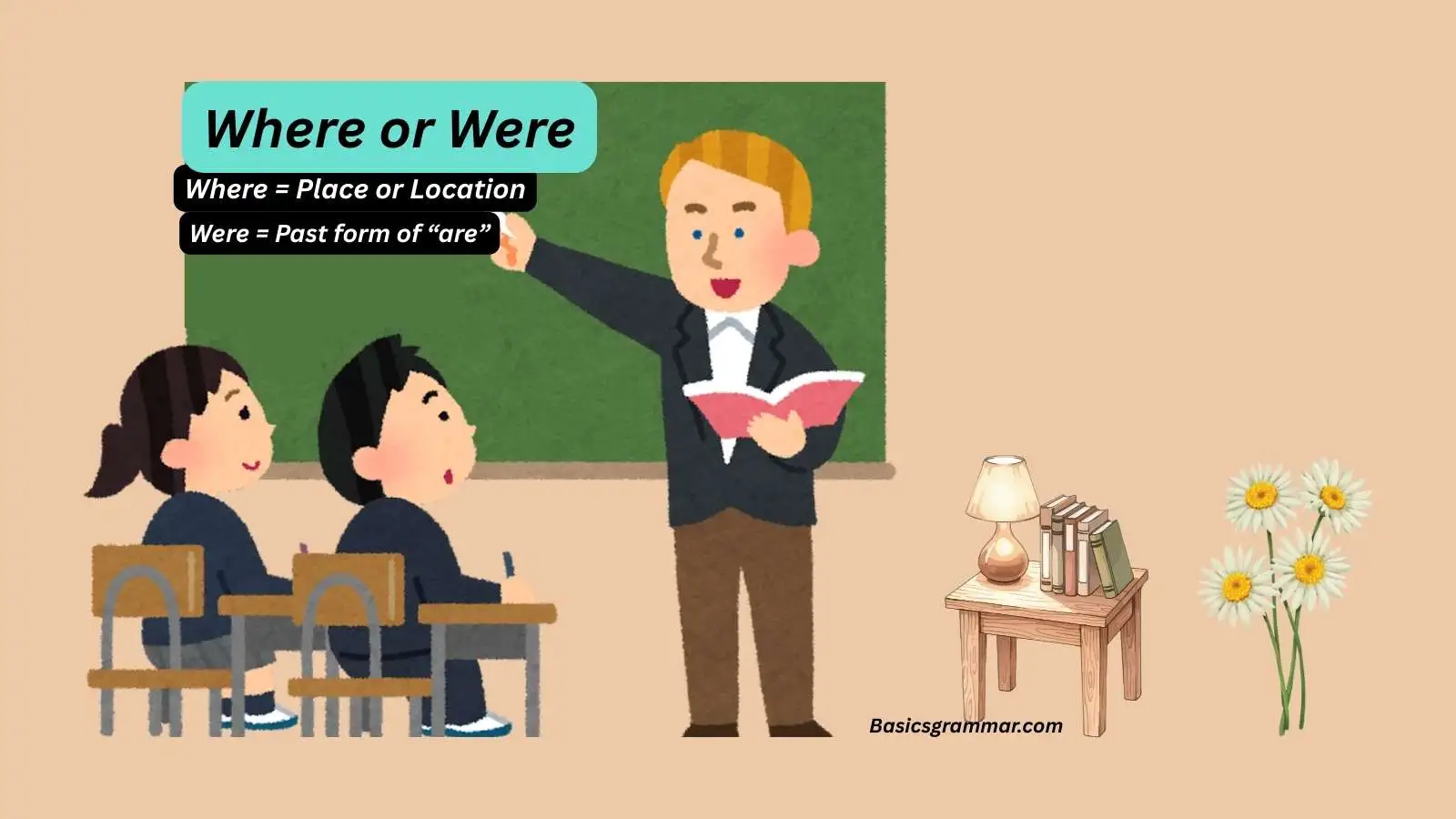
Because “where” and “were” have a similar appearance yet function significantly differently in sentences, many people seek for these terms. A minor error might alter the message or give the impression that the writing is not professional. Even proficient English speakers, authors, and students frequently pause to consider whether to use “where” or “were here.”
Pronunciation and rapid typing are typically the causes of the mistake. Where and were might sound similar when speaking quickly, especially in informal conversation. That sound resemblance in writing causes mistakes in news articles, emails, tests, and social media posts.
That issue is swiftly and plainly resolved by this guide. You will discover the precise distinction, examine simple examples, comprehend typical errors, and receive useful guidance that you can put to use immediately. This article will help you confidently select the right word every time, whether you’re writing for work, school, or internet content.
Correct and Incorrect Sentence Examples of Where and Were
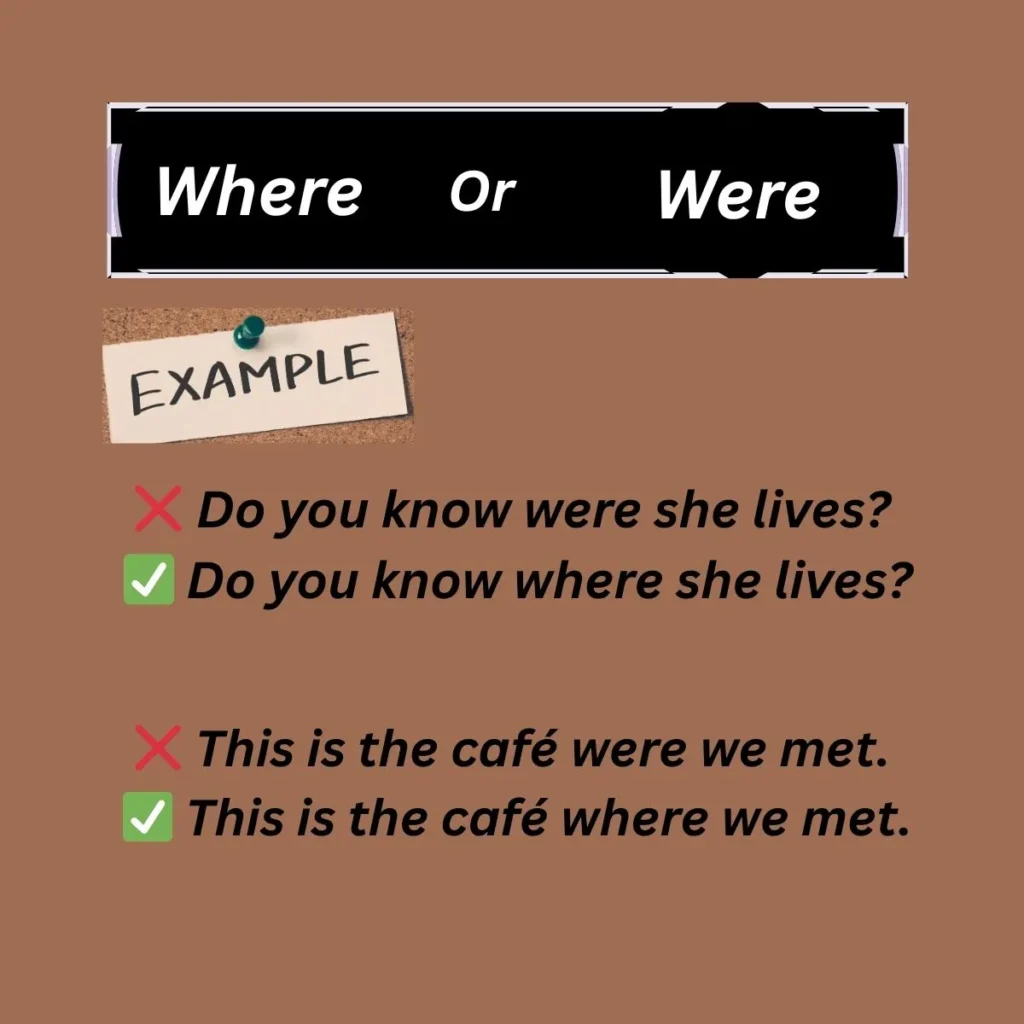
Using where and were correctly depends on meaning. Where is used to talk about a place or location, while were is used as the past tense of “are.” Many mistakes happen when writers confuse sound with grammar, so examples help make the difference clear.
Correct and Incorrect Examples:
- ❌ Do you know were the office is?
✅ Do you know where the office is? - ❌ This is the park were we played as kids.
✅ This is the park where we played as kids. - ❌ They where tired after work.
✅ They were tired after work. - ❌ I remember the day were we met.
✅ I remember the day where we met. - ❌ We don’t know were he lives.
✅ We don’t know where he lives.
These examples show a simple rule: if the sentence talks about place, use where; if it talks about past time or condition, use were. Learning from common mistakes helps improve accuracy in both casual and professional writing.
Grammar Tips to Avoid Where or Were Confusion
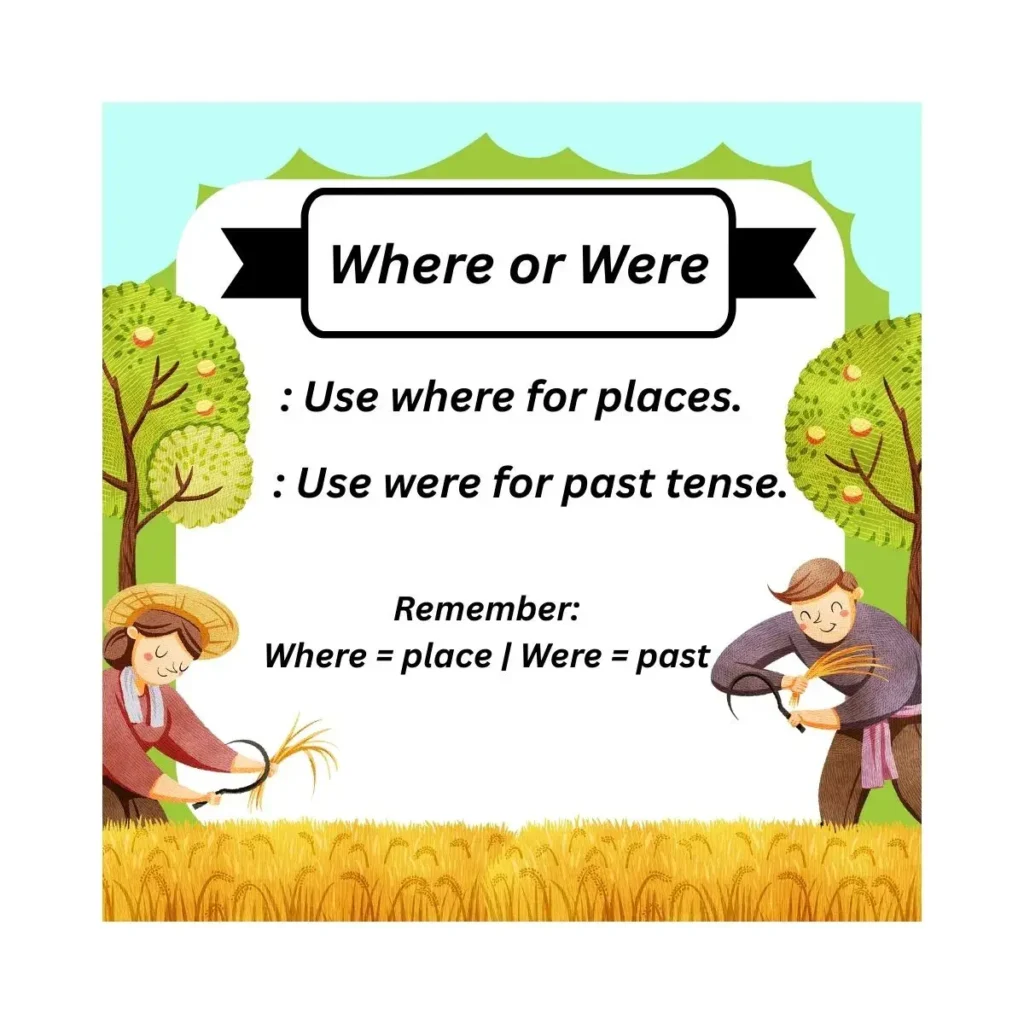
To avoid confusion between where and were, always focus on the function of the word in the sentence. Use where when you are referring to a place, position, or location. Use were when you are talking about the past tense of “are” or describing a past situation. Do not rely on pronunciation, because both words can sound similar in fast speech but have very different meanings in writing.
A helpful grammar tip is to check what comes before and after the word. Were usually follows a subject like we, you, they, while where often introduces extra information about a noun or place. Also, look for time clues such as yesterday, last night, or earlier—these signal were. With regular practice and careful reading, this simple awareness will help you use where or were correctly every time.
How to Remember the Difference Between Where and Were
The easiest way to remember the difference between where and were is to connect each word with its meaning. Where is always related to a place or location. You can remember this by noticing that where contains the word “here,” which also talks about place. If your sentence answers the question at what place?, then where is the correct choice.
Were, on the other hand, is used for the past tense. Think of were as a past form of are. If your sentence talks about something that already happened or describes a past condition, were is correct. A quick memory trick is: Where = place, Were = past. Keeping this simple rule in mind will help you avoid mistakes in both spoken and written English.
Where or Were – Quick Answer
Where is used for place or location.
Were is the past tense of “are”.
Examples:
- Where are you going? (place)
- We were happy yesterday. (past tense)
Simple rule:
If you are talking about a place, use where.
If you are talking about the past, use were.
The Origin of Where or Were
Where comes from Old English hwǣr, meaning at what place. It has always been linked to location or position.
Were comes from Old English wǣron, the past plural form of to be. Over time, English kept were for past situations, including conditional sentences.
The confusion exists because English evolved from many languages, and spelling stayed while pronunciation changed. Today, these two words look similar but serve completely different grammatical purposes.
British English vs American English Spelling
There is no spelling difference between British and American English for where or were. Both varieties use the same forms and rules.
Comparison Table
| Word | British English | American English | Meaning |
|---|---|---|---|
| where | where | where | place or location |
| were | were | were | past tense of “are” |
The confusion is grammatical, not regional.
Which Spelling Should You Use?
You do not choose based on country. You choose based on meaning.
- US audience: Follow standard grammar rules
- UK/Commonwealth audience: Same rules apply
- Global audience: Correct usage matters more than accent
If your sentence talks about location, use where.
If it talks about something in the past, use were.
Common Mistakes with Where or Were
❌ Where you late yesterday?
✅ Were you late yesterday?
❌ I remember the day were we met.
✅ I remember the day where we met.
❌ Do you know were my keys are?
✅ Do you know where my keys are?
Tip: Replace the word with “place”.
If it works, use where. If not, use were.
Where or Were in Everyday Examples
Emails:
- Please tell me where the meeting is.
- We were informed yesterday.
News:
- This is the city where the event happened.
- The players were ready.
Social Media:
- Where are you going tonight?
- We were so excited!
Formal Writing:
- The location where the study was conducted…
- The results were published last year.
Where or Were – Google Trends & Usage Data
Search data shows that “where or were” is commonly searched by:
- Students learning English
- Non-native writers
- People editing emails or assignments
The query is popular in countries where English is a second language, especially in academic and professional contexts. Most searches happen when users want a quick grammar fix, not long theory. This shows strong intent for clear, simple explanations—exactly what this guide provides.
Where or Were – Comparison Table
| Feature | Where | Were |
|---|---|---|
| Part of speech | Adverb / Conjunction | Verb |
| Time reference | Place | Past |
| Example | Where is the office? | They were tired. |
| Common mistake | Used for past | Used for location |
FAQs: Where or Were
1. Is “where” ever a verb?
No. “Where” relates to place, not action.
2. Can “were” be used with “I”?
Yes. Example: I were you (conditional).
3. Why do people confuse where or were?
They sound similar when spoken quickly.
4. Is the rule the same in all English types?
Yes. Grammar rules are universal.
5. Can Grammarly catch this mistake?
Often yes, but not always in casual sentences.
6. Is “where” formal or informal?
Both. It works in all writing styles.
7. What is the fastest way to remember?
Place = where. Past = were.
Conclusion
Once you concentrate on meaning rather than sound, it becomes easy to understand where or were. Where is always associated with a location or place. We are always connected to a situation or the past. There is no distinction between American and British spelling, nor is there an exemption based on style.
The majority of errors occur when writers focus more on the sound of words than their meaning. By taking my time and posing the question, “Am I talking about place or past?”—you can immediately avoid mistakes.
Writing with proper language increases confidence, professionalism, and clarity. Whether you are writing an essay, sending an email, or publishing something online, picking the appropriate words makes your message seem professional and legitimate. Over time, mastering minor grammatical rules like this develops excellent English proficiency.