Many writers, students, and professionals often get confused between “wierd” and “weird.” This common spelling mistake happens because English pronunciation does not always match spelling rules. People search for this keyword to confirm the correct spelling and avoid embarrassing errors in emails, assignments, and social media posts. Using the wrong spelling can reduce credibility and make writing look unprofessional.
The confusion mainly comes from the “i before e” rule, which has exceptions. Understanding the correct form, its origin, and usage will help you write with confidence. In this guide, you’ll learn the correct spelling, common mistakes, and practical tips to ensure accuracy in every context.
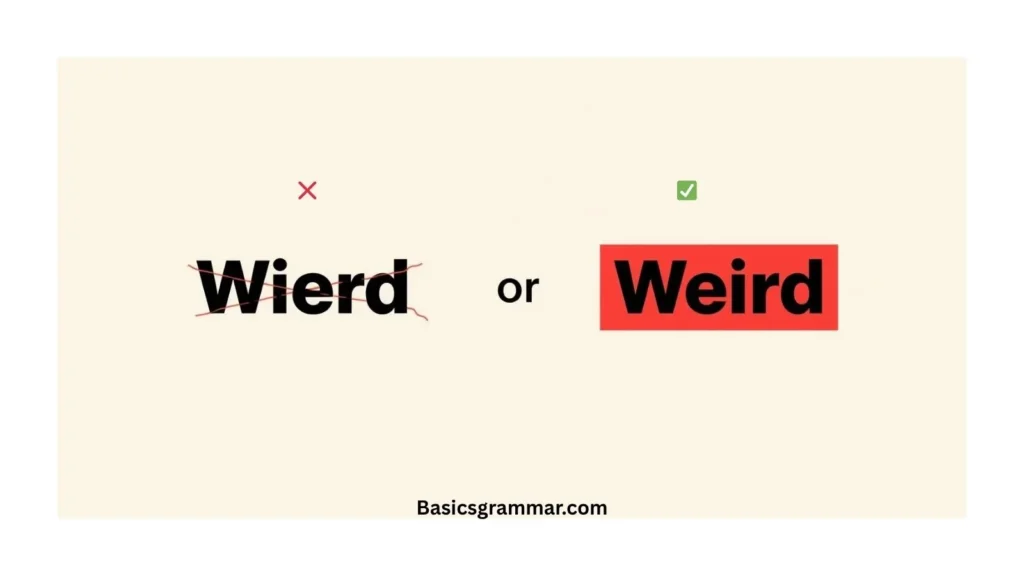
Wierd or Weird – Quick Answer
- ✅ Correct: Weird
- ❌ Incorrect: Wierd
Examples:
- “That movie was really weird.”
- “I had a weird dream last night.”
Tip: Remember: “Weird” breaks the ‘i before e’ rule.
The Origin of Wierd or Weird
The word weird comes from Old English “wyrd,” meaning fate or destiny. Over time, its meaning shifted to describe something strange or unusual. The misspelling wierd likely occurs because people try to follow the “i before e except after c” rule, which does not apply here.
British English vs American English Spelling
| Word | Region | Example Sentence |
|---|---|---|
| Weird | US & UK | “That sound is weird.” |
| Wierd | Incorrect | Not accepted in any English form |
Note: There is no regional variation—weird is correct everywhere.
Which Spelling Should You Use?
Always use weird in all types of writing—American, British, or global English. The spelling wierd is incorrect and should be avoided in professional, academic, and casual communication.
Common Mistakes with Wierd or Weird
- Writing wierd instead of weird
- Applying the wrong spelling rule
- Typing too fast and reversing letters
Tip: Memorize this phrase:
👉 “We are weird, not wierd.”
Wierd or Weird in Everyday Examples
- Emails: “The file is acting weird today.”
- News: “A weird weather pattern surprised experts.”
- Social Media: “That was such a weird moment 😂”
- Formal Writing: “The experiment produced weird results.”
Wierd or Weird – Google Trends & Usage Data
- “Weird” dominates global search results.
- “Wierd” appears mainly as a misspelling query.
- Popular worldwide across the US, UK, Canada, and Australia.
Insight: Correct spelling improves SEO ranking and readability.
Comparison Table: Wierd vs Weird
| Variation | Correctness | Notes |
|---|---|---|
| Weird | ✅ Correct | Standard spelling worldwide |
| Wierd | ❌ Incorrect | Common spelling mistake |
FAQs About Wierd or Weird
- Is wierd correct?
No, the correct spelling is weird. - Why do people spell it wierd?
Due to confusion with spelling rules like “i before e.” - Is weird the same in US and UK English?
Yes, the spelling is the same globally. - How can I remember the correct spelling?
Think: “We are weird.” - Can weird be used in formal writing?
Yes, but choose context carefully for professionalism. - What does weird mean?
It means strange, unusual, or unexpected.
Conclusion
Understanding wierd vs weird is simple but important for clear and professional writing. The correct spelling is always weird, regardless of region or context. The incorrect form wierd is a common mistake caused by confusing spelling rules. By remembering that “weird” breaks the usual pattern, you can avoid errors and improve your writing quality.
Whether you are sending emails, posting on social media, or writing formal documents, using the correct spelling ensures credibility and clarity. Small details like correct spelling make a big difference in communication and SEO performance. Always double-check your work and stay consistent.

Hi, I’m John Miles, the voice behind Grammar Meaning! I share clear and practical grammar tips. You’ll find my work on basicsgrammar.com.