Many people search this keyword because they are unsure which word fits their sentence. Is it “tear the paper” or “tare the weight”? The confusion grows because “tear” has more than one meaning, while “tare” is less common but still important.
“Tear” or “tare” Difference:
This words have a similar pronunciation. We want to know which one is correct and which we should avoid. We also want to know the correct meaning of them.
|RELATED: Leaves or Leafs: Which One Is Correct?
Tear or Tare – Quick Answer
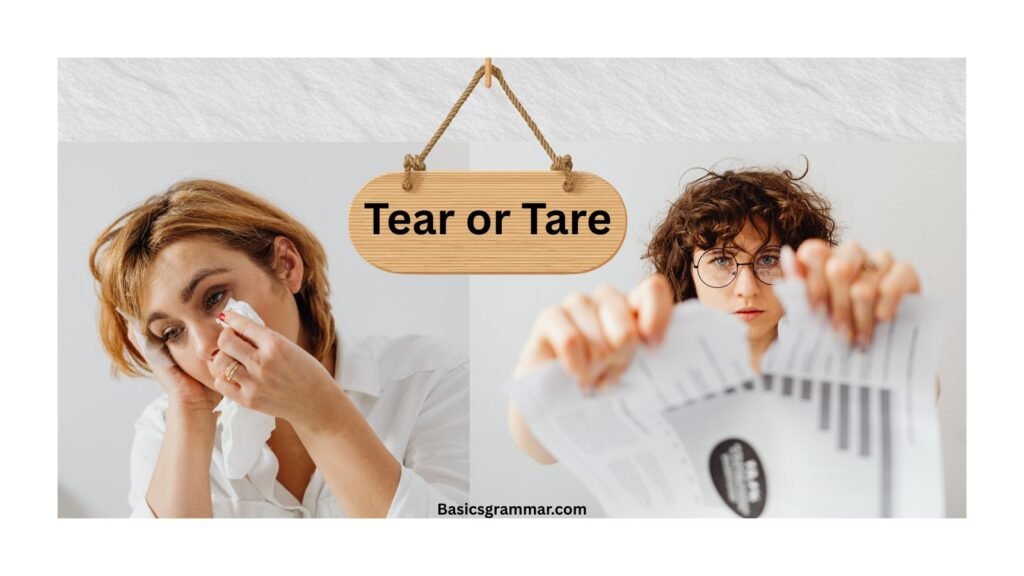
Tear means: “To rip something or refers to drops from your eyes”.
Example:
- She will tear the paper.
Example:
- A tear fell from his eye.
Tare means: “The weight of a container that is subtracted from the total”.
Example:
- The scale shows the tare weight of the box.
👉 Simple rule:
- Use tear for ripping or crying.
- Use tare for weight and measurement.
The Origin of Tear or Tare
Tear comes from Old English words:
- teran means: to rip
- tæher means: a drop from the eye
This is why “tear” has two meanings today.
Tare comes from Old French tare, meaning “waste” or “defect.”
Later, it became a trade term used in weighing goods. It refers to the container’s weight that must be removed to find the true weight.
👉 The difference exists because the words come from different languages and fields.
|See also: Donut or Doughnut: Is It Donut or Doughnut?
Tear or Tare – Quick Quiz
Fill in the blanks:
- Be careful not to ___ the paper.
- The cashier will ___ the weight of the container.
- I felt a ___ in my shirt.
- Please ___ the scale before weighing the item.
Answers:
- tear ✅ (to rip)
- tare ✅ (to reset weight)
- tear ✅ (a rip)
- tare ✅ (set scale to zero)
👉 Tip:
- Tear = rip or damage
- Tare = adjust weight on a scale
British English vs American English Spelling
No spelling difference between British and American English for these words. Both use tear and tare the same way.
Comparison Table
| Word | Meaning | British English | American English |
|---|---|---|---|
| Tear | Rip / drop from eye | Tear | Tear |
| Tare | Container weight | Tare | Tare |
👉 The confusion is not about region—it’s about meaning.
Which Spelling Should You Use?
Same Rules in all regions:
🇺🇸 US audience → Tear
🇬🇧 UK audience → Tear
🌍 Global writing → Tear
✔ Use tear when talking about damage or emotions.
✔ Use tare in business, shipping, or weighing.
👉 Tip:
If your sentence is about weight, “tare” is correct.
Common Mistakes with Tear or Tare
❌ Please tare the paper into two pieces.
✔ Please tear the paper into two pieces.
The tear weight is 2 kg.❌
The tare weight is 2 kg.✔
❌ Wrong: She had a tare in her eye.
✔ Correct: She had a tear in her eye.
Tear or Tare in Everyday Examples
Emails:
- Please tare the container before measuring.
- Do not tear the document.
News:
- A tear rolled down her face during the speech.
- The company reduced packaging tare weight.
Social Media:
- This movie made me tear up 😢
- Don’t forget to tare your scale!
Formal Writing:
- The operator must subtract the tare weight.
- The fabric may tear under pressure.
Tear or Tare – Google Trends & Usage Data
- “Tear” is far more popular worldwide because it has daily use
- “Tare” is used mostly in industries like shipping, cooking, and manufacturing.
Usage Insights:
- 🌍 Global: “tear” dominates general searches
- 📦 Trade & logistics: “tare” is common
- 🍳 Cooking: “tare weight” appears in recipes and kitchen scales
👉 Most people search this keyword to avoid mistakes in writing or exams.
Comparison Table: Tear vs Tare
| Feature | Tear | Tare |
|---|---|---|
| Meaning | Rip / drop from eye | Container weight |
| Usage | Everyday language | Technical / measurement |
| Frequency | Very common | Less common |
| Context | Emotion or damage | Business, shipping, cooking |
FAQs
1. Is it tear or tare weight?
👉 The correct term is tare weight.
2. Can tear mean crying?
👉 Yes, a “tear” is a drop from the eye.
3. Is tare used in daily conversation?
👉 Not often. It is mostly used in technical contexts.
4. Why do people confuse tear and tare?
👉 They sound similar but have different meanings.
5. Can tear be used as a noun and verb?
👉 Yes. Example: “Don’t tear it” (verb), “a tear fell” (noun).
6. Is tare used in cooking?
👉 Yes. Kitchen scales use “tare” to reset weight.
7. Are tear and tare interchangeable?
👉 No. They have completely different meanings.
Conclusion
“Tear” and “tare” may look alike, but they serve very different purposes. “Tear” is a common word used in everyday life. It describes ripping something or the drops that fall from your eyes. On the other hand, “tare” is a technical term used in weighing. It helps you find the true weight of an item by removing the container’s weight.

Hi, I’m John Miles, the voice behind Grammar Meaning! I share clear and practical grammar tips. You’ll find my work on basicsgrammar.com.