
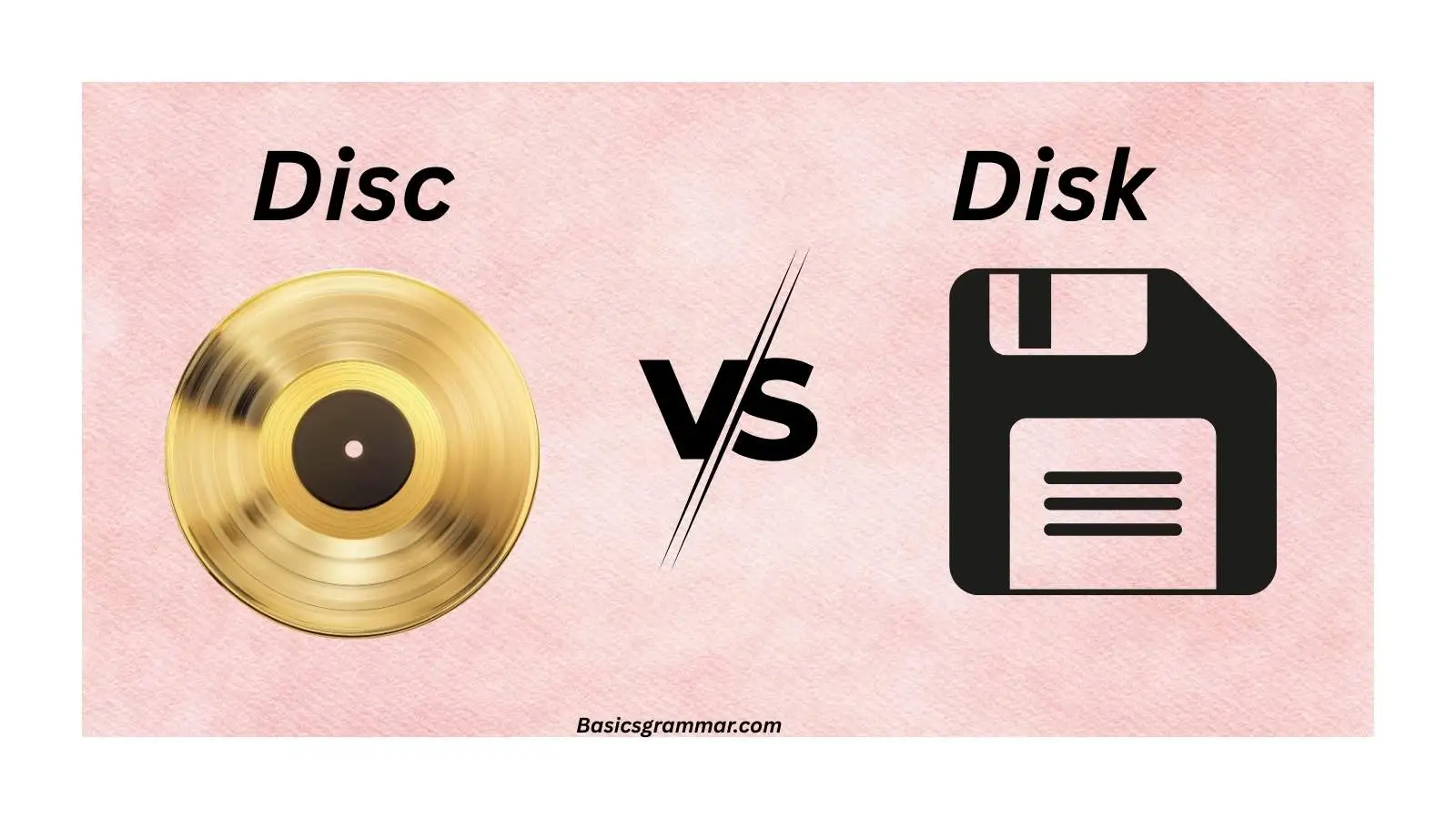
Many people search for disc or disk because both spellings look correct, sound the same, and appear in everyday writing. You may see compact disc (CD) in music, but hard disk drive in computers. This creates confusion, especially for students, writers, bloggers, and professionals. The main question is simple: which spelling is right, and when should you use it?
The confusion exists because English borrowed this word from two ancient languages and then split its usage over time. Today, disc vs disk difference depends more on context than on grammar rules. One spelling is common in the music industry terminology, while the other dominates computer storage terminology. People also wonder if this is a disc vs disk American English or disc vs disk British English issue, or if both countries use both forms.
This article solves that confusion clearly. You will get a quick answer, learn the history, understand regional spelling rules, avoid common mistakes, and see real-life examples. By the end, you will know exactly when to use disc and when to use disk, with confidence.
When to Use “Disc” in Music, Medicine, and Sports
The word disc is preferred in music, health, and sports contexts. Examples include compact disc, spinal disc, and discus throw. When referring to physical, round objects that are not digital, disc is the most natural and accepted spelling.
When to Use “Disk” in Computing and Technology
Disk is the standard spelling in computing and IT-related topics. Terms like hard disk, floppy disk, and disk space are widely used in software, hardware, and data storage. Technical documents almost always prefer disk for accuracy and consistency.
Quick Quiz: Disc or Disk
Test your understanding of disc vs disk by answering the questions below. Try to choose the correct word before checking the answers at the end.
Q1: A music CD is called a compact ______.
Q2: Computer storage is measured as available ______ space.
Q3: A spinal injury affects a spinal ______.
Q4: A computer uses a hard ______ to store data.
Q5: A Frisbee is also known as a flying ______.
Answers
A1: Disc
A2: Disk
A3: Disc
A4: Disk
A5: Disc
Disc or Disk – Quick Answer
The quick answer is simple. Use disc for music, sports, and anything that is a round and flat object. Use disk for computers, data, and digital storage.
For example, compact disc (CD), gramophone disc, and Frisbee terminology use “disc.” On the other hand, floppy disk, hard disk drive, and save icon disk symbol use “disk.” This rule covers most real-world usage and solves most disc or disk spelling confusion.
So, the disc vs disk meaning is the same, but the disc and disk usage depends on context, not pronunciation.
The Origin of Disc or Disk
The disc vs disk origin goes back thousands of years. The word comes from the Latin word discus, meaning a plate or throwing object. The Greeks spelled it as the Greek word diskos, linked to throwing sports like the ancient Olympics discus.
English adopted both spellings. For centuries, writers used them interchangeably. You can even find both spellings in old medical and astronomy texts describing a round and flat object. Over time, industries began to prefer one spelling over the other.
The music world kept disc, especially with phonograph records and later compact disc (CD). Technology adopted disk for magnetic storage media and computer-related lingo. This natural split created the modern disc spelling vs disk spelling rule we follow today.
British English vs American English Spelling
This is not a simple UK vs US spelling issue. Both disc vs disk British English and disc vs disk American English follow context-based rules.
In both regions, disc is used for music, sports, and optical items like CDs and DVDs. Disk is used for computers and data storage. However, British English slightly prefers disc in general writing, while American English strongly prefers disk in technology.
Here is a simple comparison table:
| Context | Disc | Disk |
|---|---|---|
| Music and audio | Compact disc, gramophone disc | ❌ |
| Sports | Discus, flying disc | ❌ |
| Computers | ❌ | Hard disk drive, floppy disk |
| Data storage | ❌ | Digital storage, magnetic storage media |
| Optical media | CD-ROM technology | ❌ |
This table alone answers most disc vs disk grammar questions.
Which Spelling Should You Use?
Your audience matters. If you are writing for a global or mixed audience, follow industry rules. Use disc for music, sports, and optical media. Use disk for computers and storage.
For a US audience, especially in tech blogs, disk is expected in computer storage terminology. For UK or Commonwealth readers, disc may feel more natural in general writing, but technology still uses disk.
Professional advice is simple. Match the spelling to the topic. This avoids errors and improves clarity. This approach works in SEO, academic writing, and business communication.
Common Mistakes with Disc or Disk
A common mistake is writing compact disk instead of compact disc (CD). This is incorrect in formal writing. Another error is using disc for computer storage, such as writing “hard disc drive.” The correct form is hard disk drive.
Writers also mix spellings in the same article, which looks unprofessional. Choose the correct spelling based on context and stay consistent. These small fixes greatly improve clarity and credibility.
Disc or Disk in Everyday Examples
In emails, people often write, “Please insert the disk,” referring to a USB or backup drive. In news articles about music, writers correctly say, “The album was released on disc.”
On social media, casual posts may mix spellings, but professional content should not. In formal writing, disc jockey / disk jockey is interesting because both forms exist. “Disc jockey” is more common today because of music roots, while “disk jockey” appeared earlier in broadcasting.
These disc vs disk examples show that context always decides the correct form.
Disc or Disk – Google Trends & Usage Data
Search trends show that disk is more popular in tech-heavy countries like the United States. Searches related to hard disk drive, digital storage, and computer-related lingo dominate.
The spelling disc is more popular in music-related searches, sports, and entertainment. Terms like compact disc (CD), optical media, and flying disc / flying saucer drive this usage.
Globally, both spellings remain active, but they rarely compete in the same context anymore. This shows how language adapts to technology and culture.
Disc or Disk Comparison Table
| Term | Correct Spelling | Reason |
|---|---|---|
| Compact disc | Disc | Music and optical media |
| Hard disk drive | Disk | Computer storage |
| Floppy disk | Disk | Magnetic storage media |
| Frisbee | Disc | Sports object |
| CD-ROM | Disc | Laser reading technology |
FAQs About Disc or Disk
Q: Are disc and disk the same?
A: They have the same meaning, but disc is used for music and anatomy, while disk is used for computers.
Q: Is it medical disk or disc?
A: The correct medical spelling is disc, such as spinal disc.
Q: Is a disc a shape?
A: Yes, a disc is a round and flat shape, like a coin or CD.
Q: What is a disk?
A: A disk is a flat object, commonly referring to computer storage devices.
Q: Is disk an English word?
A: Yes, disk is a correct English word, mainly used in American and technical contexts.
Q: Is it disk or disc space?
A: The correct term is disk space when talking about computer storage.
Q: What is a disk image?
A: A disk image is a complete digital copy of a storage disk.
Q: Is it brake disk or disc?
A: The correct spelling is brake disc in automotive usage.
Q: Is it a hard disk or a hard disc?
A: The correct and standard term is hard disk in computing.
Conclusion
The disc vs disk difference is not about right or wrong spelling. It is about correct usage. Both words share the same origin and meaning, describing a round and flat object. Over time, English naturally divided their roles. Today, disc belongs to music, sports, and optical media like CDs and DVDs. Disk belongs to computers, data, and storage devices.
Understanding this difference helps you write clearly and professionally. It prevents common errors, improves SEO, and builds trust with readers. Whether you are writing an email, blog post, academic paper, or technical guide, using the correct spelling shows attention to detail.
The best advice is simple. Look at the context first. If it plays music or flies through the air, choose disc. If it stores data or runs software, choose disk. Follow this rule, and the disc or disk spelling confusion disappears completely.