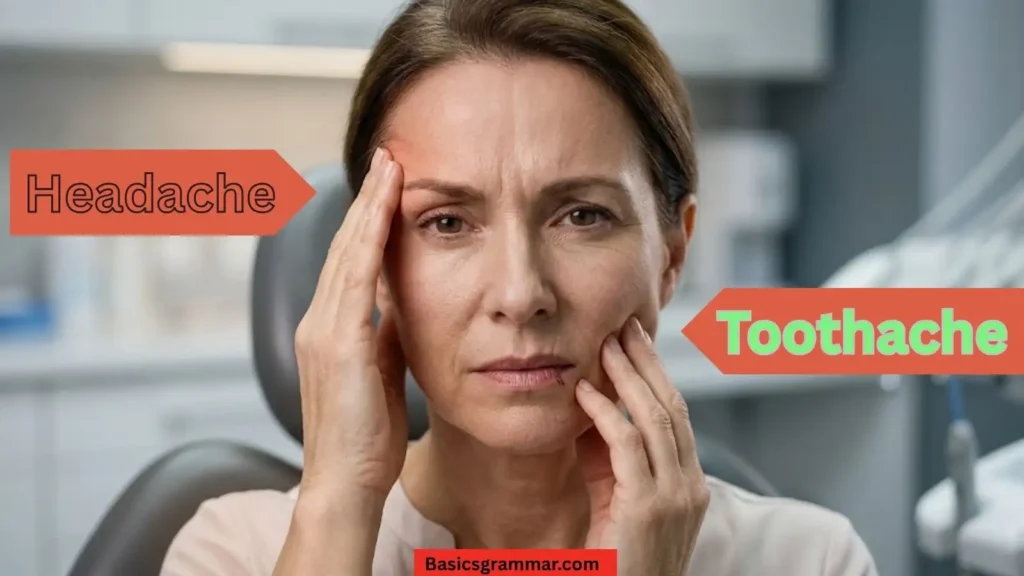
Pain around the head, face, jaw, or teeth can be confusing because several conditions can produce similar symptoms. A person may experience a headache that feels like facial pressure, while dental pain can sometimes radiate toward the temple, ear, or jaw. Understanding the difference between a headache or toothache can help you decide whether you need rest and self-care, a dental evaluation, or medical attention.
Headaches have many possible causes, including tension, dehydration, illness, stress, and migraine. Toothaches, on the other hand, commonly arise from dental problems such as tooth decay, infection, damaged teeth, gum disease, or dental abscesses.
The location and character of the pain can provide useful clues, but symptoms alone cannot always identify the underlying cause. Persistent, severe, or unusual pain should be assessed by an appropriate healthcare professional.
What Is a Headache or Toothache?
The phrase headache or toothache describes two different types of pain that can sometimes overlap.
A headache is pain or discomfort affecting the head. It may occur across the forehead, around the temples, behind the eyes, or toward the back of the head. Headaches can vary considerably in intensity and duration.
A toothache is pain originating from a tooth or surrounding oral tissues. Common causes include tooth decay, dental abscesses, cracked or damaged teeth, loose fillings, gum disease, wisdom-tooth problems, and teeth grinding.
The distinction matters because the appropriate professional may be different. A recurring headache may require medical evaluation, while persistent tooth pain generally requires dental assessment and treatment of the underlying dental problem.
Key Features
Headache Symptoms
Headache symptoms. Pain may feel:
- Dull or pressure-like
- Throbbing
- Tight or squeezing
- Concentrated around the temples
- Located behind or around the eyes
- Spread across the forehead
- Associated with sensitivity to light or sound in some headache disorders
Many ordinary headaches improve with rest, hydration, and appropriate over-the-counter pain relief. However, worsening or recurrent headaches should be discussed with a healthcare professional.
Toothache Symptoms
Tooth pain is more likely to be localized around a particular tooth or area of the mouth.
Possible symptoms:
- Sharp or aching tooth pain
- Sensitivity to hot or cold foods
- Pain while biting or chewing
- Gum redness or swelling
- Bad taste in the mouth
- Facial or jaw swelling
- Difficulty opening the mouth
- Fever in cases involving infection
A dental abscess can cause intense tooth or gum pain and requires urgent dental treatment because it does not normally disappear on its own.
Pain That Radiates
One reason it can be difficult to distinguish a headache or toothache is that pain may be felt away from its original source.
Dental inflammation can produce pain around the jaw, cheek, ear, or temple. Likewise, a headache can sometimes be perceived around the face.
For this reason, pain location alone should not be used as a diagnosis.
Benefits of Identifying the Pain Source
Determining whether symptoms are more consistent with a headache or a dental problem can help with appropriate next steps.
Choosing the Right Professional
If the symptoms strongly suggest a dental problem, a dentist can examine the tooth, gums, bite, and surrounding tissues.
If the symptoms are primarily headache-related, particularly when they recur or change in pattern, a physician or other qualified healthcare professional may be more appropriate.
Avoiding Delayed Dental Treatment
Pain medication can temporarily reduce discomfort without treating the underlying dental problem. The American Dental Association emphasizes that pain-relieving medicines may provide temporary management when definitive dental treatment is not immediately available; they are not a substitute for treating the dental cause.
Recognizing Potential Emergencies
Understanding warning signs can help prevent dangerous delays. Severe swelling involving the mouth, throat, or neck, especially when it interferes with breathing or swallowing, requires emergency medical attention.
How to Tell the Difference Between a Headache or Toothache
Step 1: Identify Where the Pain Begins
Think about the original location of the discomfort.
If the pain clearly begins in a particular tooth, especially when chewing or drinking something hot or cold, a dental source becomes more likely.
If the discomfort begins around the forehead, temples, or broader areas of the head without obvious dental symptoms, a headache may be more likely.
Step 2: Check for Dental Symptoms
Look for signs such as:
- Tooth sensitivity
- Gum swelling
- Pain when biting
- Broken or cracked tooth
- Bad taste
- Facial swelling
- Recent dental treatment
These findings increase the likelihood that the pain is associated with a dental condition.
Step 3: Consider Associated Headache Symptoms
Pay attention to symptoms occurring alongside head pain.
Headaches can sometimes occur with nausea, vomiting, visual symptoms, or sensitivity to light. Certain headache patterns require medical assessment, particularly when symptoms are severe, unusual, or rapidly developing.
Step 4: Monitor the Duration
Temporary discomfort may resolve, but persistent pain deserves attention.
The NHS advises seeking dental care when toothache lasts longer than two days or does not improve with painkillers.
Similarly, headaches that repeatedly occur, become worse, or fail to improve with appropriate self-care should be discussed with a healthcare professional.
Step 5: Keep a Pain Record
For recurring symptoms, record:
- Date and time
- Location
- Pain intensity
- Duration
- Food or drinks that trigger symptoms
- Sleep pattern
- Other symptoms
- Medicines taken
- Recent dental procedures
This information can help a dentist or doctor understand the pattern.
Common Mistakes to Avoid
Assuming Every Headache Is a Dental Problem
Not every headache is caused by the teeth. Treating an unrelated dental condition will not necessarily resolve a headache.
Assuming Every Toothache Is a Headache
A painful tooth can produce discomfort in nearby areas, but persistent dental pain should not simply be treated as an ordinary headache.
Taking Antibiotics Without Professional Advice
Antibiotics are not appropriate for most dental pain conditions. The ADA recommends prioritizing definitive dental treatment and appropriate pain management rather than routinely using antibiotics for dental pain without systemic involvement.
Ignoring Persistent Pain
Temporary pain relief does not necessarily mean the underlying problem has disappeared. Toothache that persists should be evaluated by a dentist.
Using More Pain Medicine Than Recommended
Always follow the product label or advice from a qualified healthcare professional. Taking larger amounts does not necessarily provide better relief and can cause serious harm.
Maintenance and Care
Preventive oral care can reduce the likelihood of dental problems that cause toothache.
Important habits include:
- Brush teeth twice daily with fluoride toothpaste.
- Clean between teeth regularly.
- Limit frequent sugary foods and drinks.
- Attend routine dental check-ups.
- Avoid chewing hard objects.
- Address damaged or painful teeth promptly.
The NHS recommends brushing twice a day for approximately two minutes with fluoride toothpaste and cleaning between the teeth daily.
For headache prevention, maintaining regular meals, adequate hydration, appropriate sleep, and stress-management habits may be useful for some people. Avoiding known personal triggers can also help reduce recurring symptoms.
Troubleshooting Guide
| Problem | Possible Cause | Recommended Action |
|---|---|---|
| Pain is centered around one tooth | Decay, crack, infection, or gum problem | Arrange a dental examination |
| Pain occurs mainly with hot or cold foods | Tooth sensitivity or dental damage | Avoid triggers temporarily and see a dentist if persistent |
| Head pain improves with rest | Common headache pattern | Rest, hydrate, and monitor symptoms |
| Tooth pain lasts more than two days | Possible underlying dental condition | Arrange dental care |
| Toothache with facial swelling | Possible dental infection or abscess | Seek urgent dental assessment |
| Headache suddenly becomes extremely severe | Potential medical emergency | Seek emergency medical care |
| Headache with weakness or speech difficulty | Possible neurological emergency | Seek emergency medical attention |
| Mouth or neck swelling affects breathing or swallowing | Potential serious infection or airway problem | Seek emergency medical care immediately |
Professional Tips
Do Not Diagnose Solely From Pain Location
Pain patterns can overlap. A professional examination is more reliable than attempting to identify the cause based only on where the pain is felt.
Consider the Whole Symptom Pattern
A combination of symptoms provides more useful information than one symptom alone. Dental swelling, sensitivity, chewing pain, and a bad taste suggest a different pathway than an isolated headache.
Treat the Cause, Not Just the Symptom
Painkillers may temporarily reduce discomfort, but persistent toothache often requires dental treatment. The ADA’s current guidance emphasizes evidence-based pain management while definitive dental care addresses the underlying condition.
Know the Emergency Warning Signs
A headache accompanied by sudden extreme pain, weakness, numbness, speech problems, balance problems, or other serious neurological symptoms requires emergency assessment.
Similarly, significant swelling of the mouth, throat, or neck with difficulty breathing or swallowing is an emergency.
Frequently Asked Questions
Is a headache or toothache more serious?
Neither is automatically more serious. The seriousness depends on the cause and accompanying symptoms. Most ordinary headaches are not dangerous, while some dental infections require urgent treatment.
Can a toothache cause a headache?
Yes, dental pain can be perceived in nearby areas of the face and head. However, a headache can have many unrelated causes, so persistent symptoms should be professionally assessed.
How can I tell if my headache is coming from a tooth?
Look for dental clues such as pain in a specific tooth, sensitivity to temperature, pain while biting, gum swelling, or a damaged tooth. These signs make a dental source more likely.
When should I see a dentist for a toothache?
You should seek dental care when toothache lasts more than two days, does not improve, or occurs with fever, swelling, pain when biting, red gums, or a bad taste.
Can I treat toothache with painkillers?
Appropriate pain relievers can temporarily manage acute dental pain for many people, but they do not remove the underlying dental cause. The ADA recommends evidence-based non-opioid pain management as first-line treatment for many cases of acute dental pain in adults and adolescents.
Should I take antibiotics for toothache?
Do not start antibiotics on your own. Most dental pain conditions do not require antibiotics; dental treatment is generally prioritized, while antibiotics may be indicated when systemic involvement or specific clinical circumstances are present.
When is a headache an emergency?
Seek emergency medical care for a headache that starts suddenly and is extremely painful, or when it occurs with symptoms such as weakness, numbness, difficulty speaking, walking, balancing, or remembering.
Can toothache cause facial swelling?
Yes. Dental infections and abscesses can cause swelling of the face or jaw. Significant swelling or difficulty breathing, swallowing, speaking, or opening the mouth requires urgent or emergency assessment.
Conclusion
Understanding the difference between a headache or toothache can help you make a more informed decision about seeking care. A headache generally involves pain in the head, while toothache commonly produces localized dental pain and may be accompanied by sensitivity, chewing pain, gum changes, or swelling.
Because symptoms can overlap, avoid relying solely on pain location to determine the cause. Persistent tooth pain should be evaluated by a dentist, while recurring, worsening, or unusual headaches should be discussed with a healthcare professional.
Most importantly, do not ignore emergency warning signs. Sudden severe headache symptoms or significant mouth, throat, or neck swelling that affects breathing or swallowing require immediate medical attention.
Medical disclaimer:
This article is for general educational purposes and does not replace an examination, diagnosis, or treatment plan from a qualified healthcare professional

Hi, I’m Alex Reed, the voice behind Grammar Meaning! I simplify English grammar into easy lessons. I write for basicsgrammar.com to help you improve daily writing.